I am a septuagenarian. How did that happen? It’s easy; all you have to do is wait seventy years. You also have to be lucky enough to live that long. Looking back, I’ve come to a rather curious conclusion: the decades that exerted the greatest influence on me, are the two that were concluded before I was born: the 1930s and 1940s. Here’s why.
The 1930s and 1940s
In 1933, my father, aged thirty, gave up his ambition of becoming a Roman Catholic priest, borrowed money to make up the £4 ticket fee, and returned to Lancashire after a year in Neufgrange in Alsace-Lorraine, France. By 1935 he had established his own milk delivery business at 98 Skeffington Road, in Preston. He began courting my mother. They married in August 1938 and moved into St Gregory Road, Deepdale. North End Dairy remained the family home for another half century. My home environment, was therefore, founded on the conventions, attitudes and ideas prevalent in the late 1930s and early 1940s; times of great instability.
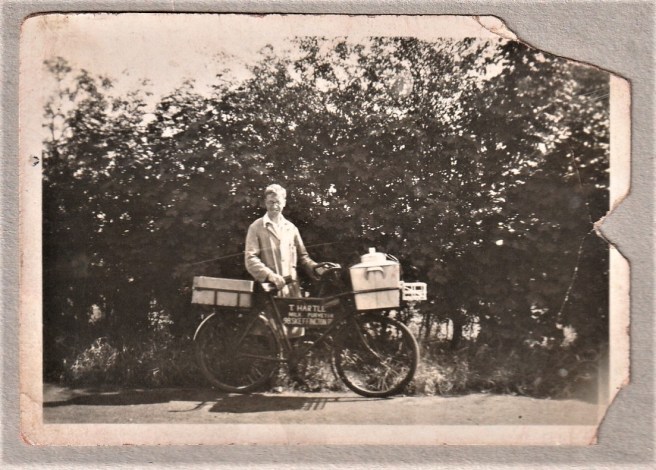
Europe was volatile throughout the 1930s, most notably leading to a right-wing dictatorship in Germany that would impact the whole continent and beyond. My father was spared military service because his was a reserved occupation. That must have been some comfort to my mother, who gave birth to three of my four sisters between the Julys of 1939 and 1945. Preston was not badly hammered like the nearby cities of Liverpool and Manchester, but it was hit. Everyone suffered the shortages, rationing and stress.
The war put a pause on societal progress. Great advances were made but they were in technology and manufacturing and would not benefit ordinary civilians directly until after peace had been declared hence the 1940s were, in effect, the extended 1930s. That is why I feel that when I finally appeared in 1956 my family home, town and country was only just starting to move on. All around me was the legacy of things put in place two decades earlier.
Politics had progressed but my parents remained entrenched in the attitudes they had established in the 1930s. Similarly, their religious beliefs and the way in which our family was conditioned to accept, cherish and express them, were subject to teachings disseminated at that time. Consequently, my schools and Sunday spiritual supplements were not just rooted in the past but chained to it at least until the mid-1960s. The church we attended was built in 1936.
The 1950s and 1960s
I don’t remember anything from the 1950s, except watching Watch with Mother on our first ever television which Uncle Joe Walton installed at the very end of the decade. My mother endured some medical concerns surrounding my birth. Thank goodness for the National Health Service – born 1948.
I didn’t feel the hand of the Rock and Roll decade on my attitudes anywhere near as much as the two decades that had preceded it. Preston tried to reassert itself during the 1950s and to some extent succeeded, but a significant component of the local industry was a direct beneficiary of wartime manufacturing.
The 1960s were passively experienced. I observed them in a detached manner, watching each of my sisters find boyfriends, fiancés, and three of them marry and start families. I loved the pop culture of this period, but I did not interact with it directly as I did not become a teenager until the final year of the decade. My sisters bought the records and the fashions and suffered the consequences of disapproval.
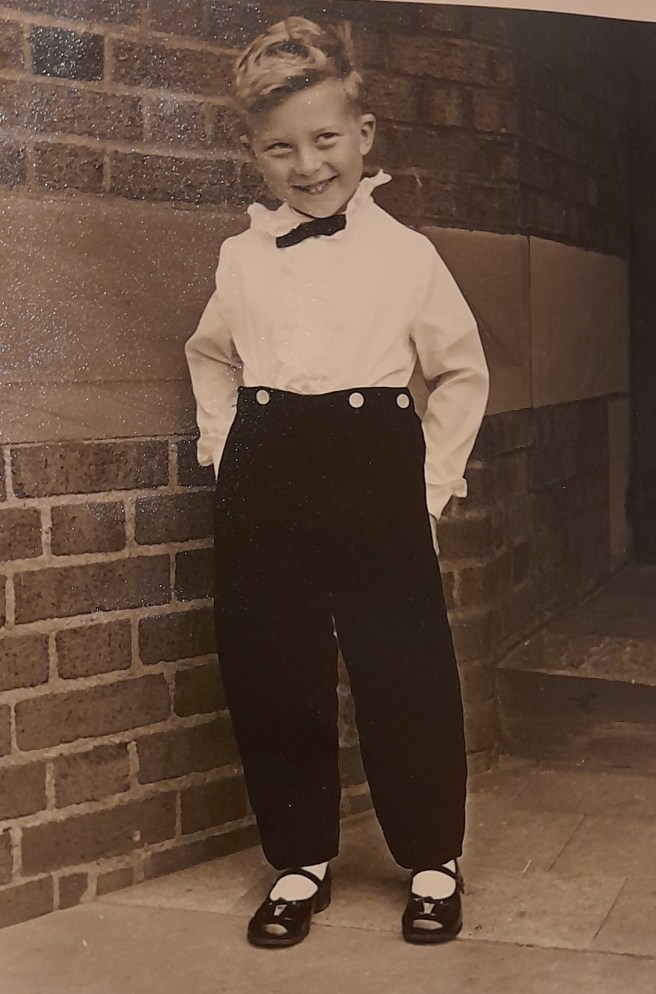
I still love a lot of music from this period but look back on this time as the decade that failed. I remember being uplifted by the inclusive and pacific vibes formulated by the late sixties’ counterculture. Strands of the philosophy linger on but seem to be increasingly crushed under the wheels of nationalism and prejudice so typical of the 1930s and 1940s.
Cultural legacy
The 1930s and 1940s dominated the cultural diet I was fed as a child. National and international culture was swamped with stories from the Second World War. Cinema and TV were impregnated with material from the two previous decades. Even the sugary The Sound of Music – my first movie in a cinema – contained Nazis. The movies I saw at home included The Dam Busters, 633 Squadron, The Longest Day, Reach for the Sky, The Wooden Horse, The Great Escape, and others. They entranced me by what I now know to be a significantly romanticised view of the decades just prior to my birth. I was too immature to see through their nationalistic bigotry. I do remember, however, being sobered sometimes on a Monday evening by the Granada Television Shakespeare quotation titled All Our Yesterdays in which each week, Brian Inglis showed newsreel footage from twenty-five years earlier. Shown in cinemas during the war, the images were starker than found in films, and the presenter’s droll tone delivered details and consequences that had been kept quiet at the time. I started to ponder.
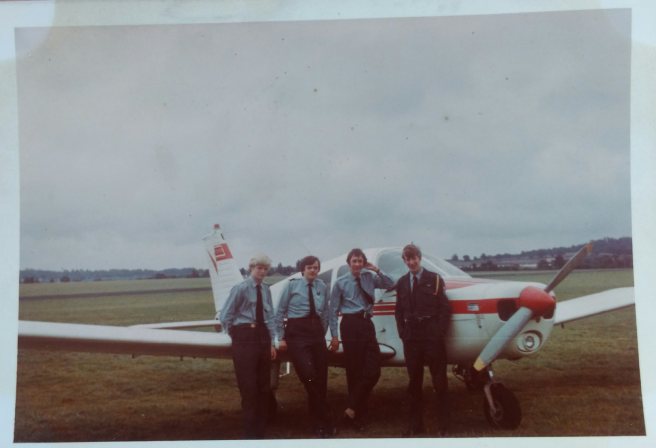
I read Enemy Coast Ahead by Dam Buster Guy Gibson and The Colditz Story by Pat Reid an escapee from Oflag IV-C. My childhood comic The Victor had two or three war stories every week including, usually, the cover story. This was the fuse to ignite my main hobby: making model aeroplanes. That in turn led to my interest in the RAF and their cadet force The Air Training Corps in which I served for five years rising right through the ranks and winning a flying scholarship – free flying training. I visited a dozen RAF bases, most of which had been built or extended to fight the Second World War. I wore a uniform indistinguishable from that worn by factual and fictional heroes who flew, and stopped flying, long before I did.
1970s and beyond
In 1970, as a new air cadet, I got to see The Battle of Britain movie every night for a week for free, between sorties to the foyer to jangle a collection tin in aid of the RAF Benevolent Fund. It remains my favourite war film. Made just a year earlier, it lacks the sanitisation of earlier movies. It boosted my desire to fly; but made me ponder more.
The ATC was the making of me. It toughened me up and significantly expanded my understanding. I can’t remember a single non-white face in my suburban junior school and only a handful at my secondary school, but in the air cadets I met first and second-generation immigrants from India and Pakistan. I was wary of them, but I admired their discipline, smartness, openness and loyalty. I also saw how they were strong friends with white boys in the squadron. I was particularly impressed by Corporal Ishtiaq who took me under his wing and one day invited me into his home because I was curious about his culture. His charming mother gave me tea that I’d never tasted before, and I was overwhelmed by the stylish décor of his house.
I became close friends with two Asian cadets, Altaf Hussein and Bashir Patel. At different times they called to collect me from my house and their politeness, smartness, charm, and humour entirely won over my mother and father. I was lucky enough not to have prejudicial disposition prior to bonding with these boys, but I was certain never to develop one after knowing them. Hence, for me, the divisive conflicts of the 1930s and 1940s, led indirectly to cross-cultural friendships in the 1970s.
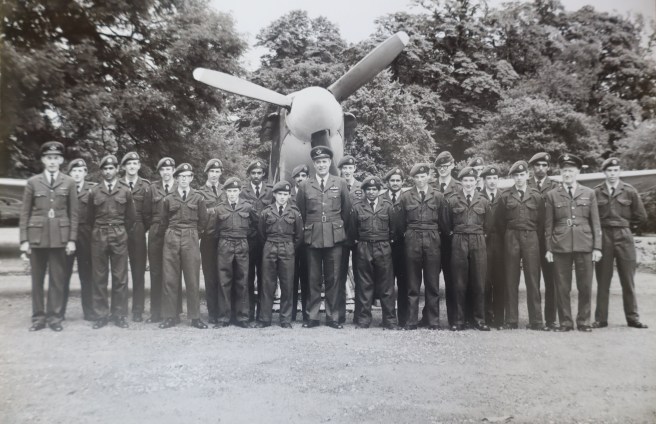
The ATC would also be key to coping with, and exerting, authority. I learned that respect had to be earned. I learned that motivation cannot be given but can be caught from someone who is genuinely infected by it. This knowledge was more valuable than any fact-based understanding that I would impart when, much later, I became a teacher and a manager of teachers.
I studied at St Thomas More high school from September 1968 until June 1973. This was one of the first ‘comprehensive’ schools in Preston – an educational idea formulated in the 1940s. All my teachers were products of the 1930s and 1940s, including those born prior to that, such was the universal impact of the war. This was true even of those trendy young things with surprisingly long hair or shockingly short skirts. I could not help being influenced by their minds and their musculature, but they were constrained by the regime of the headmaster, Mr Loffler, who strode into assembly in academic gown and mortar board hat, to remind us of the rules, of the road to eternal damnation, and the need to belt out Full in the panting heart of Rome whilst contemplating the mutilation of our patron beheaded by Henry VIII for putting popery before political expediency.
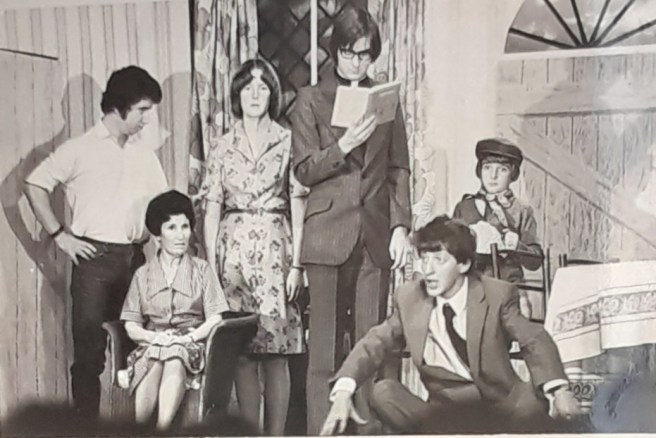
We were divided into Houses pitting the new foot soldiers of one martyr against another. Arrowsmith, Clitherow, Haydock and Southworth were the tribes. I was in the latter. Merits and demerits were accumulated for good and bad behaviour and written work. Stopwatches, Greek projectiles and bamboo poles settled the matter on sports day. The hockey sticks were never jolly, said my shins, but it all felt like our concrete and brick day school was really a public school in disguise, just like all those 1930s and 1940s movies still showed us. I even performed in the stage version of one: The Happiest Days of Your Life by John Dighton, written in 1947.
I also appeared in Without the Prince by Philip King (premiered 1940), Duet for Two Hands by Mary Hayley Bell (1947), and A Murder Has Been Arranged by Emilyn Williams (1930). This was as a member of my parish drama group established by my high school drama teacher, Lilian Riley. She instilled all the acting basics that I would later espouse over a thirty-year teaching career. Drama became the core cultural love of my life, but my first textual experiences were from the 1930s and 1940s.
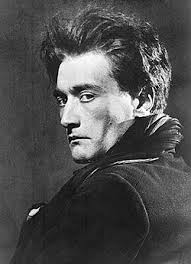
When, in the 1980s, I started teaching drama, my passport, and the book that literally changed my life, Impro, had been written by Keith Johnstone, who was born in 1933. The next biggest influence throughout my teaching times was the French actor, director and sometime surrealist Antonin Artaud. He was born much earlier, but his ideas remained somewhat hidden until after the publication of his seminal work The Theatre and Its Double in 1938. He died a decade later, in 1948. He described a revolution in theatre, a complete reboot of how drama should be done and presented, in many respects way ahead of his time. When I began evangelising his ideas in the 1980s, they seemed so new and fresh. They were already half a century old. The Lancashire theatre in which I’d grown up had been almost entirely ignorant of his techniques. Despite my best efforts, I fear it is much the same today.
In 1973 I moved to Preston Catholic College to study A levels, including Engineering Science, which I loved, mainly because it contained mechanical engineering and fluid dynamics which explained how aircraft were made and why they didn’t fall out of the sky. This was another direct consequence of those endless hours getting high on ‘plastic cement’ whilst rebuilding the Battle of Britain. My cadet service meant that throughout these years my hair was unfashionably short.
It was in 1973, whilst still doing drama the way my predecessors did, that I attended a gig at Preston Guild Hall that snared me to the greatest influence on my imagination and engagement with the written word. David Cousins, the lead singer-songwriter of the Strawbs rock group, remains an almost daily touchstone, half a century later and a year after his death.

Dave was born in 1940. During the six years that followed, his father died in a submarine and the man who would become his stepfather was held prisoner by the Japanese and made to work on the ‘death railway’. When Dave’s mother, Vera, married Jack Cousins, Dave lost his original surname to deflect any presumed shame surrounding his birth and eventually gained some half siblings who were educated according to a different religious doctrine. Those events informed some of his songs that found their way into my stereo speakers. Several of the most powerful were anti-war songs.
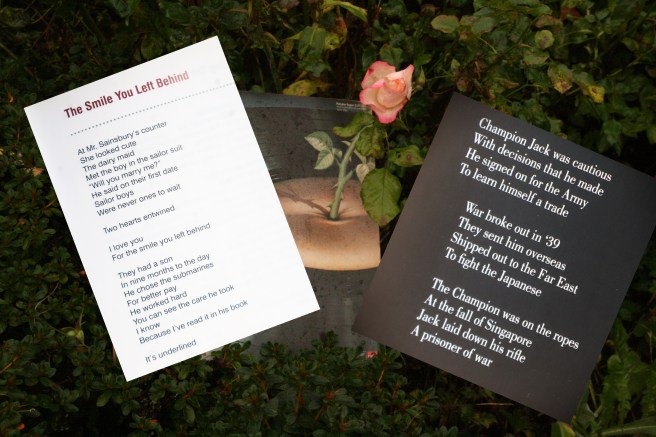
Another person on the ground in Burma during the final years of the war was a young RAF radar operator from Preston. He’d dodged the torpedoes on the way and the shells when he arrived, but a mosquito attacked and laid him low with malaria. Over 28000 of British forces personnel in Burma were killed and another 13000 died of disease. Luckily, John pulled through and when the war was over returned home, married and had three children. The youngest was born the day before my first birthday, and eighteen years later we joined forces and remain in lockstep to this day. If John had not come home, I don’t know where I’d be. Our children wouldn’t be anywhere at all.
Somehow, I scraped sufficient grades to go to the University of Manchester in the autumn of 1975 to read Aeronautical Engineering.
Biology the bully
Eventually biology bullied everything else aside, as it always does. Tiny changes in the performance of my left eye meant that reaching for the sky whilst wearing RAF uniform was no longer an option. I dropped out of university prematurely. I’m sure my father must have been disappointed that I gave up aero engineering in favour of unemployment, but he never said so. He couldn’t really. He’d given up even higher aspirations in 1932.
Casting off
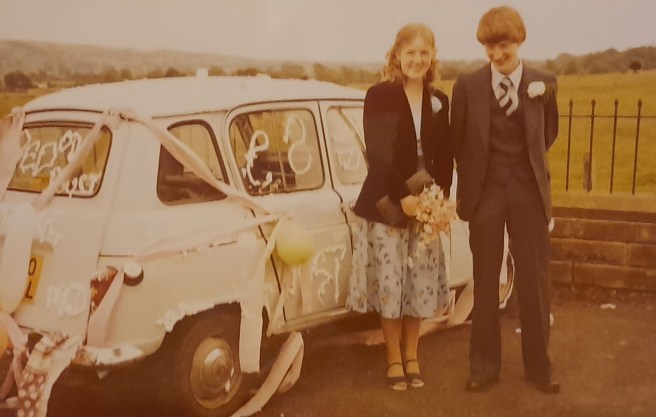
In rebuilding my life, I began to draw consciously on contemporary sources, without realising at the time, that they were the remains of what had gone before. For six months I was out of work, then for a year I was a bank clerk, then as a direct consequence of those war films and model planes leading me to an Engineering Science A level, I ended up back at the sixth form I’d left only two years previously to work as a lab technician. Marion and I married in 1979.
I listened to radio plays in the prep room, wrote one and won a prize. I’d gone back to amateur theatre and, disillusioned with those thirties and forties plays, I wrote a modern one, and won a prize. It was an anti-war play. Those two prizes helped jemmy open the door to four decades of making, staging and teaching theatre.
The two strands of playing and plane-making had finally entwined and by 1984 I was teaching drama, part-time at first, but in 1993 I was able to hang up my lab coat and don the worsted jacket of a full-time theatre tutor. My arts/science background proved perfect for teaching both the aesthetic and practical aspects of theatre production. None of that was planned; I owe it all to Hitler.
I am not a child of the fifties, nor was I fashioned by the sixties or refined by the seventies. I was moulded by the thirties and forties. Those were the decades that funnelled the key influences that would determine my tastes, my attitudes, my philosophies and my fortunes. Those years saw the start of two families that would splice together from the opposite sides of St Gregory Road, to form a third. I have always held a cosy nostalgia for the thirties and forties but I’m glad I did not experience them for real; they were not good times for the world. And they are about to happen again.
So, I celebrate not a seventieth, but a centenary. If you’ve been a part of it, however small, I thank you. If I’ve offended or upset you, however slightly, I apologise. I really didn’t mean to. In fact, I didn’t mean to do anything at all. It just happened.
For more thoughts
On Antonin Artaud see: The Alphabet of Artaud
On Dave Cousins see: Dave Cousins: poetry in lotion
On Keith Johnstone see: The man who wrote the book that changed my life has died
On my time in the Air Training Corps see: Tasting the pie in the sky


