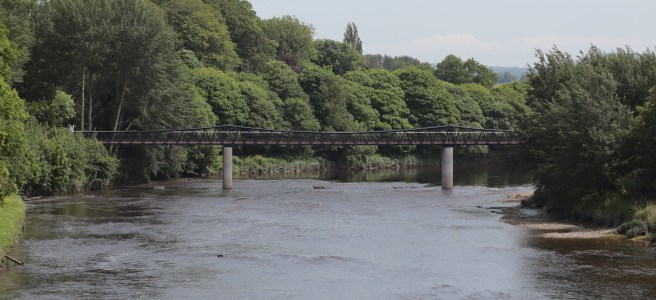
My home city’s newest bridge has opened. It’s been a long time coming. In another sense it’s been here for over two centuries. The much-cherished Old Tram Bridge spans the River Ribble at the eastern edge of Avenham Park, a green civic space close to the city centre. There’s been a bridge here since the start of the nineteenth century. This is its third renovation and the most radical of all.
History
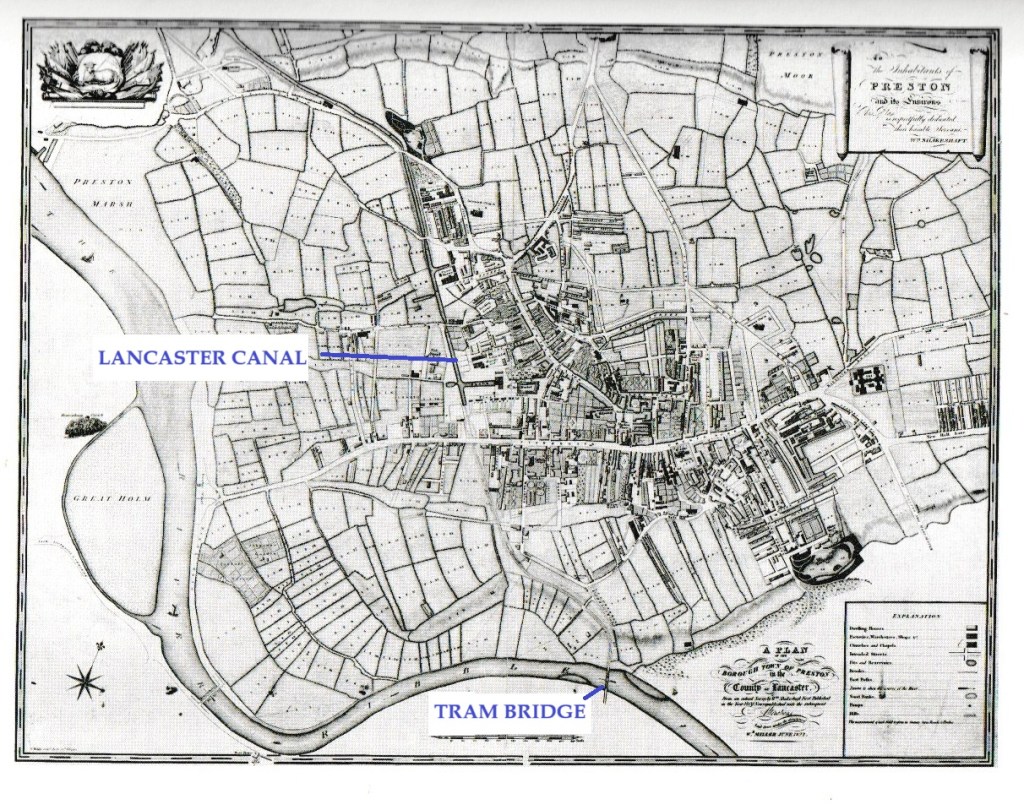
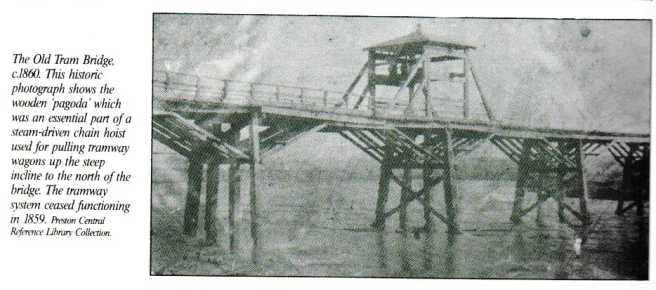
The bridge first opened in 1804 to carry a tram road over the Ribble. Initially, it had been proposed that the Lancaster canal would continue from the foot of its northern strand at the basin in Preston to Walton Summit where the southern component of the waterway continued. However, the structural problems and costs incurred by similar works over the River Lune near Lancaster persuaded the directors to opt for a ‘temporary’ alternative of laying a tram rail track to transport goods over the five-mile stretch. The tram road proved so successful that it was retained as a permanent solution.
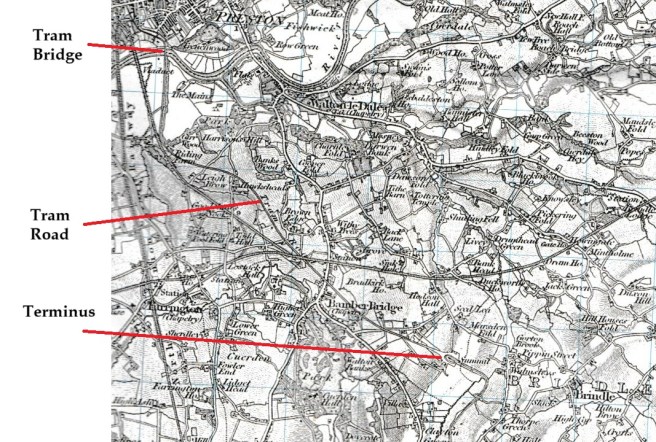
Parts of the southern strand of the Lancaster canal later became incorporated into the Leeds and Liverpool canal, with the spur to Walton Summit eventually disappearing.
The rails of the tram road were made of L-shaped cast iron plates with the vertical face keeping the wheels, which did not have flanges, on the metal tracks. For the most part, the wagons were horse-drawn, but at three inclines, stationary steam engines hauled the trucks using continuous chains. One such engine stood where the Belvedere is now situated at the end of Avenham Walk.
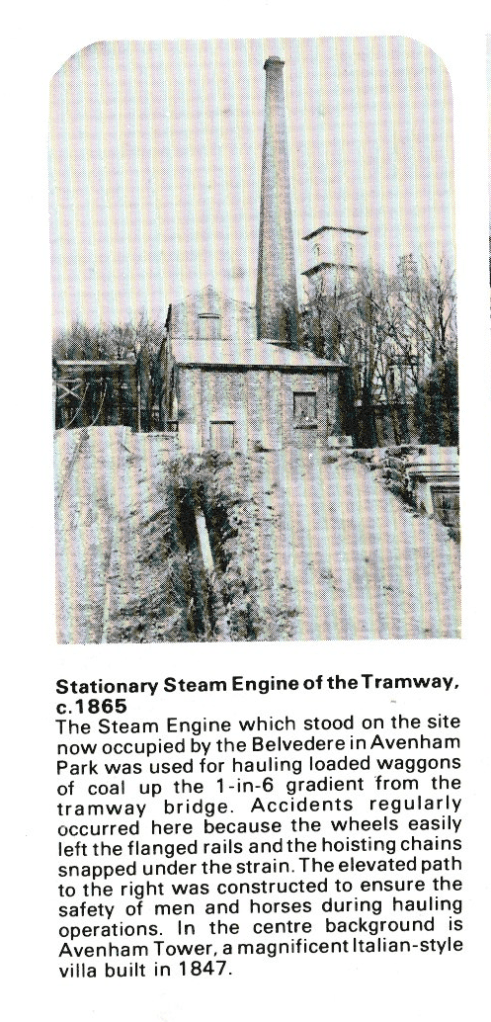
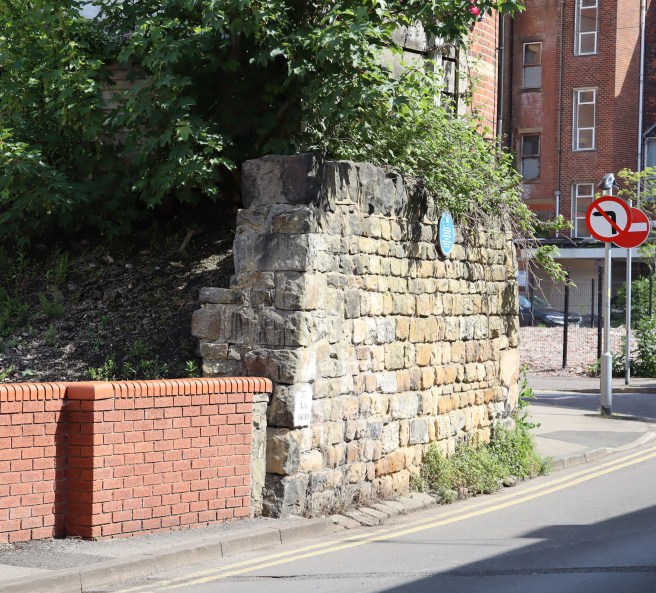
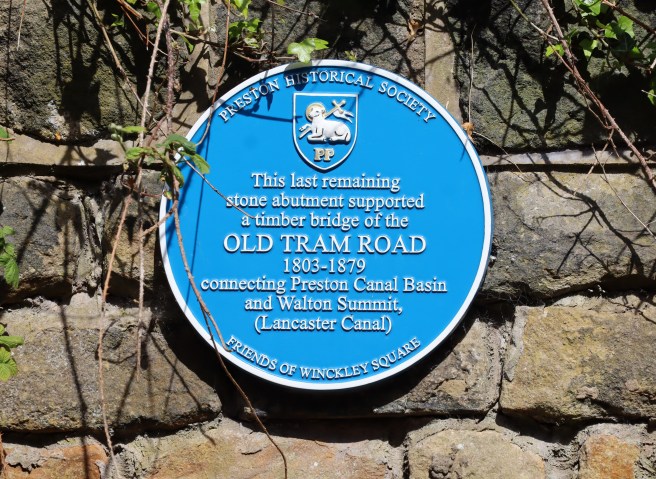
Incidentally, Prestonians still use the tunnel that took the trucks under Fishergate to and from the Lancaster Canal basin near the Corn Exchange. Now much widened, the tunnel leads to the Fishergate Centre car park. The remains of a bridge that carried the trams towards the river can also be seen forming a stone wall in Garden Street.
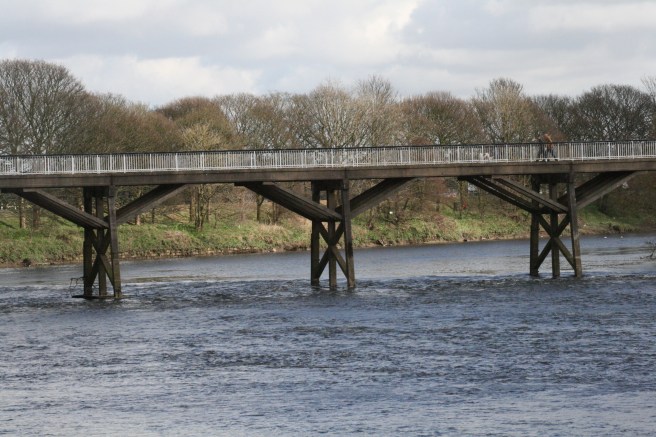
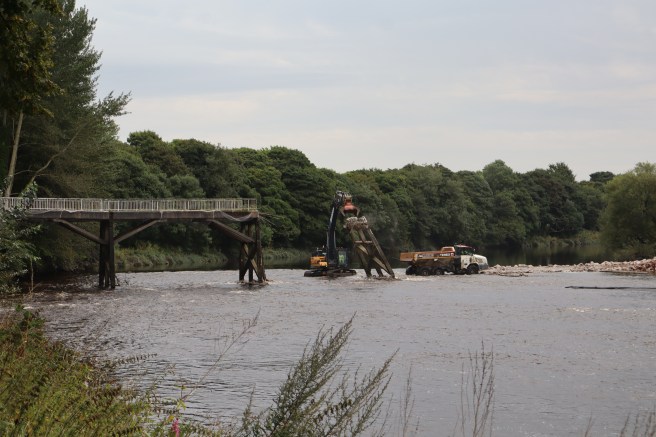
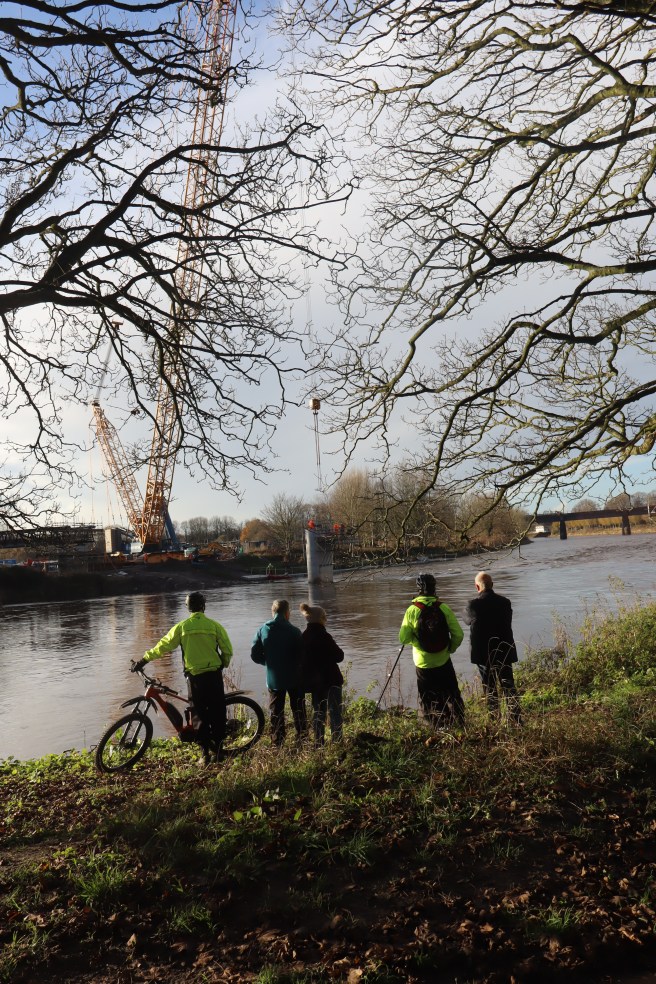
The tram road bridge over the Ribble was originally a wooden structure, but the timber trestles were replaced by concrete replicas in 1938 and the decking received similar improvements in 1966. Numerous safety concerns resulted in the bridge being closed in 2019. Work on the £8.2m replacement began in 2024, with the prefabricated sections being lifted into place during December 2025.
The new bridge
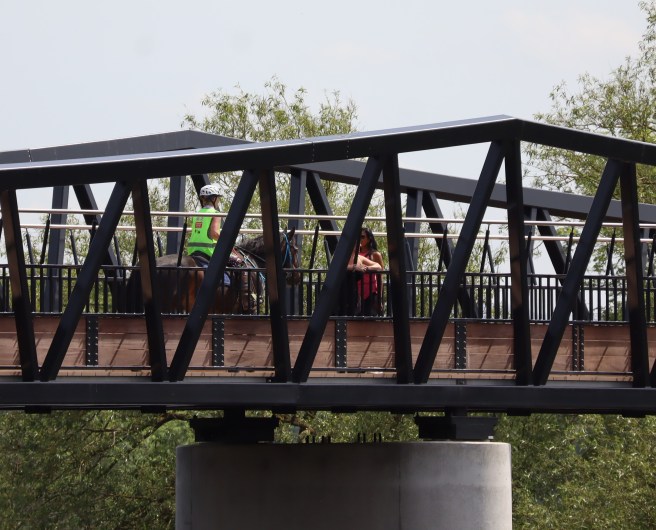
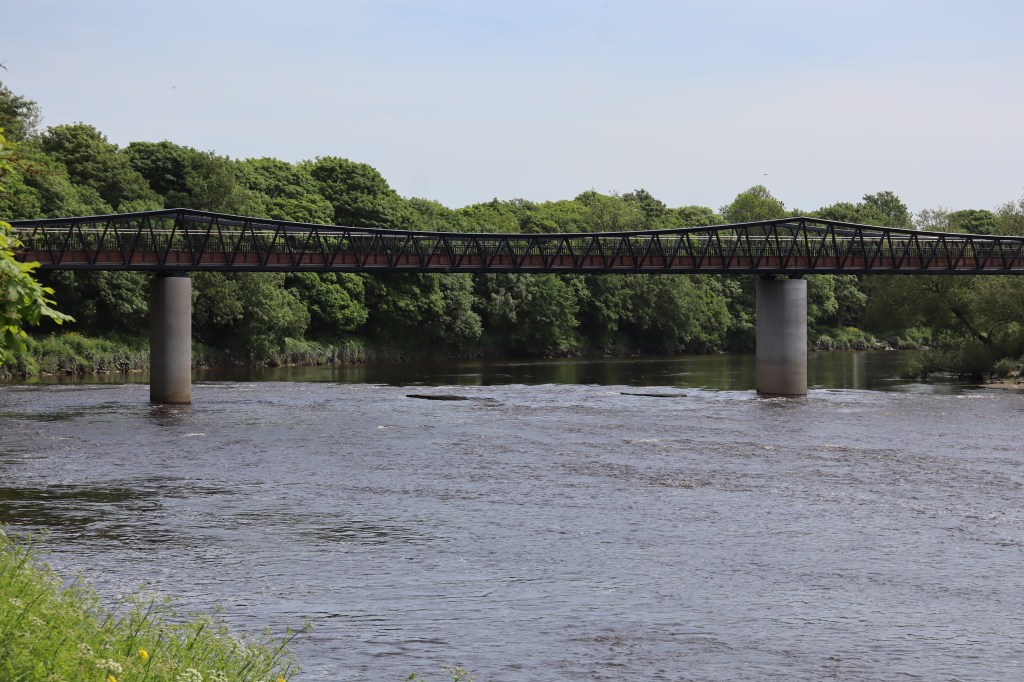
I had my reservations about the structure that might appear, but the new bridge is aesthetically pleasing and sits smartly across the water without ostentation. Its smooth lines have just enough curvature to soften the edges and present a more organic face.
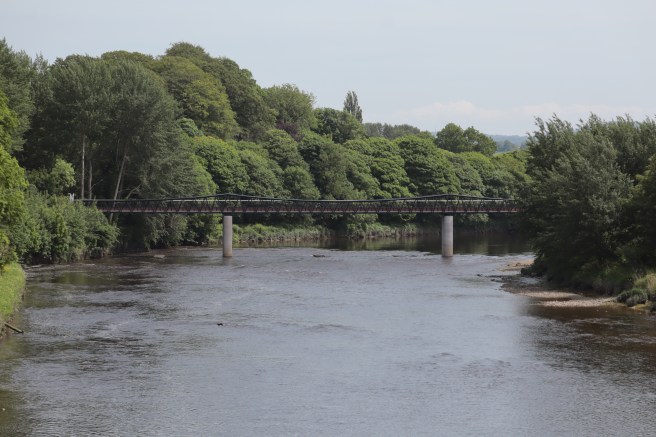
With only two pillars in the water, it has a simplicity yet looks robust and confident. The pillars are sympathetically rounded and in form and appearance collaborate with the Ribble. The flow seems happy to go with them, and they look content to paddle there. The pillars are fading to pale grey and the bulk of the steel, to my eye, is close to gunmetal grey. It neither competes with, nor completely blends with its surroundings. Its geometric frame has an assurance that looks at home among winter trees but softens against spring foliage. Its span appears longer than that of its predecessor. The previous manifestation had many more supports. ‘Look at me’ it seems to say, ‘I’m modern’.
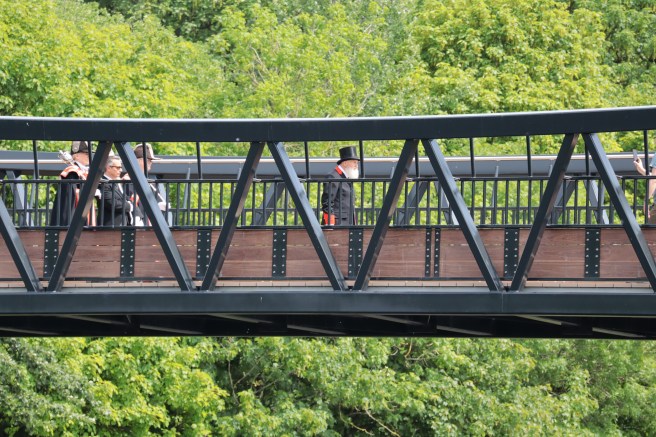
It wasn’t necessary to rebuild the bridge. It provides a convenient extension to the long tree-lined path that delineates the route of the historic trams, but the riverside paths lead to other bridges which also accommodate walkers and cyclists. I’m glad the new bridge has been built, however. It’s decorative and restores a recreational route that, like the park, grew out of commercial ambition and civic benevolence.
What is it about river bridges that people find important, other than the obvious convenience of not getting their feet wet while shortening their journey? Ultimately it is not a matter of what the bridge carries over, but of what goes under. It’s all about the river.
Bridges come and go, but the river, whilst never stopping, always remains. It is that ephemeral permanence that the river reminds us of as we look upon it. When the bridge has gone, the river will still be there; that was made clear last year.
When you stand on a bridge and look upstream, you can see what is to come. Look downstream and you can see what has gone by. Look straight down, and the moment is patently moving.
We are drawn to water even if we have a phobia of it. We are at its mercy. We cannot exist without it. We owe it all.
A prized memory
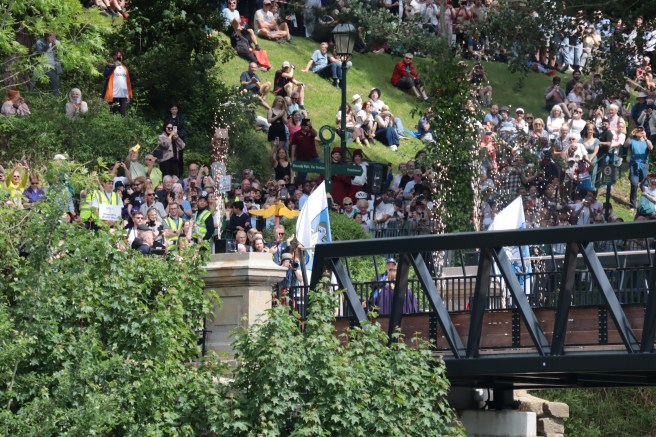
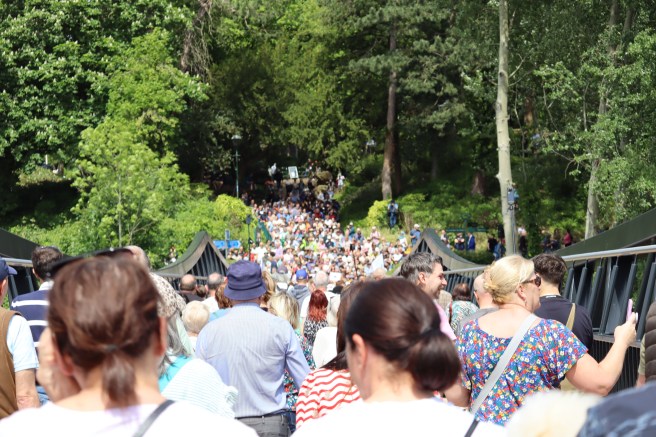
An estimated five thousand people turned out at 12:30 on 22 May 2026 to witness the opening of the new bridge. That multitude is testament to how much it is valued.
I suspect that countless local people have very personal links with this bridge. There was an outcry when it closed and significant local pressure was brought to bear to ensure that it was repaired or replaced. It is a much-loved walking and cycling route into the city, and it provides a delightful crossing point for rambling excursions from Avenham park. The return crossing can be made at the next bridge, five hundred metres downstream.
My family and I made many a trip across the 1966 structure, but there is one solo visit that burns in my memory.
In 1981, while working as a Laboratory Technician at the Catholic College in central Preston, I was making my first tentative pen-dips into playwriting. I’d had some luck with a radio play and decided to enter the Chester Community Council One Act Playwriting Competition for stage plays. I worked hard on a manuscript but hated it. I tore it up and tossed it in the bin. With less than one week remaining to the deadline, I scurried down to Avenham Park during my lunch break in search of a new idea.
It was a Thursday, I recall, about 1pm.
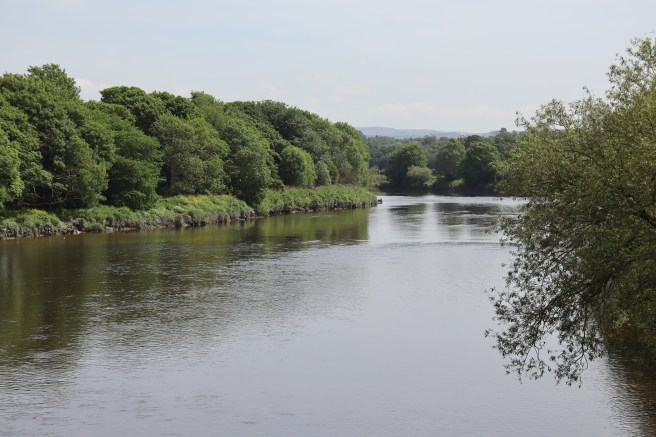
It was quieter than I had expected. I stood on the Tram Bridge and leaned against its railing. An old man – younger than I am now – walked past and went to sit on a park bench. A young woman jogged past and stopped to regain her breath by the same bench. They started talking, too far away for me to steal their dialogue. I turned and looked eastwards along the arc of the Ribble. There was no one in sight in that direction. Out of that emptiness there came an idea.
The new play won first prize.
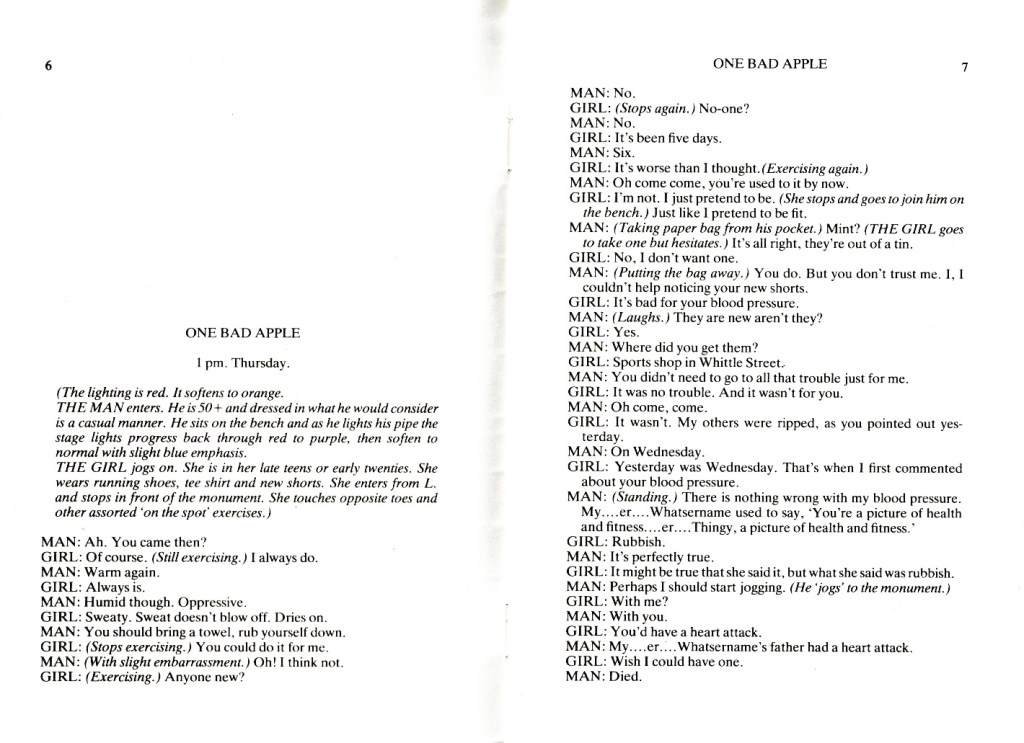
One Bad Apple was produced at the Gateway Theatre in Chester on 1st November 1981 by the Heswall Players. It was then given a two-week professional run as lunchtime theatre at the Thompson’s Arms in Manchester, directed by Tom Watt who went on to play Lofty Holloway in the original cast of the BBC soap Eastenders. The play attracted an Arts Council Royalty Supplement Guarantee which was very much appreciated, as was the confidence boost from the win. It was an anti-war play. It is a little dated now, and sadly, just as relevant as it was then.
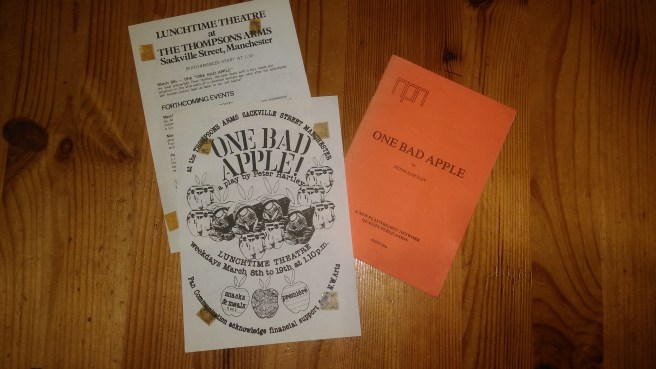
One Bad Apple was published by New Playwright’s Network and is very rare. Should you find a copy, it makes a very good beer mat, or coffee mug coaster.
Thanks, Old Tram Bridge.
You can read my latest story inspired by this structure in the previous post: Old Tram’s Bridge


