A review of a reissued and much travelled recording
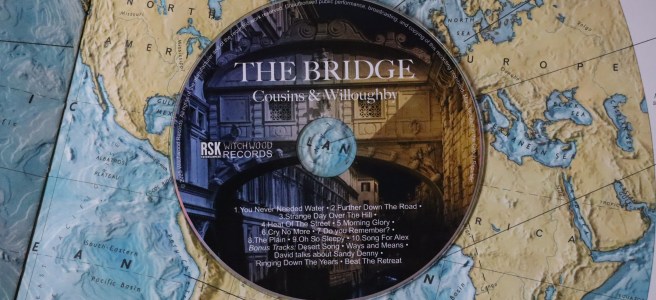
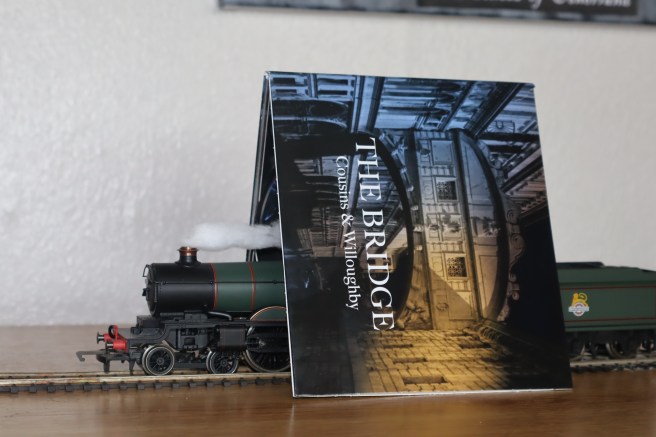
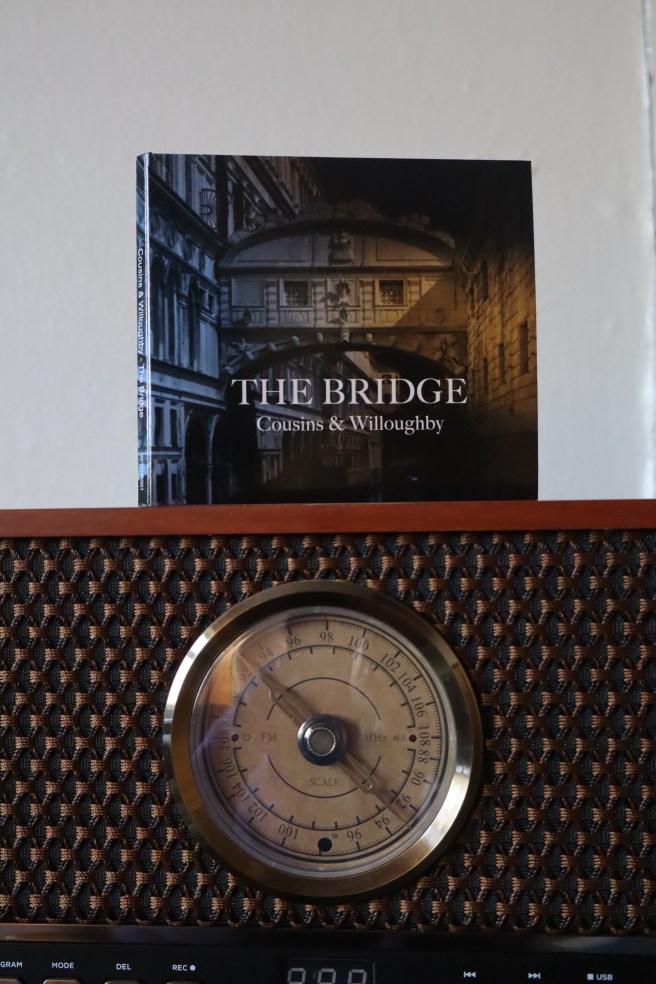
The Bridge by Cousins & Willoughby
I would have posted this review much sooner, but in a moment of desperate senility I pre-ordered it from a supplier in Cortland Ohio. I live in Lancashire, England; some 4000 miles away. I thought the postage was a bit steep, but when you are a grafted fan, you don’t count the cost. Precisely two months later, just prior to Christmas, and three weeks after its release, the CD was cheerfully handed to me by a festively jolly Preston postman.
This was a package that had not only spanned the Atlantic (probably twice) but also connected me with what my namesake L.P. Hartley described as ‘another country’: the past. They do things differently there, he said. Of course they do, they order physical copies of desired music rather than simply shouting at the AI spy next to the toaster.
Some people in the past are much further away: they are on the far side of a crevice that cannot be traversed. The death of Dave Cousins means The Bridge is a parcel from a country too far away.
I’d owned the rare original for thirty years in a cassette format, so I was familiar with most of the tracks. The exercise in hand, therefore, was one of comparison. What is the remix like? Does it resemble a relic? Or is it sound architecture spanning a bottomless fissure?
The building of The Bridge
Brian Willoughby joined the Strawbs just as their prominence had slipped behind the popular parapet. The band temporarily folded, but he and Dave Cousins started playing gigs as a duo. They issued an acoustic album of Strawbs classics entitled Old School Songs in 1979. It was over a decade later, in 1993, that they recorded this collection, of mainly new songs. Meanwhile, the band had reformed and was touring and recording again. The Bridge was seen as a link between the more intimate acoustic performances and those of the full rock ensemble.
It is important to point out that eight of the tracks on The Bridge subsequently appeared on the 2003 Blue Angel full electric album. That manifestation had the benefit of twenty-first century technical resources and a wider range of contributors, consequentially, some of the tracks do sound crisper and richer in texture on the Blue Angel album, but The Bridge has a unique charm and particular virtuosity arising from the special aesthetic engendered by the core duo plus some talented guest collaborators.
Sixties icon Mary Hopkin supremely enhances four numbers. Her voice and phrasing add a resounding gleam to the vocal chains of the lyrical carriageway. Meanwhile, sometime Strawbs Chas Cronk, Rod Demmick, Tony Fernandez, Richard Hudson and Blue Weaver supply the robust bolts to bind it all together. Only Cousins and Willoughby feature on all the tracks.
Remixing the cement
Blue Weaver has remastered this album. He joined the Strawbs when Rick Wakeman went affirmatively crusading. Blue played keyboards on two of the band’s best albums, before splitting from them when the seams burst in 1973. He later played with Mott the Hoople and on massive hits by The Bee Gees as well as extensively as a session musician with some very famous artists. He set up his own studio and rejoined the Strawbs on some of their 1990s and twenty-first century gigs and tours.
Blue has explained that he had very limited resources to work with in terms of the tracks available from thirty years ago, but he’s done a very decent job. Brian’s guitar parts in particular, come across with all the delicacy and intricacy that are the twin hallmarks of someone who deserves a far wider audience. Brian has to be one of the very, very best guitar players of the last fifty years and Blue showcases his talent, sensitivity and emotional artistry wonderfully in these re-mixes.
So how does it all pan out?
The second span
The remixed edition of this album was released in November 2025.
This is exactly what you would expect from Cousins and Willoughby: potent poetry and plucking brilliant playing.
Mysteries of ancient wonder. Endless plains, open roads. Sleepy mornings, strange days, wakeful nights. Ends that are beginnings and starts that never end. Secrets of smiles. Devotion in disguise. Vows kept and broken. Lips cut and closed. Memories ringing down the years.
Track by Track
You Never Needed Water (Cousins)
A raunchy love letter of resentment. Hints of Country here. Two guitars, campfire drumming and vocals that counterbalance the bitterness with survivor’s jollity. Brian’s lead guitar leaps like a naughty angel and we get a forceful feel of how their live performances must have imprinted on the atmosphere of intimate venues.
Further Down the Road (Cousins)
Written on the night that Cousins left DevonAir Radio the station he had run for seven years. A heart-stretching epistle of moving on with mixed emotions.
Strange Day Over the Hill (Cousins)
This charts some of the moods the songwriter felt at the start of a new relationship, one that would lead to his third marriage.
Heat of the Street (Cousins)
Brian goes full electric on this joyful dancefloor filler. Leg-empowering guitar licks and life-affirming lyrics. It’s a lot of fun. Cousins describes it as ‘a pop song and nothing more’.[1] If it had been released two decades earlier it could have been a big hit, though at that time it would have been out of step with the image of the band. This number is re-named as Rhythm of the Night on the Blue Angel album.
Morning Glory (Cousins)
This is a really lovely love song. Its poetry captures one of those moments in which we suddenly notice meaning in the mundane. It is one of those typical Cousins songs in which he draws the profound from the everyday personal. Catchy yet unique. A song outside of time, this could have been written any time in the last ten decades; or the next
Cry No More (Cousins/Willoughby)
Triggered by the name of a band not unrelated to the Strawbs, this gives due prominence to Blue Weaver’s keyboard threads which intertwine beautifully with the silk of Mary Hopkin’s vocals, Brian’s sensitive strings and Cousin’s worsted words. Another song that any crooner could turn into a classic.
Do You Remember (Cousins/Willoughby)
An old school song: memories of teenage trepidity, adolescent adventure and wistful nostalgia. Great fun. Great memories.
The Plain (Cousins)
This song pushed its way high into my favourites when I first heard it. It is inherently theatrical (see below) and therefore it is not surprising it appealed to someone steeped in drama. It has a Godot-like feel. Music and lyrics form a bleak dialogue. Brian’s guitar is a lone chorus character, observing, commenting, questioning, while Dave’s protagonist narrates a circular plot. The bleakness of Samuel Beckett and the sound of existential despair in four concise acts.
Oh So Sleepy (Cousins)
Another contrapuntal song in as much that the tempo and energy are at delightful odds with the sung sentiment. You can’t sleep through this one.
Song for Alex (Cousins/Hooper)
This song dates back to 1968 when Dave Cousins and Tony Hoopper wrote it for the Scottish folk singer Alex Campbell who sung it at the Cambridge Folk Festival the following day.[2]
For me this track typifies the duo at the heart of the album. Just Dave and Brian on this one, and it closes the album proper. The production on this simple song is especially strong, adding to its gravity. It sums up the bittersweet experience of any performer on the road. Friendly faces everywhere it notes but a careless word can make you feel so sad. It engenders the fragility of the entertainer and reminds us of the gratitude we owe travelling troubadours.
Bonus tracks
To my ear, there is a slight drop in audible quality here. There is not a fundamental difference and it serves to re-emphasise the live setting of these additional recordings. The change in clarity is partly down to Dave Cousins’ voice.
I am a huge fan of DC, but I’ve always upheld that his voice is an acquired taste and has not always been the most eloquent or clear. It did steadily improve in consistency down the years, but I was always grateful for the lyrics in the sleeves of the LPs of my youth and frustrated a little when they did not appear – notably on Cousins’ solo album Two Weeks Last Summer. It wasn’t until good old Dick Greener created Strawbsweb that I finally discovered what some of my most treasured lyrics were actually saying. One of those songs was Ways and Means, one of the bonus tracks on this disk.
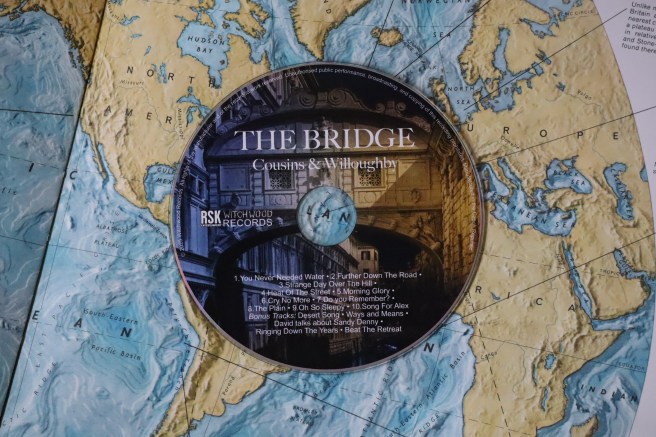
This lovely little CD comes with a booklet of lyrics but not for the bonus tracks. If you are uncertain what DC is singing, follow the link above and seek out the lyrics page.
Desert Song (Cousins)
Good to hear a live version of this, but I prefer the studio rendition on the Heartbreak Hill album.[3]
Ways and Means (Cousins)
Another song I have much loved. It first appeared in 1972. Written while DC’s wife and children were on the beach.[4] They may be the heart that gives the athlete strength to win I discovered thirty years after first hearing it. Contains a quaint capturing of Dave’s chuckle as Brian’s fifty-mile-an-hour fingers skid slightly out of control.
David talks about Sandy Denny
This is a charming inclusion of an anecdote Dave often related. The spoken interjections between songs were a legacy of the Strawbs formative folk-club days. Dave Lambert has cited it as a fundamental reason that he was drawn to the band. He realised how much those links added to the entertainment of the audience. They didn’t just give context to the numbers, they brought contrast and helped to establish a rapport with those of us who were paying to be included.
Ringing Down the Years (Cousins)
This track is fully explained by the previous one. It is nice to hear the title song from the second Virgin label album stripped back to just two guitars. Brain is especially tender in his playing here.
Beat the Retreat (Cousins)
Also on the Don’t Say Goodbye Album. (See Virgin Years.) This rendition very much echoes A Song for Alex, in mood, and hence closes the collection with a similarly satisfying conclusive sentiment.
Strawb and dance show
I know from my friend, the theatrical entrepreneur Peter Rae, that Dave Cousins was keen to see this album form the basis of a musical theatre production. (Pete persuaded DC to do a bit of acting in a film he made.) Pete discussed the Bridge project with me. I said I felt it had theatrical potential but might need one or two of the Strawbs better-known tracks to boost the commercial appeal of the project.
The Plain provides a wonderful plot spine and just about every other track could be used to flesh out the structure in entirely convincing ways. There is searching and discovery, joy and melancholy, wonder and philosophy, love and loss. There are easily enough songs for a fistful of core characters plus some crowd-pleasing climactic numbers.
I believe Pete had just put pen to paper before Dave left on his final journey.
In summary
I always give a Strawbs album several spins before forming an opinion and I ensured this pressing had the same treatment despite having owned the original for three decades. I find it to be a very worthwhile remake. It lives up to its name in several ways.
It does bridge that gap between the full electric band and the more intimate, smaller set-ups. Like a finely engineered iron viaduct, the structure of the architecture is laid bare here and there, and we can appreciate how the guitar girders and lyrical chains are beautifully crafted and melded to enable us to get from one aspect to another. All hail, Isambard Kingdom Brian-Will.
It is also a welcoming bridge into the Strawberry Hill soundscape for those who have not ventured this way before. It’s a solid and welcoming introduction to the band. None of the tracks are too extreme, yet all are impressive. It’s a low-risk gift for the mid-ground music lover. Just double check that your supplier of choice is on the same side of the Atlantic.
And it is, as a consequence of the accidental nature of natural events, a timely, and emotionally rewarding bridge offering us a glorious glimpse towards that place where David Joseph Cousins now resides. Too far away.
Related posts

For a fuller discussion of Brian Willoughby’s contribution to the Strawbs (and that of guitarist Dave Lambert) see my previous post Virgin Years.

For an appreciation of Dave Cousins lyrical work see Dave Cousins: poetry in lotion.
For a theatrical appreciation:
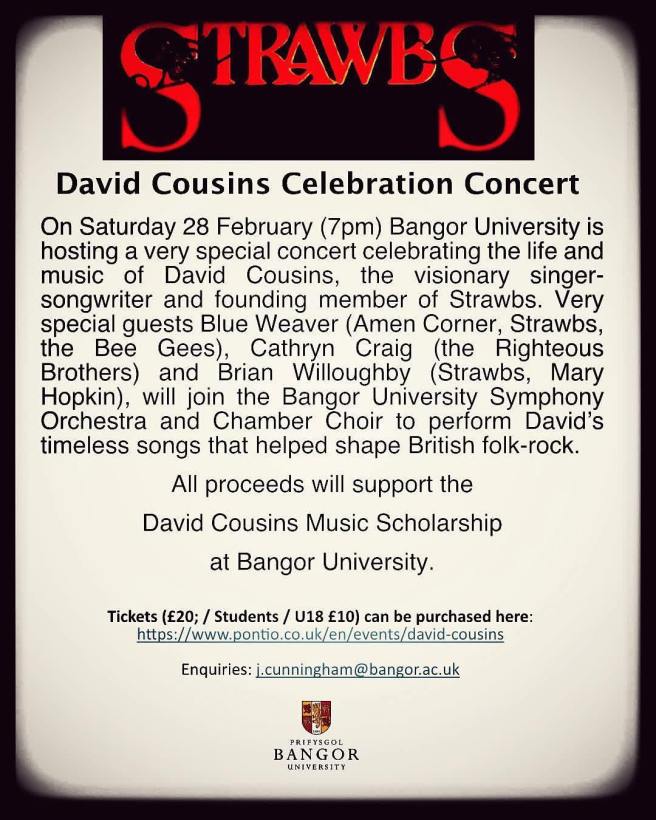
More information here: Bangor University David Cousins celebration concert
References
[1] Cousins, Secrets, Stories, Songs, Witchwood Media, 2010, page 294
[2] Cousins, Secrets, Stories, Songs, Witchwood Media, 2010, page 60
[3] See Heartbreak Hill
[4] Cousins, Secrets, Stories, Songs, Witchwood Media, 2010, page 126


One thought on “A Bridge from too far”