An appreciation of the David Cousins Celebration Concert at Bangor University
I am as the world forever spinning
Rekindled by the early rising sun
I’m as the road that’s ever winding
A never-ending journey just begun
David Cousins: Ways and Means
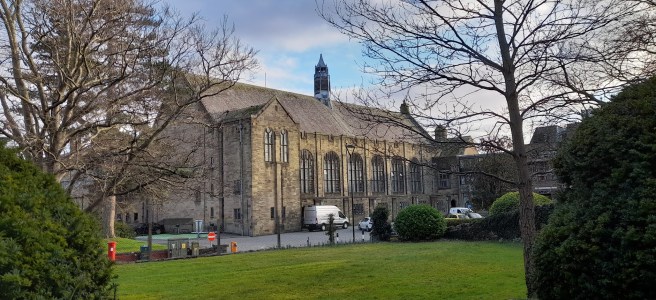
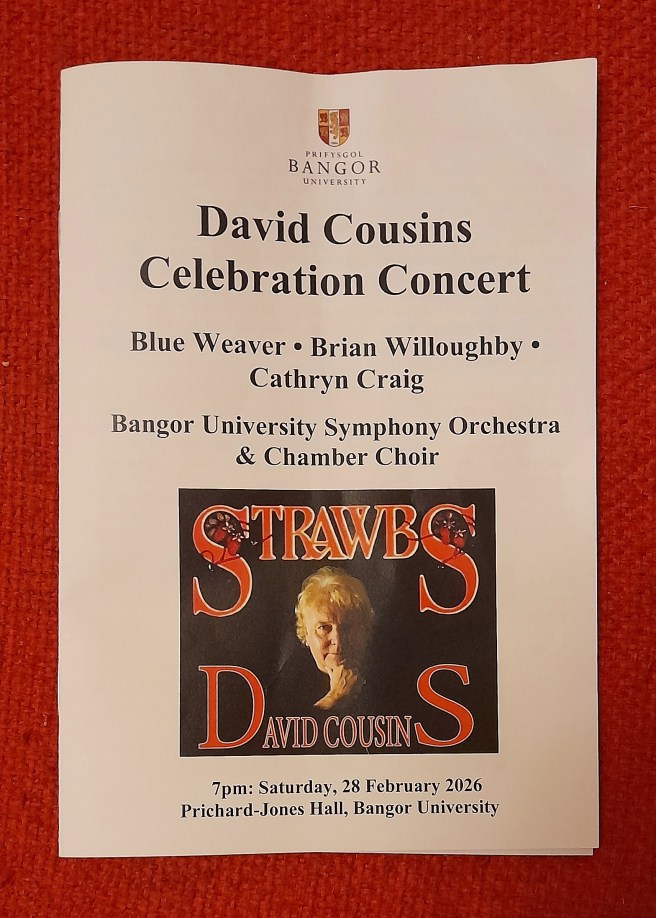
There is always an unanswerable question whilst witnessing a tribute to a departed artist: what would they have thought of it? That question was tempered somewhat when Edmund Burke, the Vice Chancellor of Bangor University, delivered his introduction to the David Cousins Celebration Concert held in the magnificent Pritchard-Jones Hall on the evening of 28th February 2026. David would have approved, because it was his idea.
Evergreen
I hasten to add that a memorial tribute was not David’s intention, but a concert in which a number of his songs would be performed by Bangor students had been suggested by the songwriter as the next step in his collaboration with the University’s Music department. David had very much intended to be there and take part, though he would only sing three of the songs. The others would be performed entirely by young people. Edmund Burke told me those songs – the only three Cousins decreed should be included – were Benedictus, Blue Angel and The King. David’s death in July of last year, turned a proposed collaboration into a commemoration. There was sadness here certainly, especially for we who had prior association with DC and his work, but that was far from the overriding mood. This was a night not of endings, but of new beginnings.
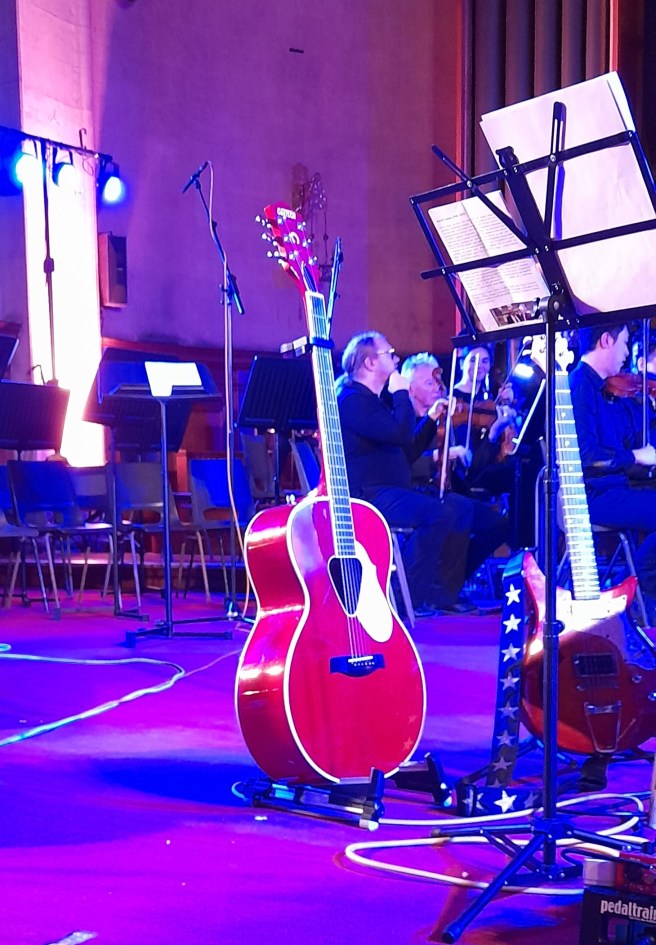
Professor Burke drew our attention to Dave Cousins’ guitar, positioned down-stage centre. This was now the property of the University, as the singer had bequeathed it to the institution with one condition: that as well as being displayed, it should be played. And played it was, on many of the songs that followed. Last year, David had delivered two lectures here: it was the last time he played live.
Edmund Burke’s intro changed my entire viewpoint. He explanation revealed that David Cousins had once again reached out for the hourglass to turn it face about. We were no longer looking back, but forwards. This was not just Cousin’s protégés’ tribute to their deceased benefactor, it was also his living gift to them. Far from being a cabinet of antiques and musical curios, this gig was a showcase of new talent and rejuvenated treasures.
Stay awhile
When former Strawbs guitarist Brian Willoughby alerted me to this event some months ago, my companion and I decided that we would make a weekend of it. We booked our room in the University’s Management Centre which placed us precisely one minute from the Pritchard-Jones Hall. We drove from Preston to Bangor on the Friday and took a late afternoon familiarisation stroll, to be rewarded by the muffled chorus of Blue Angel, cherubically winging from the leaded windows.
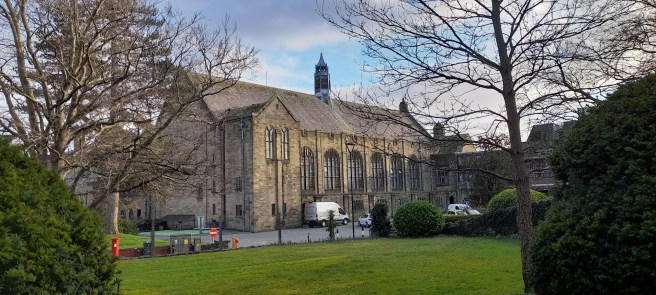
It seemed to me that there was no better venue for hosting the compositions of someone who described his music as gothic rock.[1] Gothic, the 1911 hall is not, but it has that vibe. We encountered a pair of tourists who asked us if the church was open. We said it wasn’t a church and I showed them the poster that explained our reason for being there. The featured artists and group name meant nothing to them. They were older than those who would be doing the majority of playing and singing at the concert. That is the kernel of the priceless joy at the heart of this event. DC was not wielding the baton; he was passing it on.
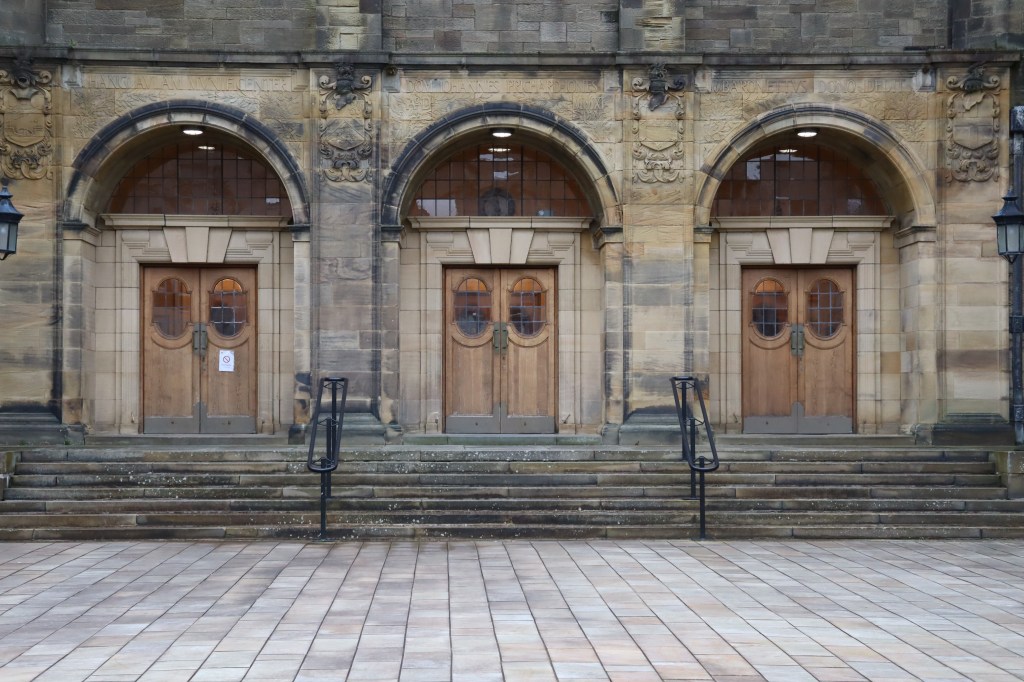
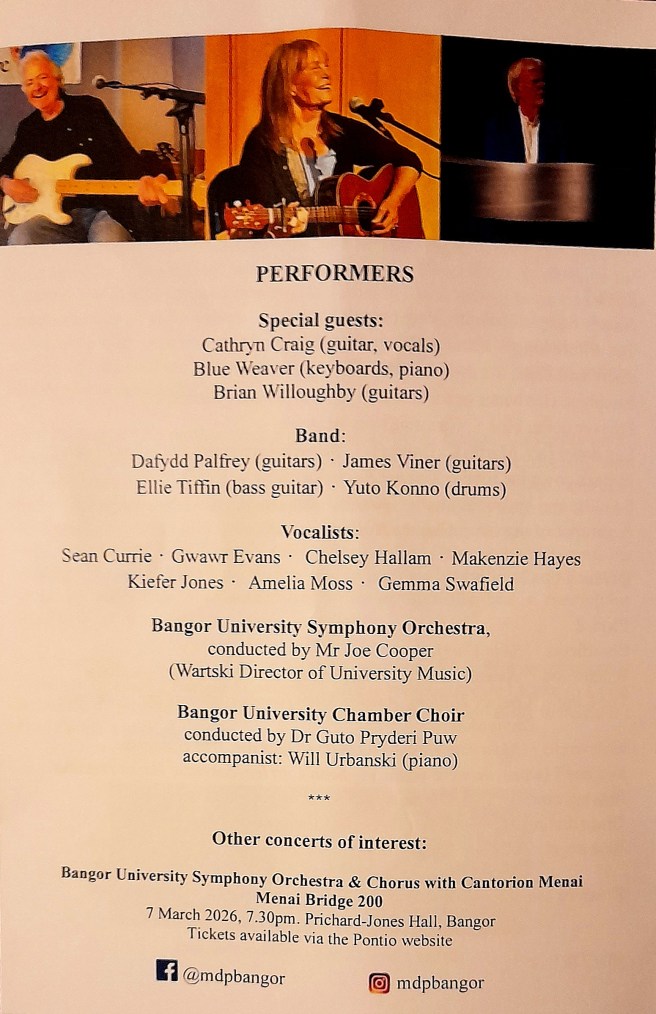
Had Cousins been able to participate in the event, I’m sure he would have, in his inimitable witty manner, provided some background to each composition. That task was taken in hand by one of the three guest professionals, singer Cathryn Craig. I had glimpsed her through the locked courtyard door window when I took another circuit of the Pritchard-Jones exterior on Saturday afternoon. (I was rewarded once more with escapee Blue Angel notes.) She was perched majestically alongside the sacred red guitar, as indeed she was when we entered to take our seats that evening, and there she remained right through the show, including the interval. She conducted proceedings in the manner of a benevolent Brechtian matron of ceremonies. She gave context, but also donated something even more valuable: a warm, supportive introduction to the singers and musicians. She was Mother Encouragement, invaluable to nervous novice entertainers about to play and sing in front of ancient folk who may know every word and note by heart.
Where is this dream of your youth?
Thoughtful planning had gone into the performance schedule. The early numbers were thinly structured with fewer components slenderly arranged. They gradually grew in complexity with more musicians and additional vocalists. By the end of the evening, we were being served by the entire assembly of singers, choristers, orchestra and rock ensemble. Cousins was always a careful curator, a skill he said he learned when presenting radio programmes way back in the 1960s. I feel he would have approved of the format of the setlist.
There were some delectable decisions made by the collective producers. I have at least fifteen recordings of Lay Down, and I have seen it played live on some twenty-five occasions, but I have never heard anything in the style of the inspired and inspiring arrangement by Martin C. Brasier and delivered by the university Chamber Choir conducted by Dr Guto Pryderi Pugh.
Similarly, Joe Cooper’s orchestra-wrangling took me right back to my sofa-sloth teenage days summoning up romantic dreams to ever-revolving vinyl tracks some of which had been embellished by orchestration. It was marvellous to experience that fuller sound live and just as refreshing to hear familiar pure folk or rock numbers newly decorated with classical strings and wind.
The most uplifting aspect, however, was the sight and sound of young voices wedded to old favourites. These youthful cantors were at least two generations adrift from the one that spawned and first harvested this strawberry fayre. Their new attire suited them well. The longer they were on stage, the more comfortable they looked.
Rhythm of the night
The concert started with the one song on the schedule that was not written by Cousins but is another track that he hoped would be used. Cathryn summoned her husband to sit alongside her. Brian Willoughby explained that he had written Alice’s Song, after being inspired by his autistic niece. The Acoustic Strawbs had recorded and released the track in 2002 with royalties going to the National Autistic Society, who adopted it for one of their awareness campaigns. The rendition was the first to spark a tear in my eye. We have an autistic daughter. Jenny loves the Strawbs songs. At her insistence, she and I duet on the fortnightly drives to her home from ours. One of us is always perfectly in tune, and it’s not me.
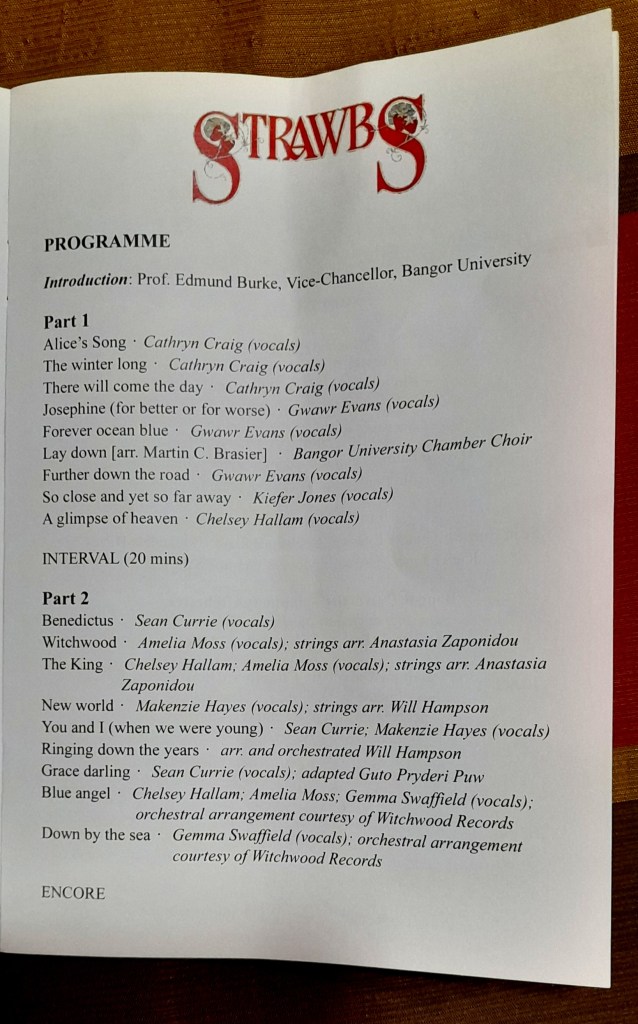
The next two numbers were performed in the reverse order to that printed in the programme. Cousins composed several anti-war songs in his time. He often complained that he still had to sing them. Whenever he went on tour there was a new war to add contemporary relevance. Cathryn alluded to our troubled times. Another conflict had been triggered just hours before she sang the second song. There Will Come the Day was written in response to the siege of Sarajevo in the 1990s but it put us in mind of more recent hostilities. The guest artists were to the fore on this and the wedding favourite, The Winter Long, that followed it. Vintage Strawb Blue Weaver came to the piano while Brian played another of Dave Cousins’ former guitars.
From that point on Cathryn was mainly confined to hosting duties, Brian added guitar here and there, and Blue, after giving up the principal piano stool to Will Urbanski, sometimes augmented his cords with electronic keys. Now and then, Blue wondrously scrambled up the steps to the magnificent incumbent pipe organ on numbers such as Glimpse of Heaven and Benedictus. The spotlight was very much refocussed onto Bangor students for the bulk of the show with the special guests not regaining prominence until the encore. This was another lovely aspect signifying the rejuvenating theme of the evening.
The students and staff served up a smorgasbord of Strawbs classics from across the last sixty years from Josephine for Better or for Worse, the tribute/apology to Irish writer Dominic Behan’s wife Josephine after bringing her husband home in a non-vertical condition at the start of the 1970s, via Forever Ocean Blue the tune used as an end of broadcast close-down song for DevonAir Radio which Cousins managed in the 1980s, to Further Down the Road the song he wrote on leaving that station in 1991.
In this half too, were the previously mentioned Lay Down and Glimpse of Heaven, two songs with spiritual ambiences the former being a blend of the 23rd Psalm with magic mushrooms.[2]
On the original 1972 Lay Down single (the first Strawbs disc I ever bought) Blue Weaver applied the three settings of the now antiquated, but then ground-breaking, mellotron. According to Cousins’ autobiography, Blue used strings for the first verse, organ for the second and choir for the third. Now a living choir had it all, but by giving the dominance to different vocal ranges on each verse we were treated to a rendition that was recognisably the same yet almost entirely different. Their enchanting delivery was rounded off by the raising of their arms, not in supplication, but in regeneration, launching their spirits skywards against the backdrop of the pipe organ spires. That organ, I understand, was installed in 1973, the year Lay Down appeared on the Bursting at the Seams album.
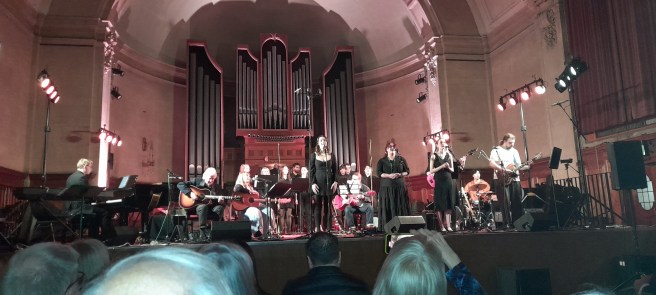
Part two picked up where part one had left us: in heavenly environs. From the sacred blessings of Benedictus we descended devilishly into Witchwood. This was another subtle triumph. Three female vocalists found herbal harmonies making the lyrics reek of suspected mischief firmly rooted in feminine confidence. There was a discernible boost of energy. The vocal performances had been strong throughout, but now I detected a deeper security. The songs were no longer simply being sung, they were being embodied.
That ownership continued with the rejoicing anthem of The King, a song inspired by the rising sun. Then we were hit by the musical howitzer that is New World. Detonated by the ‘Troubles’ of Northern Ireland, and the title track of what one reviewer called ‘the Sergeant Pepper of folk-rock’, this song takes no prisoners, but singer Makenzie Hayes, had been firmly recruited by it. Her delivery became visibly physical with her hands straining towards the gestural. The lyrics were living within her.
She remained onstage for a complete mood change as she was joined by Sean Currie to share You and I (when we were young) a song about Cousins’ boyhood friendship with fellow founder-Strawb Tony Hooper. (Ah! came the exclamation from someone a few rows back.) Delectable.
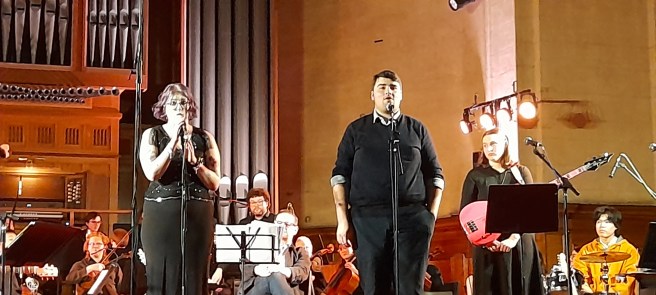
And then there were none: no vocalists at all. This constituted another clever production twist. Just as we were in danger of becoming overcome by lyrical wrenches the words were taken away. Ringing Down the Years, Cousins’ paean to singer Sandy Denny, was served in vocal silence set against musical magnificence. It really worked. Those of us who knew the words could inwardly overlay them if we wished, those who didn’t still got the melancholy of the melody, the depth of loss, the weight of gratitude, the cherishing of remembrance: the orchestra said it all.
And so we arrived at the culmination. I couldn’t have been more pleased. The three final scheduled songs were my favourite trio to be presented in reverse order.
There are two distinct versions of Grace Darling on record: the original 1974 track from the Ghosts album and Brian Willoughby’s remarkable 1990s relaunching. I like both but prefer the latter. I was, however, delighted, by this ghostly remake. Cousins’ song is a lyrical entwining of the history surrounding the Northumbrian lifeboat heroine and his feelings towards a contemporary ‘lifesaver’. The 1974 recording (released in 1975) was made using the choristers of Charterhouse School and I never expected to hear a live version with that manner of accompaniment, but here it was. I shivered at the similarity and was gratefully haunted by it.
Then came the hymn that had taunted me on my immature reconnaissance expeditions. Blue Angel alighted and became the pinnacle of the entire evening. It is a complex song. Composed in three sections it throws up multiple challenges for musicians and singers. Chelsey Hallam, Amelia Moss and Gemma Swaffield vocally took flight to sing words I’d only ever heard sung by Cousins before. The orchestra invigorated the arrangement provided by Witchwood Records and the whole ensemble catapulted this song to make it the crowning glory amid a priceless cache of musical jewellery. Magnificent.
Down by the Sea was the song that drowned me in 1973 and so my delight was sustained as the end of this unique voyage came into sight. This was another of those treats I never expected to experience. I played my original vinyl LP so much that I bought a second copy a couple of years after the first, and DBTS was the most worn track. It has the biggest of big endings when the guitars, keyboards and drums indistinguishably meld to the orchestral labyrinth of the sound seascape. Here now, fifty-three years and three days after first hearing it I was presented with a live replica of the studio original. This was yet another instance of hearing a much-loved song sounding so familiar and yet so novel. After literally thousands of listenings, this was the only time I had ever heard it sung by a woman. It was an identical alternative, different but the same, an old adage turned into a new truth.
I was thrilled to be able to thank Gemma in person for delivering my two favourites so meaningfully, and I also snatched a word with, to my mind, the maestro of the new breed, drummer Yuto Konno who replicated every beat with uncanny precision. He, in common with so many of his accomplices grew stronger and stronger as the concert progressed.
The young performers gave almost flawless performances. The problem with a one-off like this is that the show cannot bed-in. An odd word slipped here and there and sometimes microphones were a tad tardy in opening, but the show looked and sounded superb. The sound balance was just right with the singers given due prominence, and they in turn gave the best vocal clarity I have ever heard on some very familiar songs. They were generous in their acknowledgement of their comrades but less so in response to our responses. I would have liked them to acknowledge our thanks with their thanks more noticeably with just a few more nods and smiles before they stepped back. That kind of response can build the audience contribution still more. We all hate arrogance, but at times they were just a little too modest. Their achievements were monumental.
The journey’s end
The encore was an exquisite pleasure-pain. The guest artists came back to the fore but perpetuated the spirit of the evening by sharing the limelight with their young colleagues, and what a job Sean Currie did. This was a consummate arrangement. A musical wreath of poignant beauty. The instrumentalists were the flowers; the singer was the hand-written sentiment. Sean not only understood the lyrics he totally grasped the meaning in the moment. My eyes moist up even now, as they did then, when I recall the mood he made.
Beat the Retreat was clasped within The Journeys End. The former is about withdrawing when feeling defeated and the latter about leaving this grave new world for another. The arrangement took us from the journey to the retreat and back again to the end. Sean’s classical tenderness carved these rock songs into a headstone dedication. His careful phrasing and empathetic emphasis etched an everlasting inscription.

The smile you left behind
The old grey man with his heavy load no longer needs a friend were the last of Dave Cousins’ words we heard. David is beyond the needs of friendship now, but his legacy lives on. Some of his future royalties will benefit the provision for young musicians at Bangor. He has given them so much and on the last day of February this year he gave them the most generous gift of all: an audience. The protégés did not disappoint. This was an evening I will always remember.
And so it was, on the north coast of the Land of Song, and on the eve of St. David’s Day, young performers became the bright lights that Mr Cousins had seen shining a little way further down the road. They did as he requested and lifted from him his heavy load. He has reached his journey’s end, while their stint on the never-ending journey has just begun.
They played and sang like true angels, and treated him most kindly, down by the sea.
Notes and references
The headings used here are all song titles used by David Cousins.
[1] Dave Cousins’ commentary on the Live at Chiswick House DVD, Witchwood Media 2002
[2] D. Cousins, Exorcising Ghosts, Witchwood Media Ltd, 2014, page 167
Related posts
My tribute to David: Dave Cousins: poetry in lotion
To understand my obsession see: Savouring Strawbs
My review of Dave, Brian and Blue’s latest release: A Bridge from too far


