Park and pride in Preston
At last, after a promised three-year wait had been stretched into four, it was back into the cultural stronghold of my hometown to see how well the temple had been titivated and to seek a rendezvous with my favourite painted paramour. Would she still be available?
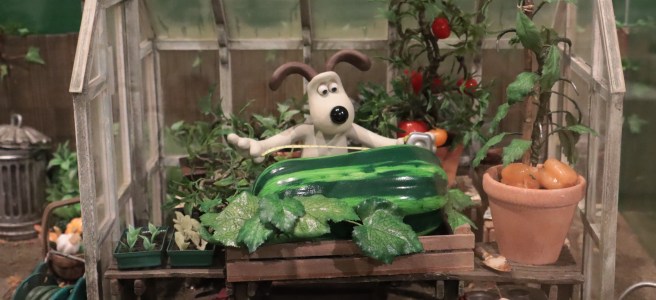
I knew other individuals would be there: plasticine people who have gone right around the globe, but who originally sprang from Preston. The special exhibition chosen to relaunch the Harris is designed to provide a new perspective on a grand day out. Oscar-winning animator Nick Park grew up near here, went to school here, took, and still takes, some of his inspiration from here. His work has come home. Call in before it goes.
The legacy
The Harris Museum and Art Gallery opened in 1893 funded by a £300,000 bequest from Preston Lawyer Edmund Robert Harris. Designed by architect James Hibbert it is a magnificent neoclassical structure housing some significant artworks and providing a home for the city’s central library. It closed in 2021 and has undergone a £19 million renovation with money from a variety of sources including the National Lottery Heritage Fund. So, was it worth it?
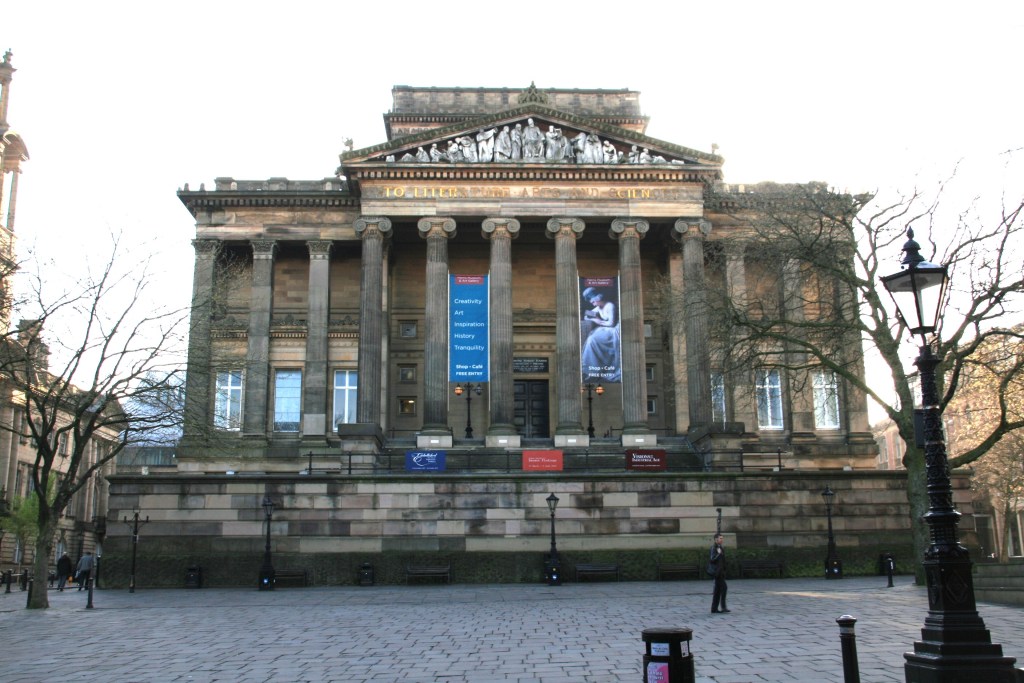
There is now an additional main entrance. The longstanding ‘hidden’ gateways are back in service. The imposing facade overlooking the market square hides its doors from the frontal perspective because the twin gates are just around the corners of Harris Street and Jacson Street, but during the 2020 Covid Pandemic the entrance from Lancaster Road was opened and this is now a permanent ingress leading directly to a reception desk which also services the lending library and gift shop. The latter was previously tucked into the stairwell either side of the door from the market square vestibule.
A lot of the work was done behind, beneath and above the scenes to tackle a long-standing damp problem. A number of unexpected complications arose, hence the additional twelve-months of labour and escalation of costs. At the same time, the organisation of the gallery and library spaces was reviewed, and steps were taken to improve access and the quality of the facilities.
Round and round
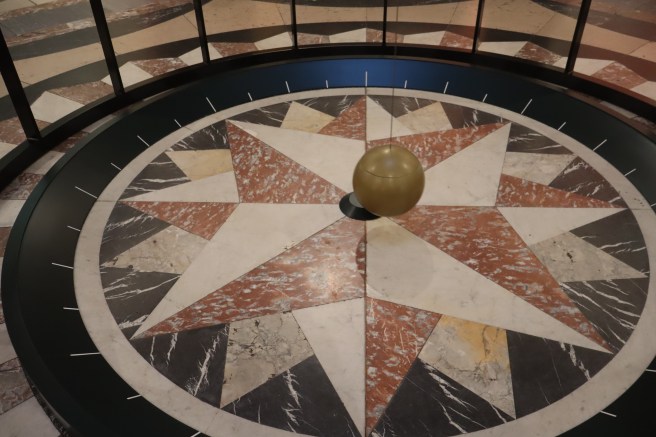
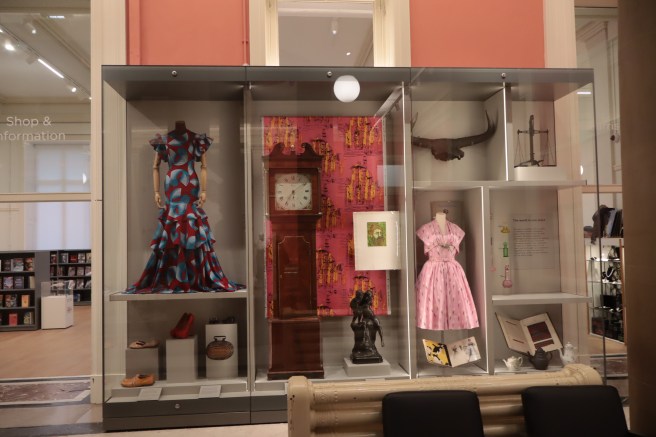
I was much heartened by the main exhibition and circulation spaces. The central rotunda is splendid on each level. The 35 metre Foucault Pendulum is now central, rather than awkwardly offset and it is aligned with the floor pattern and hence hypnotically describes the movement of the rotating earth on the tiles whilst also taking the eye right up to the bright natural lantern of the ceiling above the Egyptian gallery. Artworks have been freshly assembled along with new cabinets and together they make the initial inclusivity statements that have been placed at the centre of the rebranding. This ground floor space provides a foretaste of the art and artefacts you will find above. It also outlines the foundation of the museum and illustrates some of the key influences on the collections.
The lending library is pretty much as it was, though significantly smartened up. A new family-friendly section has sprouted. Gone are the days when demand meant nearly all books had to be displayed by spines only. Lots more now show their front covers, perhaps partially hiding their diminished numbers? I pessimistically predict this type of book-lending is on borrowed time.
What was once the south wing of the lending library is now the café. I can see the sense in this relocation in terms of efficiency and hygiene, but I will miss the opportunity to loaf on oak seats among the pillared arcadia of the rotunda and imbibe caffeine whilst my fellow Prestonians dodged the steampunk radiators that had once warmed tailcoated bums. The radiators are still poised, and there are benches and chairs here, but the caffeine is now imbibed elsewhere.
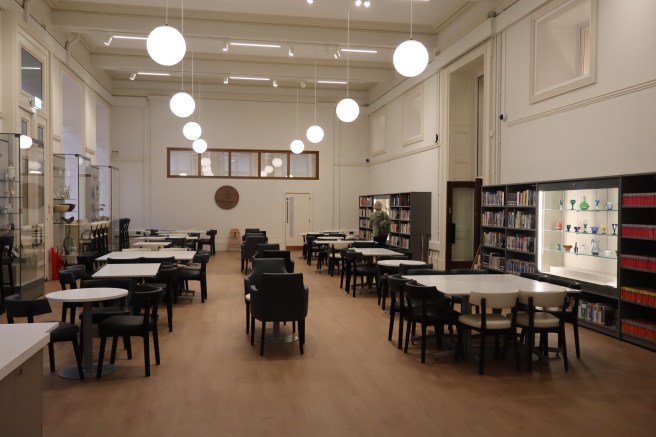
A few books and some display cabinets line the café walls, but the ambience is less Harris and more generic. This could be any refreshment room in any museum. There is no doubt, however, that it will do more trade this way, and good luck to it. The museum is free. Buy a cake at least.
Linking the café to the original foyer is the mysteriously named ‘No 9’ room. I was informed that this is a multi-purpose space now with a nod towards a young adult readership. It is the room that changed my life way back in 1984 when it was the Music & Drama library.
Ups and downs
The main split stairway is now stripped back. In years gone by, displays would chaperone the ascending visitor with small works at shoulder height while the landings were bedecked with large canvasses. The larger works are gone from this space, though some of the paintings from there have been rehung elsewhere.
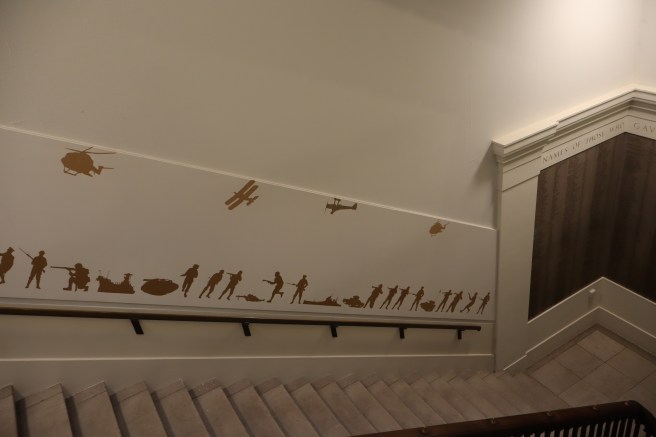
Of course, the engraved lists of war-dead remain. These memorials are extended now by military friezes climbing the stairs comprising silhouettes of fighting men and machines in a 2025 work by Khaled Hafz entitled Dwelling Histories: Cottonopolis. It seeks to mimic the style of Egyptian hieroglyphs in its depiction of modern military motifs and hence illustrate a reflection on the British occupation of Egypt, in part to secure imports for the cotton trade. I have reservations about this exhibit. Despite my youthful military links, to my mind, the sketches stretch commemoration towards celebration, and I’m not at peace with that kind of thinking. Without reading the context card the meaning is obscure, and the video screens don’t help. The two large carpets connecting the silhouettes with the eye of Horus are slightly less uncomfortable, the latter being a god of health and protection, and thereby counterbalancing the violent imagery of the soldiers, but the viewer is unlikely to grasp that equilibrium if they lack the wider background knowledge.
There is a more profound artistic statement needing to be made about our city’s colonial cotton foundations. I’d rather hoped to find one somewhere in the Harris following the museum’s reflective retreat. I’m still hoping.
First floor
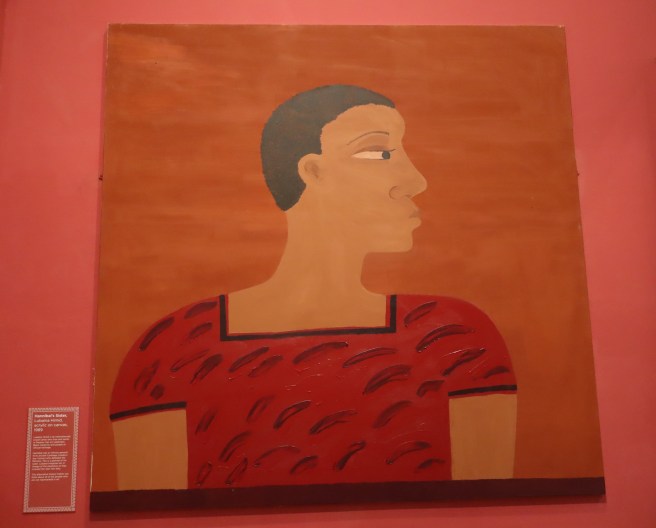
I was particularly pleased to see Lubaina Himid’s Hannibal’s Sister given prominence. You’ll find it on the first-floor balcony where there is a selection of other exhibits from various cultures, including a corner documenting Preston’s pioneering Caribbean community.
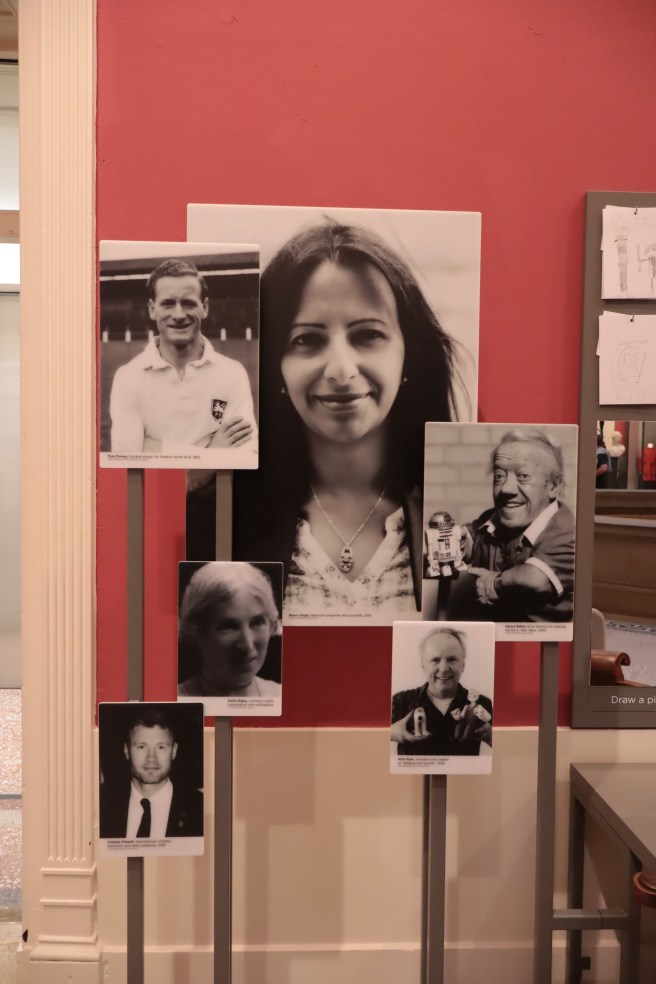
The local history Discover Preston exhibition looks to me to be more or less as it was. It’s rich in intriguing charm with old curiosities spanning the eras from locally unearthed prehistoric antlers to Freddie Flintoff’s cricketing cap.
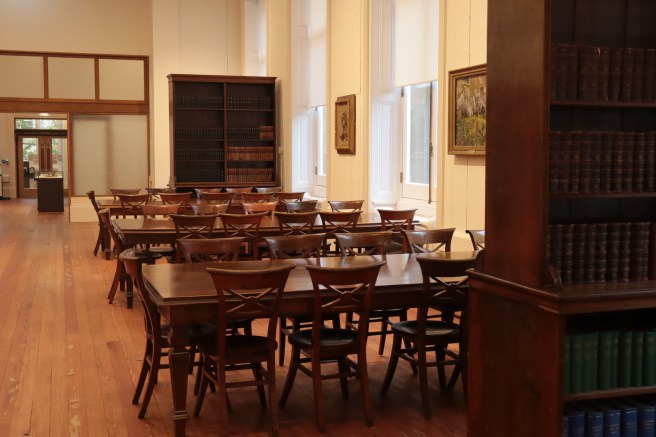
On this floor you will also find the reading rooms where the history is not just on the walls but in them, and in the furniture too, giving the impression that you are not just researching the past, but leaning on it.
At the moment, it is the temporary exhibitions that provide the abiding afterglow. We’ll get to Wallace and Gromit in a melting moment but first let me mention Saroj Patel’s draped textiles.
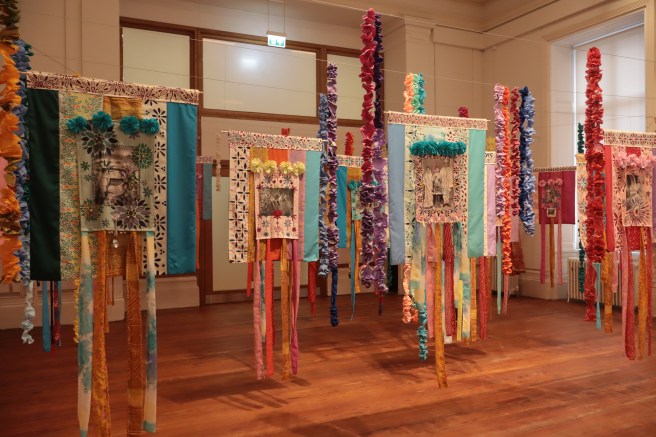
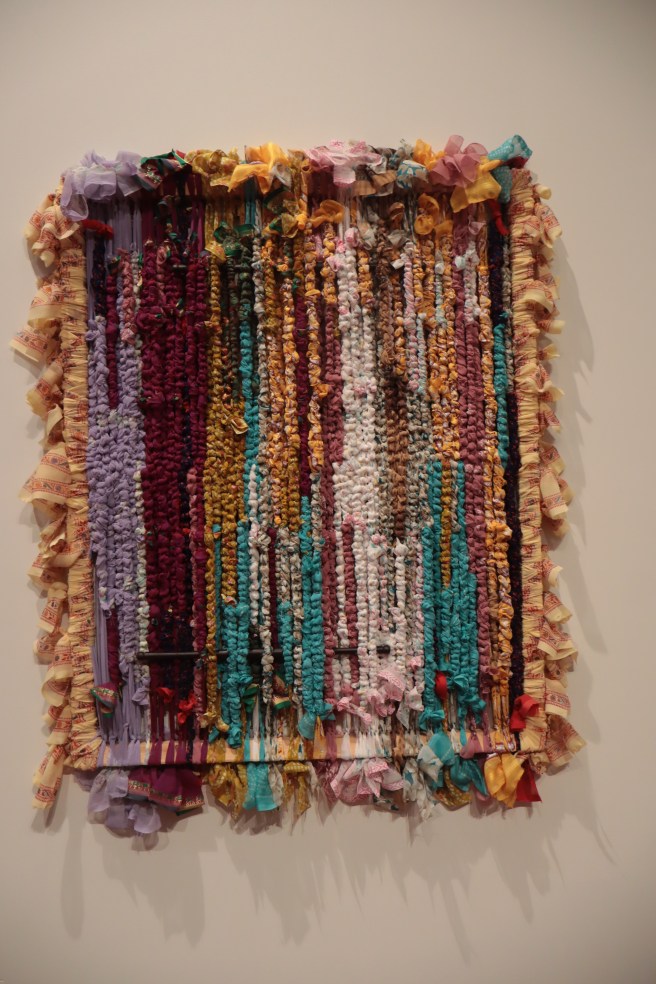
This copse of colour is intertwined meaning. Entitled Ocean Mother it is a celebration of South Asian motherhood by Preston-born Patel. The woven warmth and travails of maternal experience visibly abound. The spectacle irresistibly summoned me through the door and made me wonder as I wandered through its resplendent tendrils. The mother I know best made one of them ring. I can still hear it.
Second floor
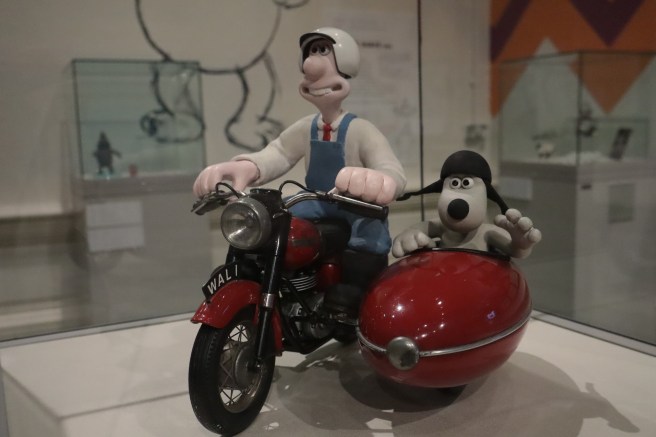
And so to the main feature. Wallace and Gromit never fail, and their Case at the Museum preserves that reputation. The exhibits are the real thing. They are some of the actual models made for the franchise films. Blast off to the second floor to find them in the flexible flesh.
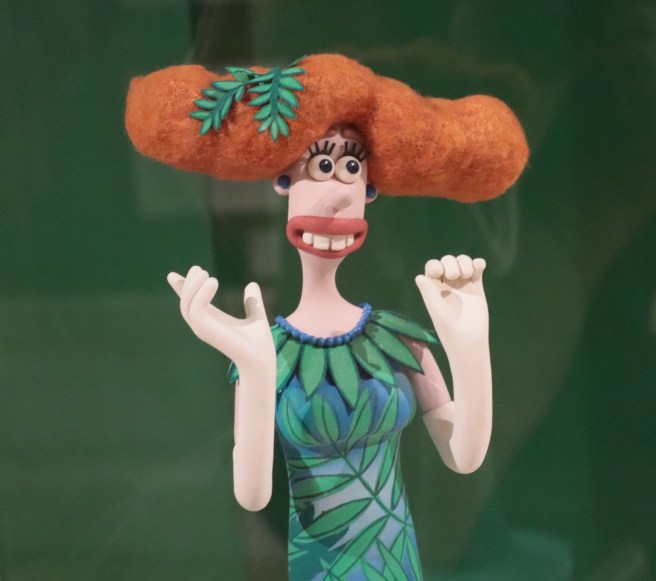
You can look Gromit in the eyes and measure the gape of Wallace’s grin, swoon at Gwendoline, and inspect the sets and machines from the various films, including the rocket that launched the duo’s stratospheric success.
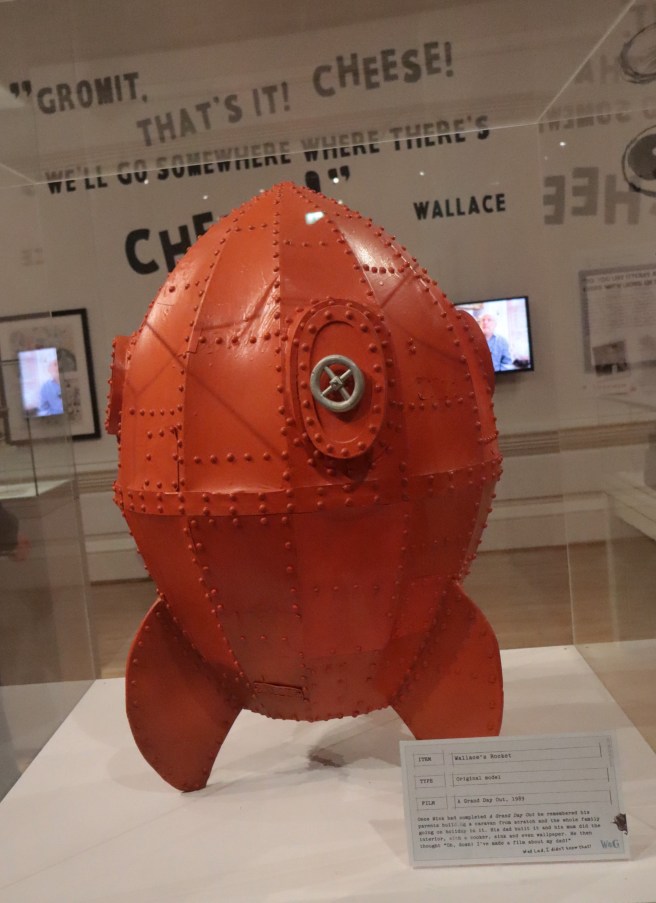
The films are the finest family fun and so is this exhibition. You do not have to have been a life-long modeller to appreciate the exquisite detail, but let me tell you, as someone who made planes before he made passes, the models are so gorgeous they almost broke my heart.
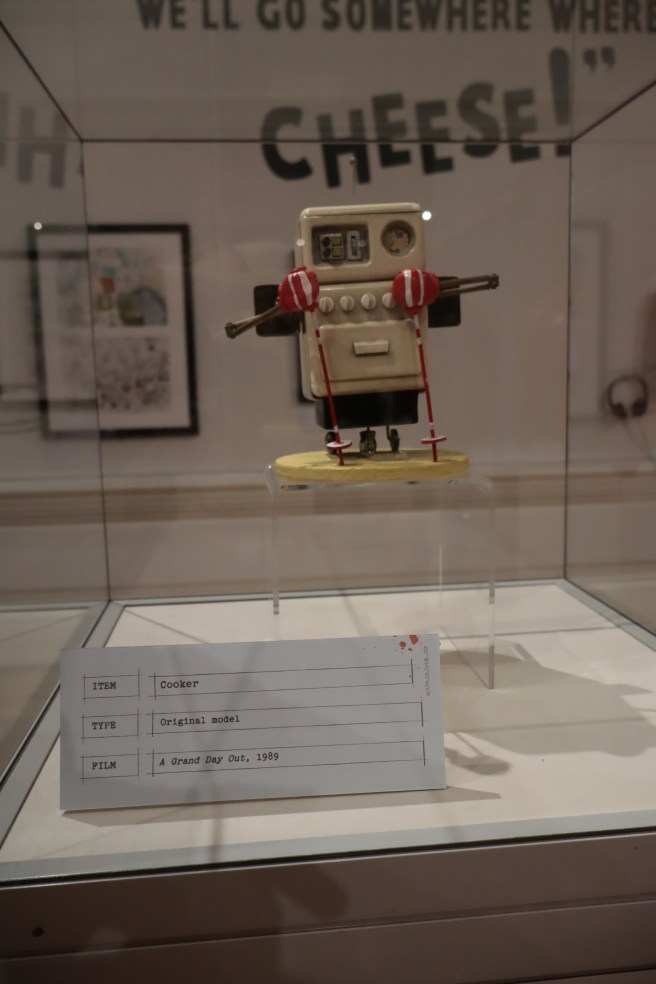
These miniatures are more than lifelike; they embody humanity. Even the inanimate express emotion: a cooker that is keen, a biplane bursting to scramble, a triplane that is just a tad too cocky, a narrowboat serenely wide in its wit.
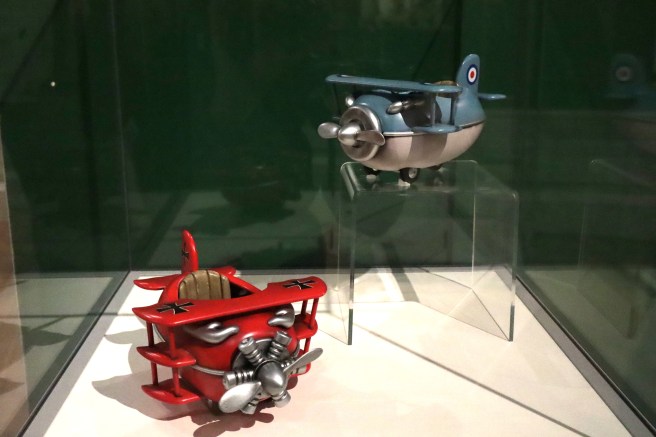
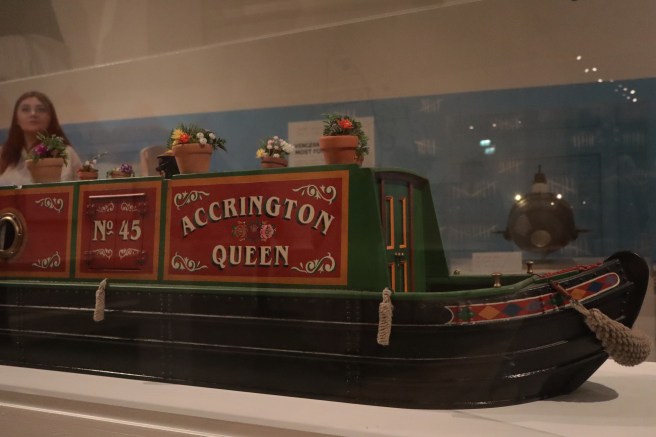
These exhibits make manifest the hallmark of Nick Park. At every glance there is humour. The pathos is never pathetic because the tragic is always saved from terminal gloom by a ticklish twist. Park does not poke fun; he moulds it from what naturally lies beneath the superficial. His work embodies my adopted life-long mantra which is to strive to make popular entertainment with a worth-while content. His art is not just amusing; it is enlightening and life-affirming. He shows us blatant fakery, and we see the truth it holds.
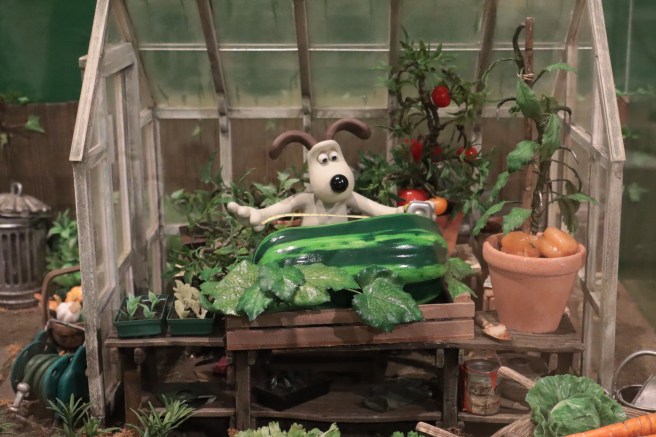
In his usual self-effacing manner Nick Park has related how, as a youth consulting the books in this library, he could never have imagined that one day it would host an exhibition of his work. So it should. He is a consummate creator and true visionary. Like the Harris, his works draw heavily on the northern past, and in doing so, illustrate the present and provoke a more imaginative future.
(For a bonus Nick Park supreme model, nip down to the Discover Preston gallery where you’ll find the incomparable mammoth from Early Man.)
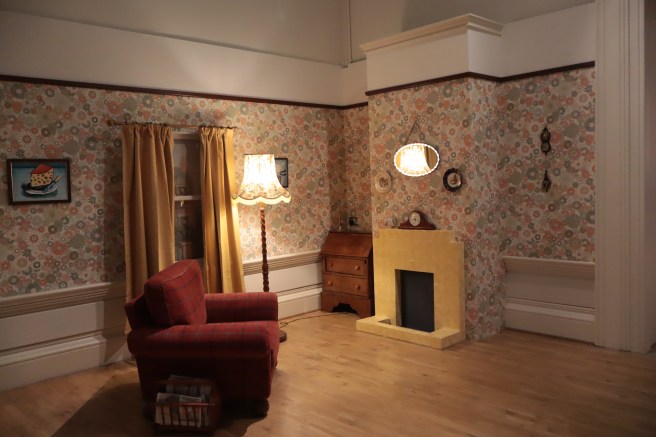
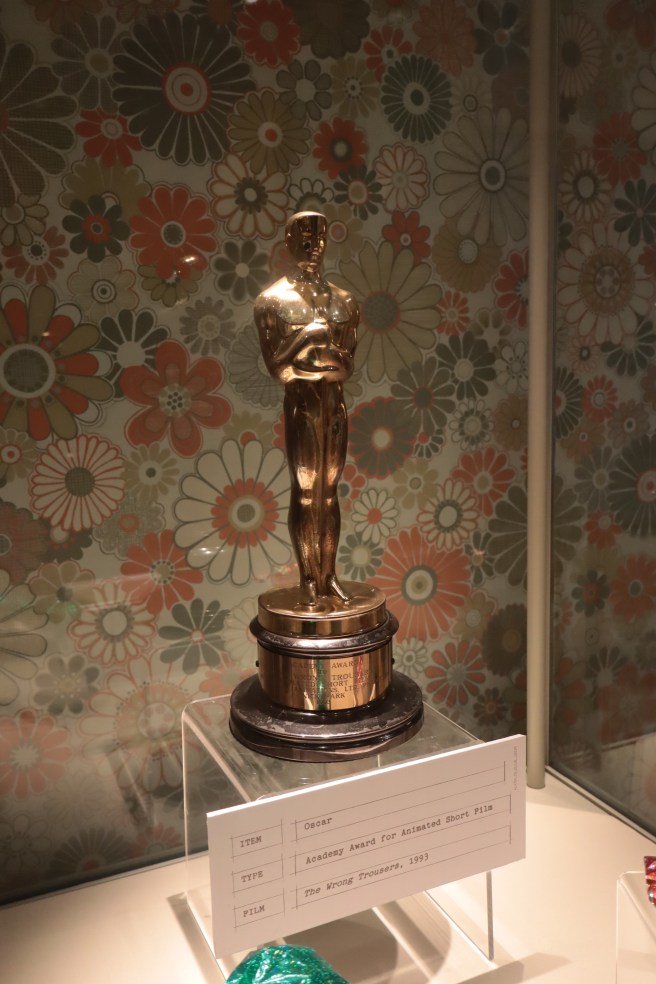
I cannot fault the Wallace and Gromit: A Case at the Museum exhibition, as for the reborn emporium itself, well…
Worth the wait?
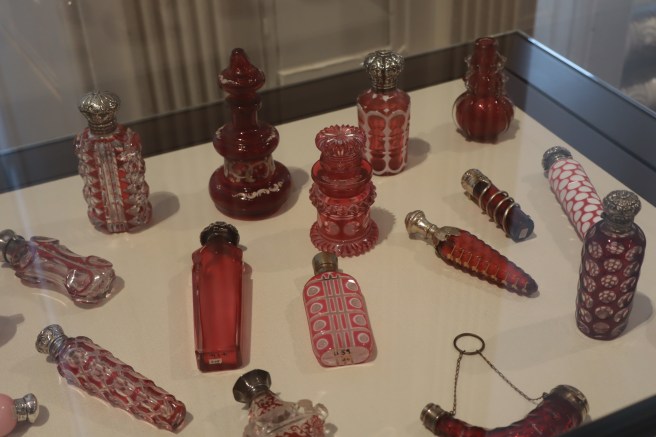
The Harris has been an aesthetic haven down the years and a reliable spring from which to draw creative waters. It has been a long wait to drink there again. I have missed its ministrations. I worried that its powers would have been distorted. I am glad to report that this is not so. The Harris is back, not with a vengeance but with a fresh benevolence. Access is better, and the building does feel more welcoming to all comers and more modern in its functioning.
The main stair has lost something in being tidied up a tad too far, though the other exhibition spaces are much more thoughtfully arranged than they used to be. Some excellent new work, and repositioning of existing stock has rejuvenated spaces that had become tired. The museum does feel much more modern but has also retained its impressive neo-classical mimicry. Movement between the galleries is smoother, in fact so smooth it is easy to miss what you may be craving to see.
Where is my Psyche?
The locally infamous (and much overrated) Pauline in the Yellow Dress by James Gunn (1944) now confronts (the unquestionably superior) Unapologetic by Azraa Motala (2021) on the second floor, which is normally as high as you can go.
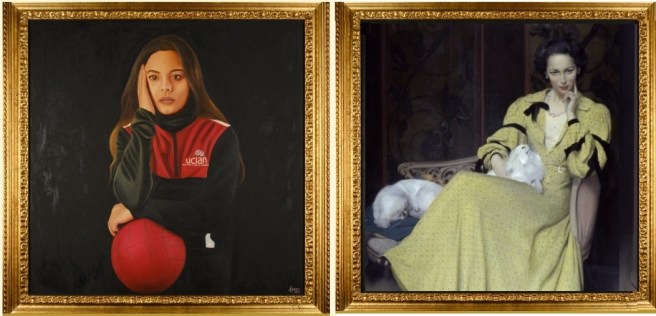
This is where you will find a selection of the finest works and some of the most expensive acquisitions. I could not find my favourite: Psyche Entering Cupid’s Garden by the pre-Raphaelite painter John William Waterhouse. I knew it. She must have been locked away, placed in perpetual darkness as Cupid preferred. I shared my fear with an attendant, showing her the picture on my phone. “Oh no,” she said. “I’ve seen her somewhere. I think she’s on the ground floor.”
I was sure Psyche was not on the ground floor as I’d been scouring every wall. Nevertheless, I heeded the attendant and dragged my long-suffering spouse down two flights of stairs in search of my mythical lover. There I consulted another attendant. “Oh, she’s definitely on display,” she said. “She’s on the second floor.”
“Are you sure?” I asked. “I’ve just been there, and she wasn’t there.”
“She’s there alright,” said the ground-floor guide, and she told me precisely where. We took the elevator.
“Second floor. Doors opening,” said the disembodied voice. And there she was. I’d walked right past her in my hurry to find her. She’s just outside the elevator, still cautiously pushing at Cupid’s gate, hoping not to be caught out peeping in.
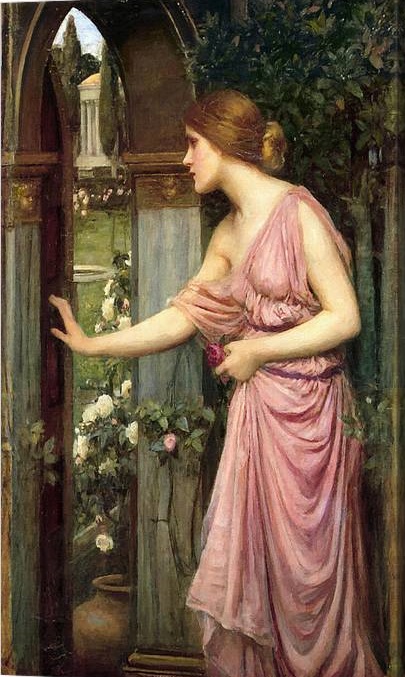
“Doors opening,” said the elevator again.
The doors are open again and will do so seven days a week for the foreseeable. Go in and find your muse.
Related posts
Why I’m so smitten by Waterhouse’s peeper: Psyche Gate
My review of Lubaina Himid’s 2018 Harris exhibition: To help with a handcart
My earlier post on Preston’s guilty past: Cotton tithes matter
How the ‘No9’ room at the Harris changed my life: The man who wrote the book that changed my life has died


