
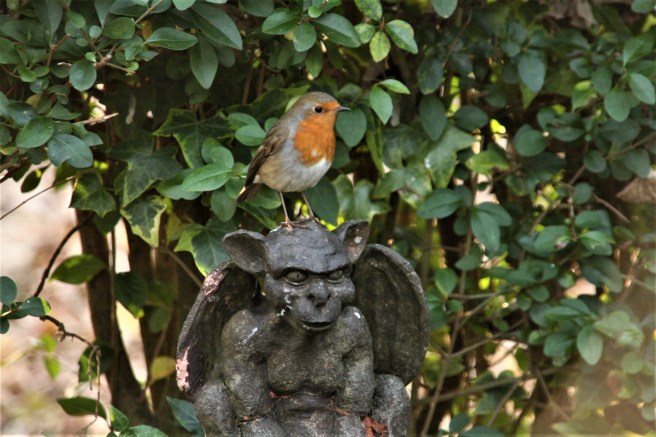
A marauding gust gripped Gordon by the wings
and spirited him away.

In his place we invited Gerontius.
We think he looks at home.
He thinks
he is not sure.
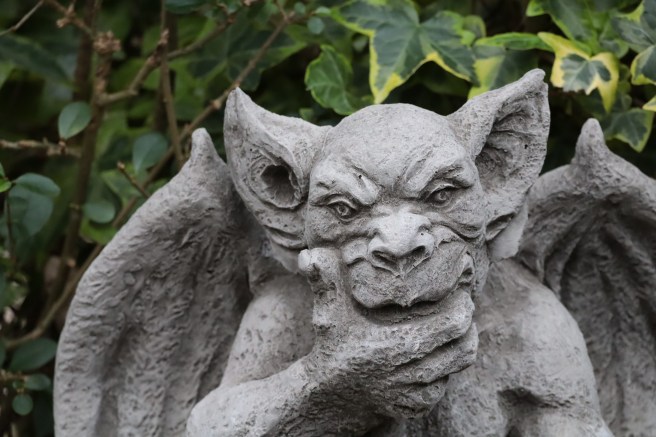
With one claw on his paw
he’s going nowhere.
The other chinstraps his jaw
and he wonders if he should
make a move
whilst knowing
that he must stay put.

He gazes over Giltrap’s shoulder
to the slope where fallen fruit
rolled far from the parent tree
where conifers confer
and climbers take account
of the balance of repayments
and where we hedge our butts
against miserly cold fronts
when all growth will stop.

Gerontius does not fear drought.
He’s petrified.
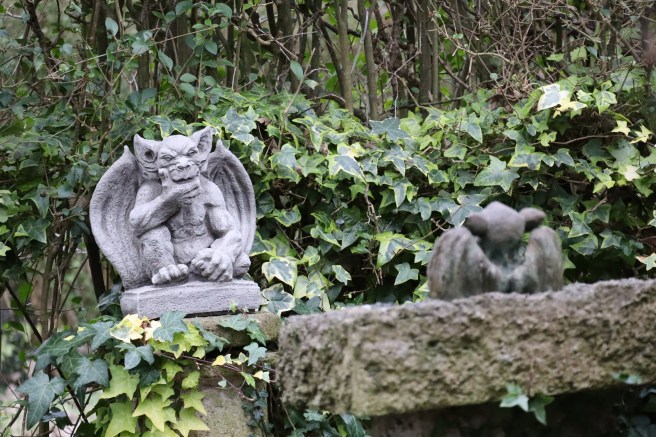
The unspoken garden says nothing.
Gerontius gazes.
Giltrap glances askance
concealing
what he might be remembering
for he is older than he looks.
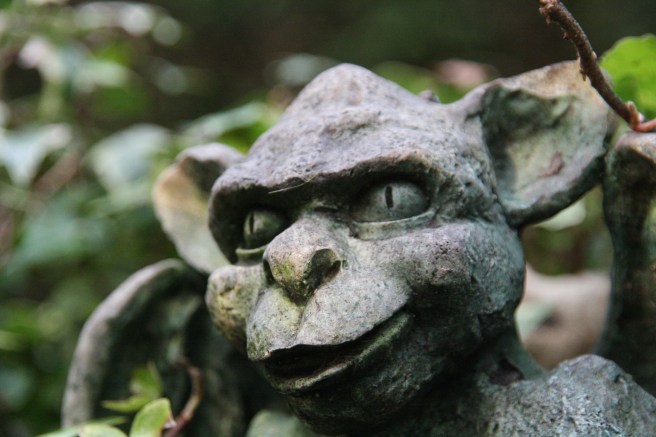
We were younger, when we moved in.
One infant pricked out
two more yet to be potted.

The unspoken garden cradled them
climbing-framed them
until adolescent gravity
pulled them in search
of pastures due.
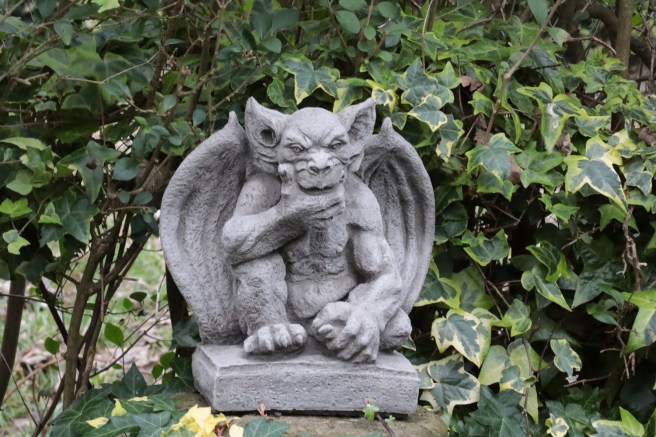
Gerontius is thinking about that:
about youth
and how swiftly maturation
underestimates
the speed of age
and the sapping of stamina
and is slow to see the camouflaged advance of petrification.

“Am I already set in stone?”
he wonders
unable to change his mind.
I grabbed the name Gerontius meaning ‘old man’ or ‘aged’ (as in geriatric) from John Henry Newman’s 1865 redemptive poem depicting the afterlife journey of the soul: The Dream of Gerontius. Edward Elgar used the poem as the lyrical component of his 1900 Choral work of the same name.
In 1970, my poet of preference, David Cousins, recorded and released The Antique Suite on the Strawbs Just a Collection of Antiques and Curios album. This song also narrates the death and afterlife of an old man.
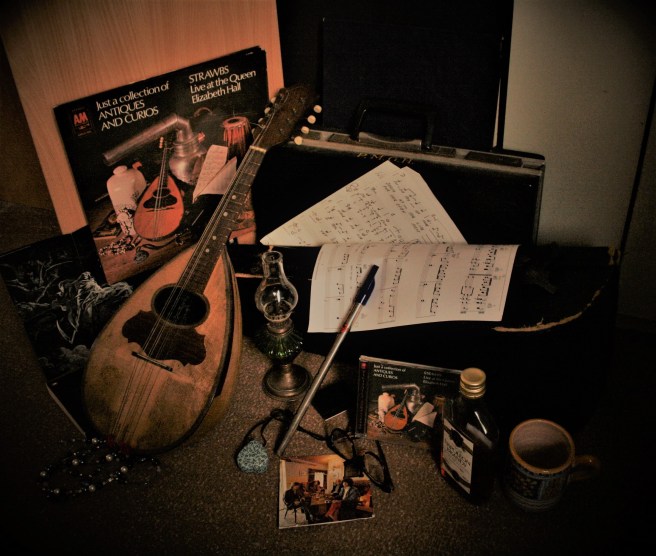
I was adolescent when I bought that record.
And now, we remember:

More information here: Bangor University David Cousins celebration concert

 uneasywords