
I was not sat next to my grammatically correct niece at my sister’s birthday party. We had each selected our places and were sitting together.

We were dining in a local Italian restaurant.  The conversation moved to reading. To my delight, she protested her anguish at the increasingly prevalent trend to insert a recusant ‘was’ before ‘sat’.  “I was always told,” she said, “that you should never put ‘was’ before ‘sat'.”  I told her she had been correctly educated and what is more, the irritation she felt was deeply shared by my wife and myself. We have a three strikes rule. Three occurrences in a book, and the book will be put down. And it does not just apply to ‘sat’ but also to ‘stood’.

This may be one of those fruitless pleas. The battle, I fear, has already been lost. Last Sunday my preferred newspaper printed an article by a critic I have long respected.  He was writing about his earliest experience of listening to a recording of music from a movie. An enlarged quote shouted painfully from the page:

I was sat there in rapt attention, mesmerised by being able to hear a movie.

Oh no! I plunged into a chasm of despair, but grasped frantically for some hope, rapidly scanning the text to find the offending phrase, and … phew!

I sat there in rapt attention, mesmerised by being able to hear a movie.

There was hope, because there was no ‘was’.  But hang-on, does this mean the sub-editor had uncorrected the critic’s accurate use of language?  We’re doomed.

It is a long time since I was physically sat, ironically a great deal by the sister whose birthday I was celebrating, who often sat me in my pram. I increasingly contemplate the days when I will need to be stood, and I fear I may not then be able to remain standing.

The error
 The mistake is quite simple.

I was sat is wrong (unless someone placed you there).
I was sitting is correct.

We don’t need to get grammatically technical to understand the problem. Just change the activity from sitting to drinking and the error is obvious:

I sat
and
I drank
are both fine, as is
I was drinking
but
I was drank
obviously sounds wrong.

Let’s put it in a longer sentence:

I sat at the bar and drank my beer.
sounds good, as does
I was sitting at the bar and was drinking my beer.
but not
I was sat at the bar and was drank my beer.

The confusion is clear.

The same principle applies to stood and standing. The corresponding error with the verb to stand is equally evident in modern parlance and literature. If you ‘was stood’, then you imply that someone physically placed you there. In the overwhelming majority of instances, you were not stood but standing.

When visiting the theatre, I may be sat, by the usher, in a particular seat, or if my seat has been damaged, I may be sat in an alternative one. In relating those cases, the sentence 'I was sat ' is precise. (Though, I prefer was seated.)

Whilst writing this post, I took a break and read that day’s edition of my local newspaper. Oh no! On page 30 amid an interesting crime report, I found…

A short while later she left the public house and was stood on the corner of Lords Walk.

The report did not clarify who stood her there or if she was drank.  The same article had earlier stated that in the dock of the court was

Frank Orrell, aged 28, motor mechanic of Radcliffe, Bury, who stood accused of robbery with violence.

Which is a perfectly correct sentence simply because stood, is not preceded by was.
The popularity
In the days when it was my duty to correct essays, this misuse of tense was one of the most frequent inaccuracies. It stems, of course, from popular speech, the trends of which are infectious. This unfortunately means TV and radio has also become increasingly contaminated. Does it matter? Not really, but if you are a journalist or commentator, I want to concentrate on your topic, and this kind of error is a distraction. That is the reason it is so annoying when reading fiction. It gets in the way of the joy of the story.

This mistake has tainted my enjoyment of many books, including those by writers I admire, and published by publishers I respect. In each case I can’t help but reduce my admiration and moderate my respect.
A warning…or threat
Yes, I feel so strongly that I must issue a warning, but not just to fellow scribblers, but also to editors, publishers and booksellers. Should I spot one of these instances whilst contemplating buying your book, it will not be taken to the checkout. It will be sat back on the shelf.
I’m sure some of my work will contain errors akin to those above. It is incredibly difficult to eradicate all mistakes, especially if one is editing one’s own work. Perhaps this is a place where AI will offer benefits. Unless, of course, it learns from the mistakes of others.
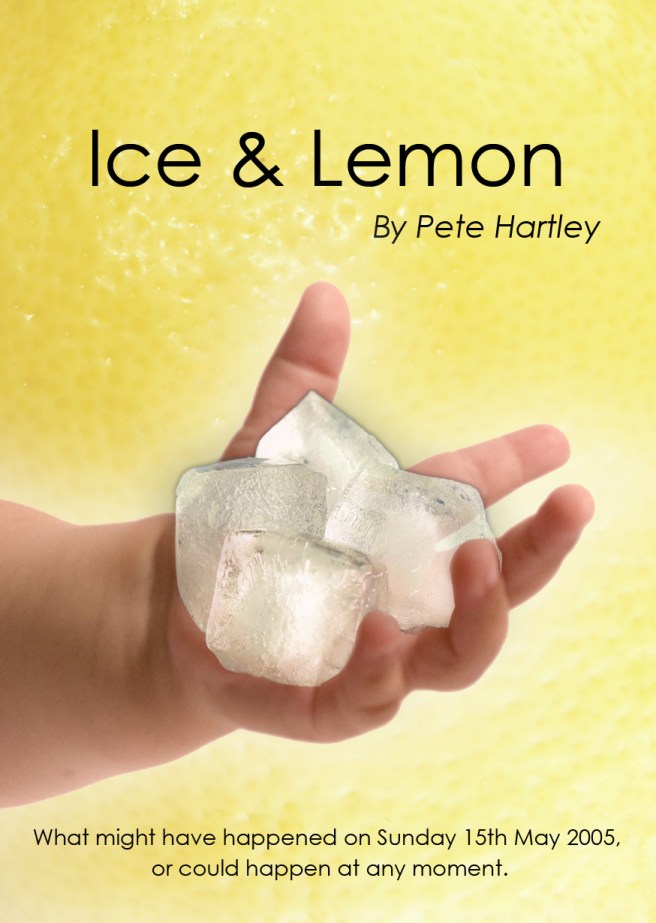
One story in which a deliberate grammatical mistake is used as a minor plot device to get the narrator off the hook is: Ice & Lemon

 uneasywords