Grasping the Gothic part seven: the permanence of the short story
The short story has an everlasting place in the pantheon of Gothic fiction. Alfred Hitchcock once described the short story as the ideal inspiration for a film precisely because of its brevity. A story that could be read in a couple of hours is an excellent basis for a movie of a similar length, he claimed. It could just have been laziness on his part. It is far harder to edit down a novel. The short story is a much more compact trinket box to snaffle from.

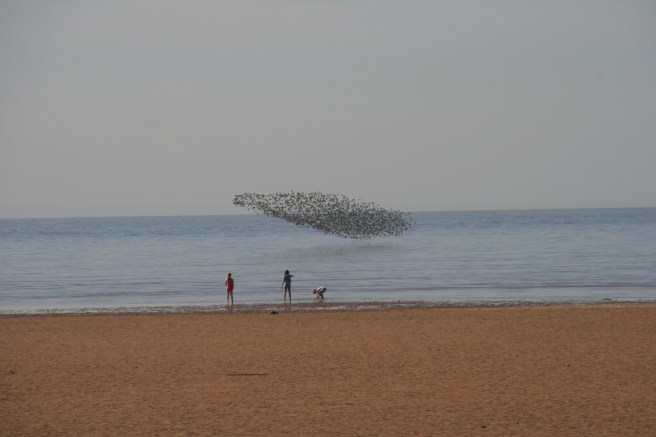
It is alleged that Hitch only read Daphne Du Maurier’s The Birds once. Her story is much more Gothic than his film. The mood is gloomier, the setting more claustrophobic, the environment more theatrical, the threat much more incessant. The tension is relieved but never removed, and when her birds assemble, they are so thick that they could be a ship at sea, or a colossal storm. When they move in, they are of one mind. They never go away even when they relent. When they have finished, they have not finished. Their menace will not cease. Strong stories share that permanence. They linger, and occupy.

In a short story the stabbing must start earlier than in a longer work.  In du Maurier’s tale a bird first draws blood on page three. From that moment on the avian threat is unrelenting. The story does not have a denouement. It lasts barely thirty pages. It ends but is not concluded. This is one of the main messages of Gothic: that the inevitable finish for all of us is not the end at all. Something will remain.
Franz Kafka’s Metamorphosis shocks even sooner. It has one of the most arresting of opening lines:

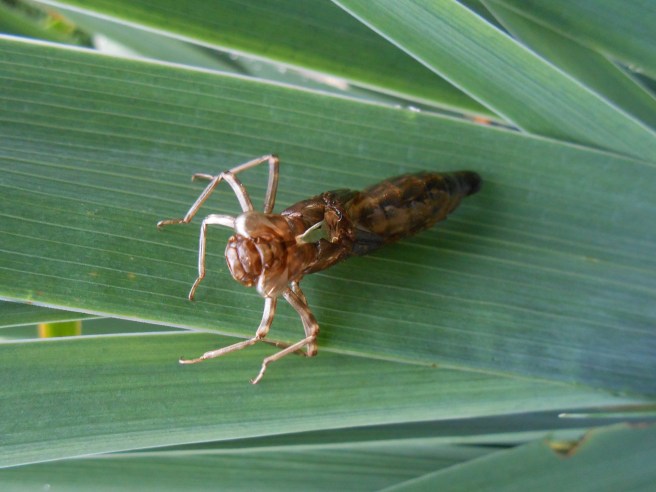
As Gregor Samsa awoke one morning from uneasy dreams, he found himself transformed in his bed into a gigantic insect.

We are presented with the ultimate beginning. Something has ended and something has started, but what has been seeded in our awareness may never be unknown. Irrespective of Gregor’s invertebrate fate, the distortion in our mind’s spine can never be untwisted. What kind of insect he became is not defined in the story, but I know the precise species. I’ll call it the perpetual. That kind of creepy crawly will be found under every Gothic story, however short.
Gothic so often blisters its brand in swift shocks. A permanent impression is made by unforeseen visceral punches. We suddenly see the unpleasantly unexpected: the gargoyle behind the angel, the skull among the fruit, the beetle in the bedroom. Some of those quick mental lacerations never cauterise, and those that do may scar us for life. Never judge a story by its length, because that is no measure of its duration.
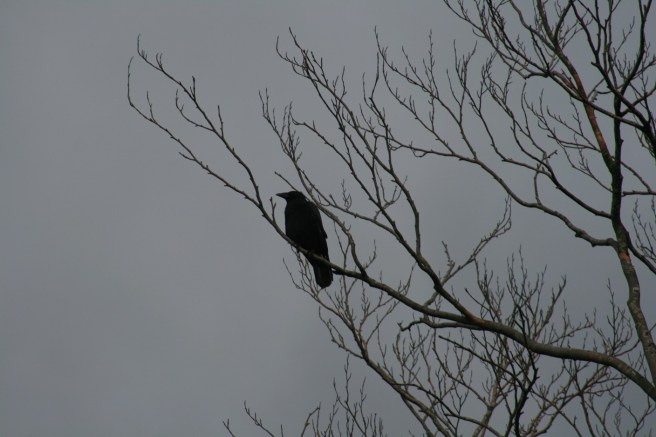
Edgar Allan Poe’s The Raven is not a story but a poem. It is a little over one hundred lines long but contains within that brief span a reach that stretches on for ever and contains its own everlasting epitaph:

     And my soul from out that shadow lies floating on the floor
     Shall be lifted - nevermore

With Poe, the title alone can be enough to trigger an infection: The Pit and the Pendulum, The Tell-tale Heart, The Masque of the Red Death.
Perhaps the most filmed of Dicken’s works was one of his shorter compositions. A Christmas Carol has a merry title, but as with Kafka’s shape-shifting story, it hits us in the mortal belly from line one:

      Marley was dead: to begin with.

For all its yuletide associations, it is a Gothic tale in every respect, and since its appearance that season has traditionally been spiced with ghost stories. Nativity, we are Gothically reminded, is not a new beginning, it is the rebirth of what has gone before, and what will persist even after expiration. Here is Gothic’s perpetual message: the future is but a fantasy, the present is fleeting, the past is what remains.

Our lives, if we are lucky, seem long. They are not. They are short stories that leave a legacy.
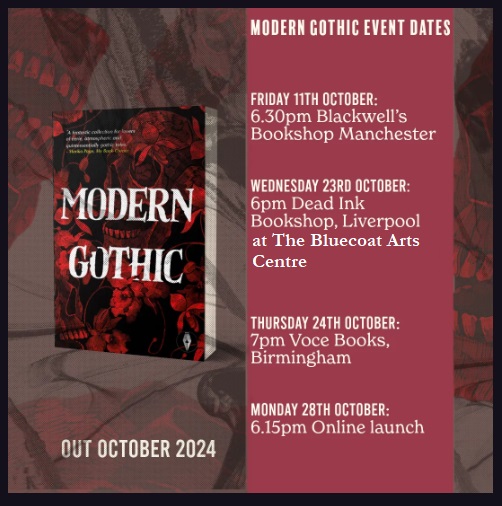
The next time I post in this chilling sequence it will be the day of our unearthing. My fellow gloomsters and I will be unleashed. From the eleventh day of October we will be seeking to infect you.

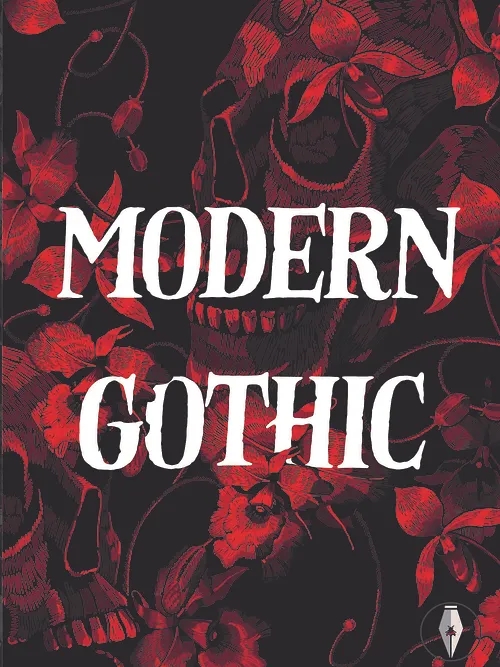
Let me welcome you into the vault where my newest creation lies waiting along with five other everlasting short testaments. I've read them all, and can vouch for the veracity of their deceptions. The tome is dark, the tales illuminating. They are unique examples of species your will recognise, but you will not have been pierced in quite these ways before. You will not have tasted these particular poisons. Enjoy your meal.
The cold dawns of autumn are upon us. Modern Gothic has cracked the sarcophagus but not yet crept out of the crypt. Its six progenies are almost done pupating. You may soon let them settle in your hand, enter through your eye, and fester in your head. Some of the thoughts they bring may never leave you. Take it from me.
Former drama teacher, fringe theatre producer and director, and author of novels, short stories and some non-fiction work. I now hawk my output under the moniker of uneasybooks.
View all posts by Pete Hartley






 uneasywords