
Three wise women
Three thirty-foot giant females have appeared in my locality.
The first example, entitled ‘Mother’ appeared on the gable end of Hogarth’s bar in Church Street in July of this year. It is the work of Preston street artist Shawn Sharpe, who specialises in sprucing up pubs across the UK.
Painted in just five days, its arrival provoked much joy and a little controversy as the bar’s management had not gained clearance from the city’s planning department. Permission was later retrospectively granted, when councillors declared the image ‘does not appear out of place and actually adds visual interest to the previously bare side wall of the 1880s building.’
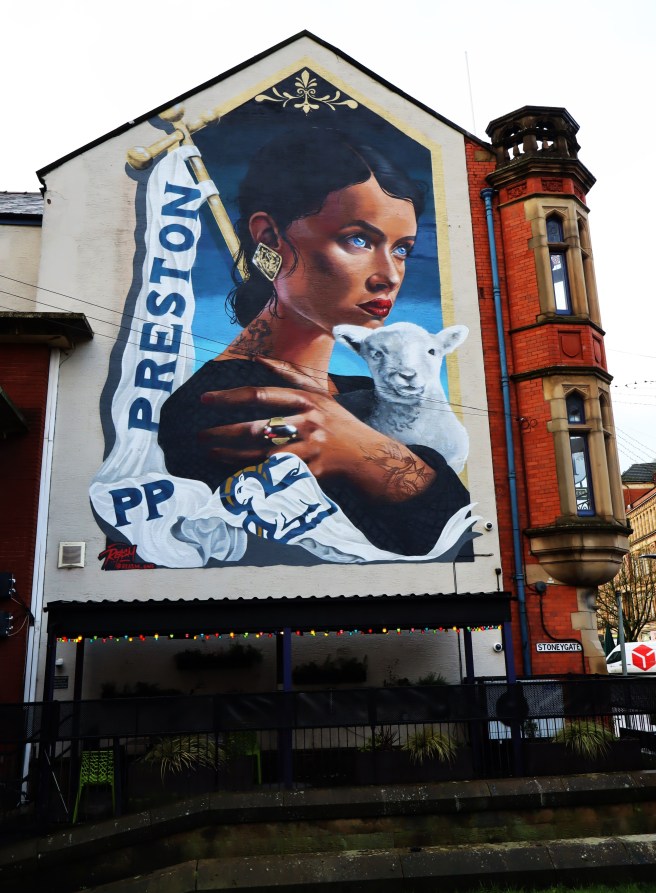
The artwork, in common with two similar representations at other locations, mixes local iconography with modern imagery to realise a pensive depiction of Lancashire nurturing.
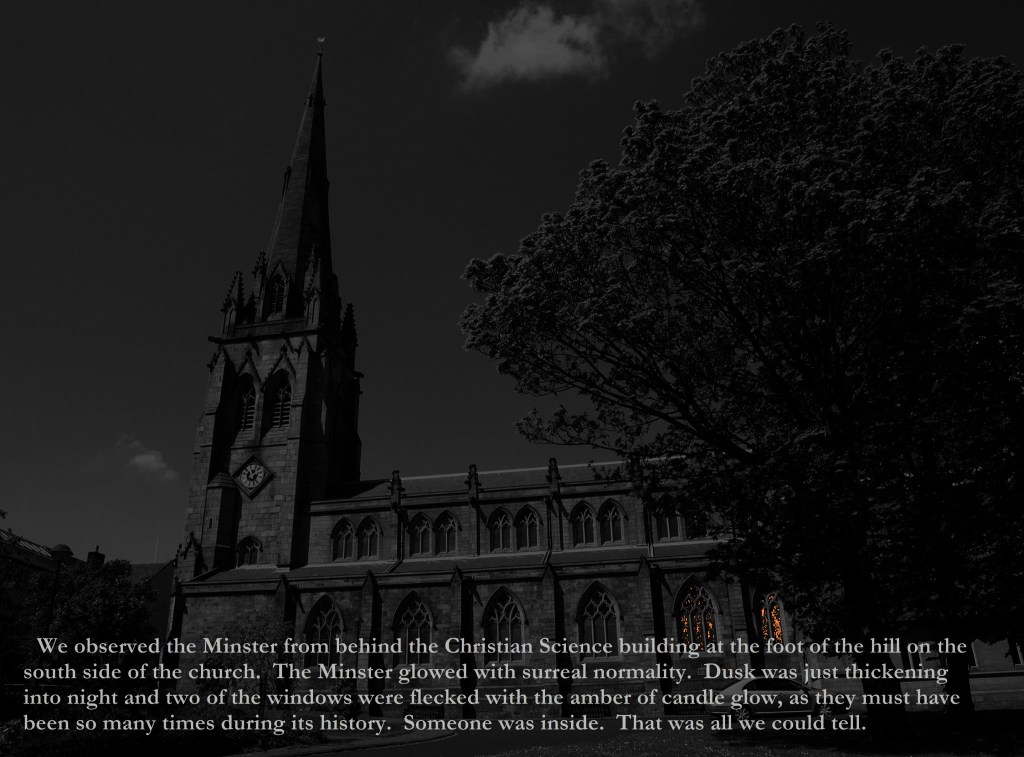
‘Mother’ overlooks the frontage and yard of the Preston Minster, a parish church that has stood in its present form for 170 years and occupies a site used for this purpose since Saxon times. It is the heart of historic Preston. The last battle fought on English soil took place here, with barricades erected across the road just outside to repel adversaries during the Jacobite rebellion of 1715. Prisoners were held inside the church, as was my 2012 theatrical reconstruction: Jacobite: The Preston Fight.
As with the other images described here, this is a wonderfully refreshing rendition. The composition redefines the notion of the city by assembling realistic figurative elements with symbolic traditional motifs. The lamb is a longstanding symbol of the town springing from its Christian history, but the woman is distinctly modern, embodying a more generic and more homogenous nature. She is a mother who embraces the past, but is very much of the present, and looking to the future.
October saw the second of the titanic trio of painted Preston women completed on the gable of The Northern Way pub close to the north end of Friargate.
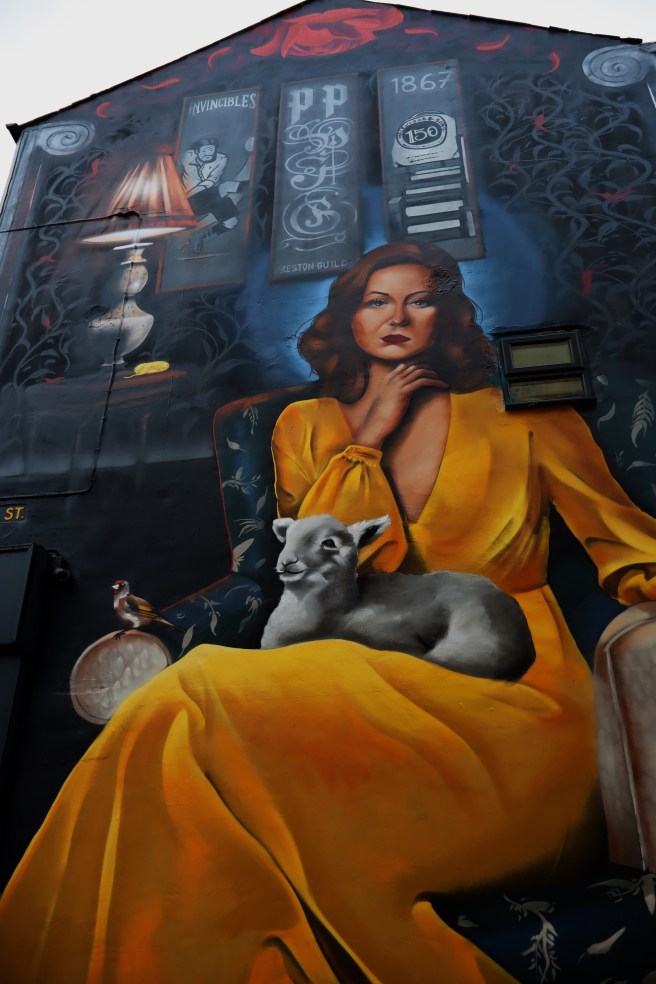
This work is a reinterpretation of one of the best-known acquisitions of the city’s Harris Museum, ‘Pauline in the Yellow Dress’ by Herbert James Gunn (1893-1964). That work, tame by today’s standards, caused a sensation when it was first exhibited in London, where it was described as ‘the Mona Lisa of 1944’.

The portrait of the artist’s wife may have been provocative in its day but it never quite did the trick for me, either aesthetically or alluringly. I remember it being used extensively outside the Harris with a strapline stolen from Mae West, of “come up and see me some time”. It is back outside the Harris again on the hoardings protecting the public from the on-going renovations. You will need to wait until 2025 to see it in the oil, but curb your disappointment and view Shawn Sharpe’s version instead. It is more enigmatic and much bigger.
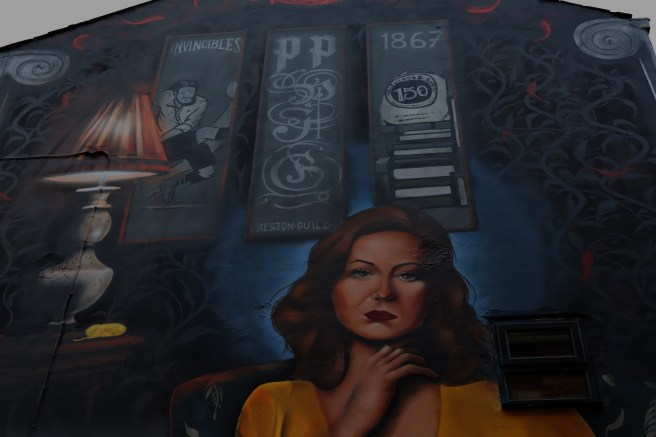
You may not be able to go up to see this Pauline, but you certainly have to look up, especially if you wish to see her face-on. Edward Street may well have comfortably accommodated a 1940s vehicle but it is a tight fit for some of today’s traffic, and hence you cannot step back to get a full perspective except by slinking off to one side. This Pauline is much warmer and yet much more withdrawn. Unlike her predecessor, the twenty-first century Pauline does not seem overly pleased to see you. There is something on her mind and she’s keeping it to herself.
The nod to the ‘Invincibles’ of Preston North End long ago, and to the Preston Guild festivals seem a tad incongruous, but the framing of the picture in the neo-classical columns of the Harris make a splendid surround, and the depiction of Pauline’s domestic paraphernalia is visually aromatic and, like her expression, provokes pondering.
The third fine female is perhaps the cleverest. Sharpe weaves a contemplative mix of pride and shame with ‘Betsy Leigh’.
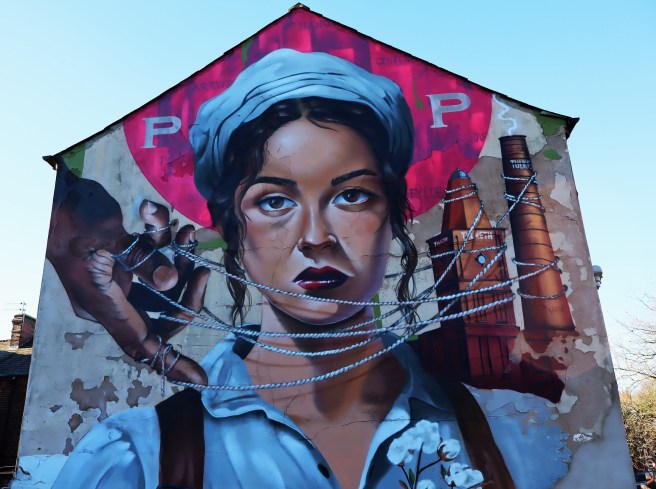
The artist claims to have a story for this but wants to the viewers to create their own versions. The message is clear. The monogram P.P. features once again. It has appeared on Preston emblems for centuries originating with the Latin Princeps Pacis (Prince of Peace), but it has been colloquially re-defined as ‘Proud Preston’. As discussed in an earlier post[1], Preston can take much pride in the quality of the cotton cloth it made and which, in turn, was arguably the making of the town; but we should also shoulder some of the shame inextricably tied up with that trade. Sharpe’s painting makes that very clear, and also successfully projects the resilience of the workers and the indifference of their industrial overlords – both ingrained in the expression of the figure bound in the overall.
There are echoes in this work of the huge socialist realism murals of the Soviet era, but there is no collective idealism here. Betsy works hard, but has been sold short. There’s resentment woven in with the work ethic, and she is both liberated and imprisoned. The threads that bind the hand of the cotton picker to the towering chimney of Tulketh Mill are white rope.
Enabling gabling
These are wise women. They make us think about who we are and how we came to be here. We may take pride in our heritage but are we completely comfortable in our surroundings? How has our city shaped us and how do we continue to shape our city? Whether you are a resident or a visitor, these Preston icons ask you to contemplate the importance of history, maternity and personal complexity.
They are also very impressive works of art.
Three peeps walk
1.3 miles. 30mins approx
This walk will enable you to view all three of the gable murals in the order described above.
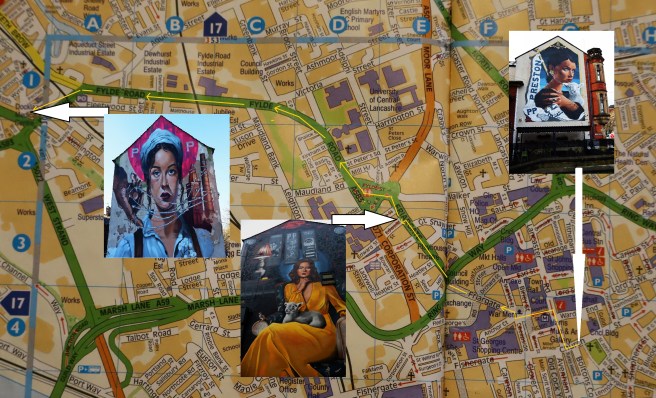
Mother
The Minster is easy to find. It is situated close to the splicing of Church Street and Fishergate. (Postcode PR1 3BT) The Mother of all Prestonians overlooks the main entrance.
When you are ready to move on, walk straight ahead to the right of the mural then take your first right into Lancaster Road, where, at the time of writing, you will be able to glimpse a cutout image of the original ‘Pauline in the Yellow Dress’ by Herbert James Gunn on the hoardings protecting the public from the renovations being conducted on the Harris Museum.
Then turn left into Harris Street and cross the Market Square in front of the cenotaph. Just beyond that bear right onto the junction of Market Street and Friargate and take the left fork to walk along the latter.
Pauline
Remain on Friargate when it crosses Preston’s most famous thoroughfare misnomer – Ring Way – (it slices through the city centre) and continue almost to the conclusion of Friargate where you will find the Northern Way pub on your left. Pauline is tucked down Edward Street.
When you’ve had your fill of the yellow, complete the last few yards of Friargate to where it slithers into the newly pedestrianised University Square. Bear left to follow the sinuous tarmac as it sweeps west and then north to skirt the new engineering building to find your way onto Fylde Road.
Stay on this road as it passes the Student Union and then veers westwards, as its name suggests, towards the Fylde coast. Walk under the West Coast Main Line Railway bridge and head towards an even more impressive railway viaduct where you should veer left to leave Fylde Road and follow Water Lane to slip under the arches that carry the carriages towards the coast.
Betsy
The Wheatsheaf is to be found at the very busy junction of Strand Road, Watery Lane, Water Lane, and Tulketh Road. Your quarry is on the corner of the latter two across the road on your right. Betsy Leigh is around the back of the pub on Blanche Street.
Back to the beginning
If you wish to return to the city centre, either retrace your steps, or step on any Preston bound bus to the Bus Station, which is within a couple of hundred yards of the Minster.
References, links and further reading
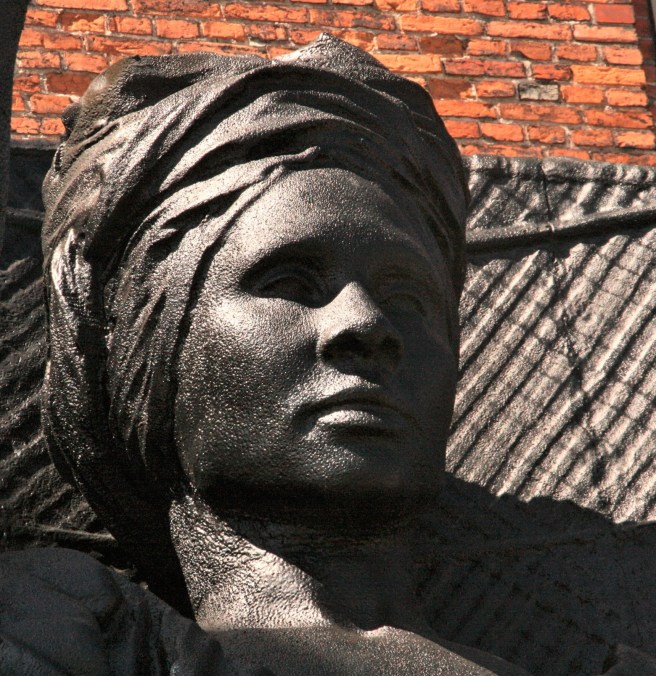
[1] For my thoughts on Lancashire’s historical links with the cotton trade see: Cotton tithes matter
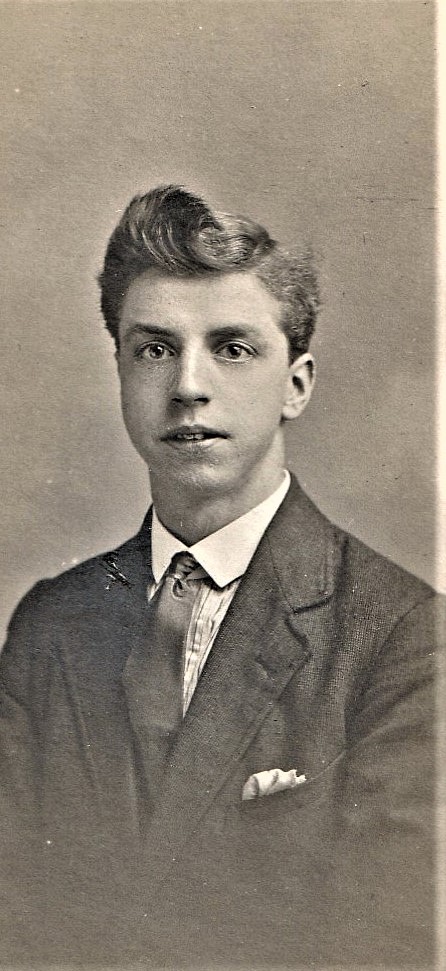
For more on the pride and penalties tied up with cotton weaving in Preston see: Fancy Weaving

My reaction to a companion painting to Pauline can be read at Psyche Gate
Preston Minster features significantly in my Ice & Lemon novel.

 uneasywords