
Not saying goodbye to old songs ringing down the years; plus taking the lead
Between September 2020 and February 2022, I posted a series of blogs reviewing the first tranche of Strawbs albums in the order that they were released. I stopped with Deadlines released in 1978, which became the final issue before the band dissolved. They reformed with a revised line-up a few years later. I’m now working my way through subsequent recordings. This post collates three albums released between 1987 and 1992.
Docking in Southport
It was while rehearsing a play called Siren in the summer of 1992, that a young friend burst through the door of the Lancashire Polytechnic Arts Centre in Preston and announced that the Strawbs would be playing The Arts Centre in Southport, some 20 miles along the coast, that September. I had no idea that they were on tour, let alone that close to my home.
An even stronger memory is hearing the band run through part of Hero and Heroine for the sound check as I climbed the rather splendid staircase of Southport Arts Centre (these days known as The Atkinson). They sounded eerily the same, but significantly different. It was a rebirth. A regeneration. The band had always evolved, but to my mind this was Strawbs #5. They had disintegrated and died in 1979. Now they were undead.
The Strawbs continuously evolved from the start and mostly smoothly, but there are discernible phases made evident by key line-up changes. Once the embryonic Strawberry Hill Boys larvae metamorphosed into their colloquial abbreviation Strawbs, it grew into a six, then eight-legged folk arthropod between 1969 and ’71. The arrival of Rick Wakeman, Richard Hudson and John Ford brought something with a harder carapace. I’ll label that Strawbs #2. Wakeman went and was replaced by a Welsh keyboard wizard: Blue Weaver. At the same time along came the band’s first proper lead guitarist: Dave Lambert. This was the first ‘classic’ line-up: Strawbs #3. A traumatic bursting shedding Hudson, Ford and Weaver and replacing them with Coombes, Cronk and Hawken transfigured into Strawbs #4 which more-or-less persisted (with various other comings and goings) until the apparently final fracturing in 1979. (This categorisation is a purely personal perspective.)
They reunited on an ad-hoc, and very much part-time, basis in the early 1980s. By 1992 the band had been playing here and there for almost a decade, mostly in southern England, but including some gigs ‘up north’ (one in Rusholm, Manchester in 1988) but I was un-blissfully unaware of this. Not being interested in the wider music press and living in a world before the internet it was easy to keep ritually commemorating my music gods, whilst being oblivious to the fact they had strummed out of the rock tomb.
The personnel was a mix of old and new. Most importantly, Dave Cousins was at the helm. Hammering out the beat was Richard ‘Hud’ Hudson who had left in 1973. Bass was Rod Demmick, keyboards Chris Parren and lead guitar Brian Willoughby. I was unfamiliar with the latter three performers. Brian Willoughby was the most significant recruit to the band since the spillage from the Bursting at the Seams explosion in 1973 which spawned the Hero and Heroine Strawbs #4 incarnation.
For a band of that nature, changing a lead guitarist is the equivalent of replacing the engine of a car. Willoughby brought a new arrangement of cylinders, and there were more of them.
Lambert and Willoughby

Comparing guitarists is a five-pint problem. It serves no practical purpose other than to pass the time while imbibing unnecessary amounts of alcohol and thereby befuddling the brain, rendering all rationality redundant. But that’s precisely what I’m about to do. My sole lubricant will be raspberry-leaf tea; I promise.
There is a qualitative point to be made. It’s not a relative one. It is not a ‘who-is-best’ discussion. It is an examination of how each style of picking and strumming shaped the fabric of the Strawbs’ sound.
Dave Lambert and Brian Willoughby have been the keystone musicians in the architecture of the Strawbs’ sound temple. The former was influential during what I regard as the golden years – from 1972 to ’78, returning to the line-up in 2000. During his absence, Brian Willoughby wielded the primary plectrum, and then for a while both players graced the full band and also the stripped back ‘acoustic’ manifestation. Through the twenty-first century both or either have stepped up and plugged in. So, what did each player bring?
I deeply enjoyed the time when both leads were in the line-up playing riff-tennis on my favourite tunes, and on such occasions their blend was seamless but when each was the sole lead guitar player the sound of the band had distinctive differences that carved contrasting elevations and pinnacles. Lambert was classical gothic; Willoughby was gloriously baroque.
Dave Lambert’s rock’n’roll origins presented a hard edge to his sound. During his dominant years the guitar didn’t just lead, it strained at the leash. When reigned-in it was beautifully dutiful, carrying the lyric carefully, securely and fittingly, but when called upon to rise to a canter or gallop it became a strident steed: impossible to ignore, with sharpened lance, bold colours and heraldic volume.
Willoughby, on the other hand, has a more florid style. He is every bit as weighty and forceful when necessary, and he too, can be superbly subtle. He is Mozartian; there are more notes per minute than there might be, and yet it always feels that there are just enough. His playing has great clarity but also great complexity. His sound has tensile strength and decorative elaboration. Form does not follow function; it embodies it.
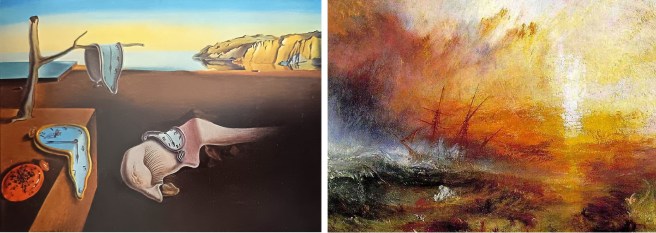
To use a painting analogy Lambert is Daliesque, while Willoughby is Turneresque. The figures in Lambert’s work stand out starkly truthful amid a surreally real landscape. Willoughby’s work is landscape made meaning.
It must be acknowledged that some of the distinction is down to the mix. Production plays its part. For me, however, the change was more than cosmetic. It was a regeneration akin to that of Dr. Who. The character remained; the personality was changed. I liked them both. The recruitment of Brian Willoughby signalled the birth of Strawbs #5. They said hello again when they didn’t say goodbye.
The Virgin couple
In 1987 the band made the first of two albums released on the Virgin label.
One thing that puzzles me about both the albums from this important time is their complete absence from Dave Cousins’ autobiography Exorcising Ghosts.[1] They are covered in the companion volume of lyrics Secrets, Stories, Songs[2], but not referred to at all in the biography, yet they are key works. They mark a return to the studio for the full band, appear on a label not previously used by the Strawbs, and contain some highly significant tracks.
Don’t Say Goodbye
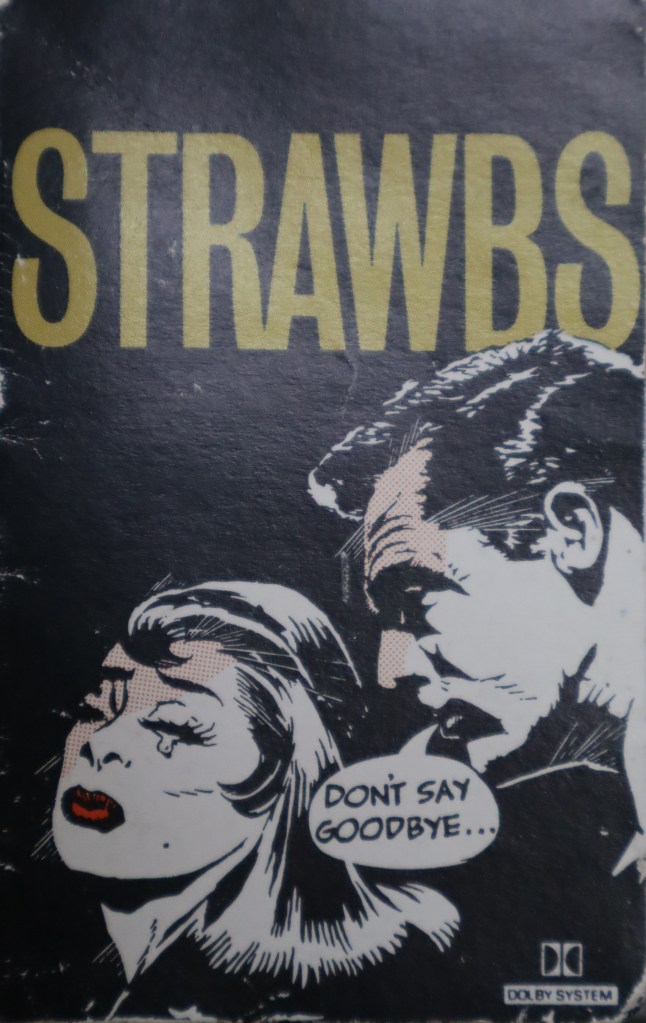
I find this to be a ‘middling’ album. It is not a brilliant collection, but it is far from inconsequential. It contains some excellent tracks. Three had been recorded on the Heartbreak Hill album, but at this time that record was essentially unreleased. (See Rockfall on Heartbreak Hill) All three of those tracks have much better versions on here.
Track by Track
A Boy and His Dog (Cousins/Parren)
Originally titled A Man and His Dog, Cousins said someone in the States suggested the slightly crueller wording.[3] He doesn’t elaborate on the inspiration. It is one of those ‘pick your own meaning’ poems that he’s so good at. Fidelity, frailty, failure: find them all in this successful song.
Let It Rain (Cousins/Cronk/Richards)
A better recording and interpretation than on Heartbreak Hill, and consequently slightly less middle-of-the-road. Witty lyrics, jaunty tune. Manages to miss the cat’s eyes. Just about.
We Can Make It Together (Cousins/Cronk)
Another recovery from Heartbreak Hill of a song written in 1967 and carrying that Strawberry Hill vintage in its wording. Two decades on, the recording technology gives added buoyancy to what it might have had if laid down in the summer of love. Sounds good.
Tina dei Fada (Hudson)
Richard Hudson has penned some very decent tracks in his time with Strawbs. This is one of his best tunes – and it is simply a tune. It’s a lovely instrumental and I really like it.
Big Brother (Hudson)
This on the other hand… Well, it sounds like an attempt to remake the Strawbs’ best-known but least-typical song and their biggest hit: Part of the Union. I have very ambivalent feelings about POTU. I’m not ambivalent about this one.
Something For Nothing (Cousins/Cronk)
This is a really good track, really well rendered. This is the third of the Heartbreak Hill revivals and the best. It’s the first track to really showcase the power of Brian Willoughby’s playing. There’s venom in the strings that stretches the visceral lyrics into raw sinews. It’s a haunted, haunting song, lupine in theme and canine in bite. One to play outdoors at full volume under a full moon.
Evergreen (Cousins)
Dave Cousins regards this as one of his greatest achievements.[4] It is an especially emotional song. The lyrics are tender yet testing. They touch on soreness as well as on bliss and do not decry the ties that bind those opposites. It is a testament of romantic longevity, sweet but not sugar-coated. (There’s also a great version of this on the acoustic 2001 album Baroque and Roll.) Here it is sung by returning Strawberry Hill boy Tony Hooper.
That’s When the Crying Starts (Cousins)
The (veiled) title track. Don’t say goodbye / That’s when the crying starts says the chorus. It works wonderfully as an interpersonal post-break-up song, but written during Cousins’ radio management years, it can also be read as professional vitriol. Duplicity is Cousins’ common bedfellow, and this memoir of betrayal has a richly resonant ring of truth to it.
Beat The Retreat (Cousins)
This sounds as if it was written about Cousin’s decision to quit the band at the end of the seventies, but he tells us it was actually composed in the middle of that decade when he was living alone in Chiswick. He says, “it wrote itself in the middle of the night while I was still asleep”. From personal experience, I would submit that there is possibly as much honesty as humour in that remark. It’s a testament to laying down arms as well as to facing up to the oldest imposter: ambition.
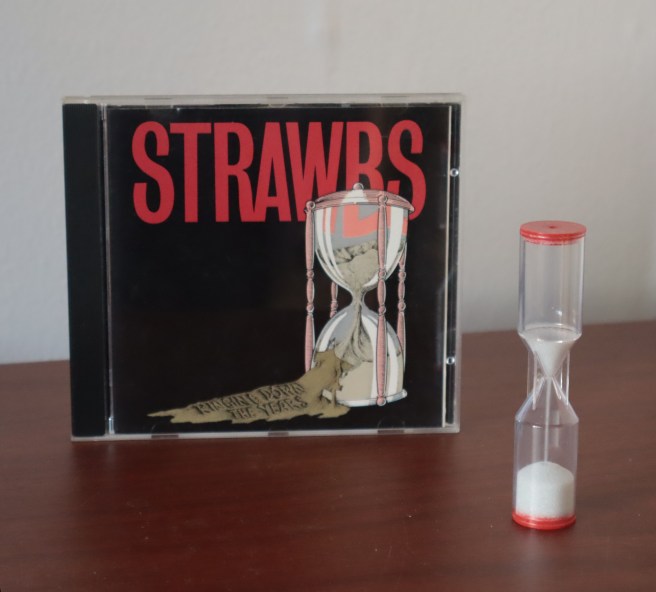
Ringing Down the Years
This is a more than middling album. There are some very noteworthy recordings on it, including the title track tribute to the late Sandy Denny who was with the band in the sixties. There is also a couple of old numbers given a refreshing rejuvenation.
Track by Track
Might as Well Be on Mars (Williamson/Chapman)
This is a peculiar track. I think I am correct in saying it is the only track on a Strawbs studio album that was written by someone not in the band. Brian Willoughby explained to me on the staircase of the Adelphi pub in Preston, that its inclusion was a condition of the Virgin recording deal. There was a requirement for the record to have some Canadian-created content. The boys bashed it into an acceptable musical trajectory but lyrically it sounds like it is from another planet.
The King (Cousins)
Ah yes, a song that seemed to sum up the reappearance of the band: The king is returning / And those that were lost are found. Evidently a version of this was released as a Christmas single. Without sufficient plays to reach the wise men and women of the Strawbs’ faithful it was always going to be below the horizon. It’s a great song. Hear it on high.
Forever Ocean Blue (Cousins)
Another composition that Cousins considers “to be one of my best love songs”.[5] He used part of it as the closedown theme of DevonAir radio, the commercial station that he was running at the time.
Grace Darling (Cousins)
This is it. This is the track that convinced me the Strawbs were back on the waves fully seaworthy, with a priceless cargo, all sails filled, all flags flying and truly on course. It is also the composition that completely confirmed the majestic musicianship of Brian Willoughby.
I always liked the song. The lyrics are wistfully witty and poetically potent and the ecclesiastical arrangement on the Ghosts album worked well enough. I always considered it to be a good song, but this interpretation turns it into a great song. The whole band, and production team, must share the credit, but it is Brian Willoughby’s lead guitar that lifts the tune to a new level. All hands are synchronised on the oars, but his fretboard is not just the tiller, but the wand that stirs the waves, combats the crests and settles the swell.
The 1974 version has been fleshed out and lengthened. The first verse is repeated at the end, but before that is an instrumental excursion taking us to the dramatic peak of Grace Darling’s legend, where we tussle with the tempest and barely avoid the rocks, before returning to relative calm and overwhelming relief. It soared right up my list of top Strawbs’ guitar sections of all time; second only to Down by the Sea – as played by Lambert or Willoughby or both.
The live version on Strawbs Greatest Hits Live the 1993 Central TV recording is almost indistinguishable from this and hence equally good.
Afraid to Let You Go (Demick/Hudson/Willoughby)
This is a very decent song. It has an almost sixties ‘kitchen-sink’ grittiness to it. Good melody, sympathetic story and endearing domesticity beget a melancholy mood.
Tell Me What You See in Me (Cousins)
This is another terrific re-rendering of an old tune. Cousins often claimed this to be one of their most enduring songs dating right back to their earliest days. I still prefer the authentic “Nosrati and his Arab Friends” restaurant band version on the 1969 eponymous Strawbs album, but this is a strong rendition that I had the pleasure of hearing live several times.
Ringing Down the Years (Cousins)
Dave Cousins’ tribute to Sandy Denny provides the title track. It is a moving memorial to a talent taken far too soon. Who knows where the time goes / When your time is running out. Too true.
Stone Cold Is the Woman’s Heart (Cousins)
Every bit as bitter as the title suggests.
Taking A Chance (Demick/Hudson/Willoughby)
Another break-up song. In common with the previous track, in spite of the sentiments the tune is sufficiently up-beat to sugar the sourness.
In summary
This is one of the better Strawbs albums. At the time it didn’t feel typical, but neither did it register as alien. The production is universally good and – if we skip over the enforced inclusion of Might as Well Be on Mars – there are no below-par or off-target tracks. The Sandy Denny dedication adds an aura and Tell Me What You See In Me and the supreme re-surfacing of Grace Darling demand that it be lifted from under the radar.
Meanwhile…
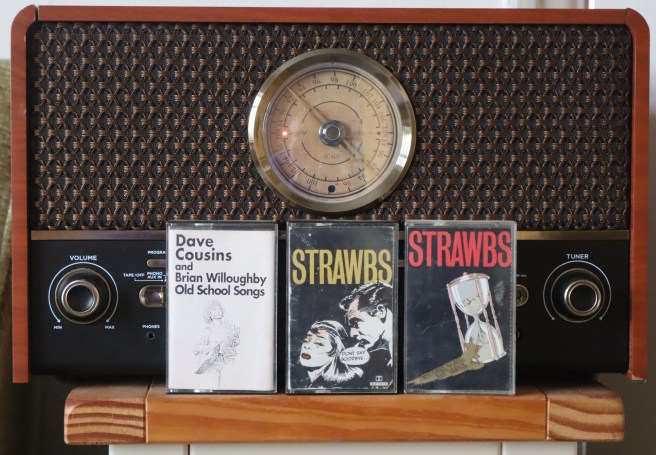
At this time, I also got my hands on the Cousins & Willoughby album Old School Songs. This is a collection of Strawbs’ songs recorded by the duo way back in 1979 but only issued then as a privately pressed limited edition of 2000 vinyl records, sold at the duo’s gigs. In 1991 the Road Goes on Forever label made it available on CD & cassette.
Track listing
- Grace Darling
- I’ve Been My Own Worst Friend
- Ways and Means
- You Keep Going Your Way
- The Battle
- The Hangman and the Papist
- Hanging in the Gallery
- Beside the Rio Grande
- Josephine, For Better or for Worse
- Lay Down
- A Song for Me
I’ve reviewed all those tracks in previous posts except for the last one. A Song for Me was written in response to the deepening cuts in the band just prior to the seams bursting in 1973. Venomous poetry and cutthroat strumming.
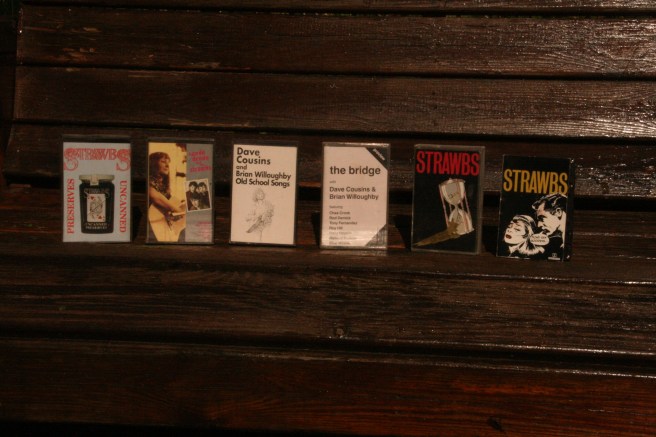
In 1994 Cousins & Willoughby recorded another collection, this time of mostly new songs, the majority of which would later form the body of the 2003 Blue Angel full electric album. A remixed version of The Bridge has just been released. I’ll let you know what I think once mine has been delivered and digested.
References
[1] Cousins, Exercising Ghosts, Witchwood Media, 2014
[2] Cousins, Secrets, Stories, Songs, Witchwood Media, 2010
[3] See Secrets, Stories, Songs, page 245
[4] Ibid page 246
[5] Ibid page 254
Influenced
The version of Grace Darling on Ringing Down the Years inspired a one-act play for two performers entitled Saving Grace. I regard it as my finest total theatre production. Joanne was majestic on stage and Graham was magnificent on sound and light. We’d have been stranded without Mr Willoughby’s water.
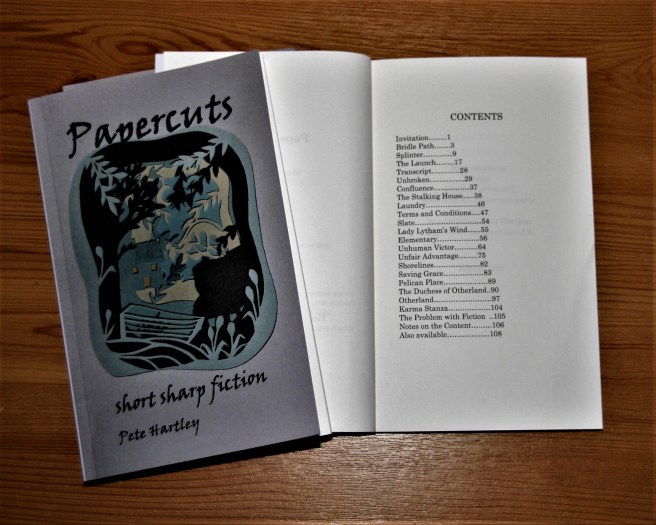
The script, slightly adjusted for the page rather than the stage, can be found as part of Papercuts.


 uneasywords
One thought on “Virgin Years”