Why bother being creative?
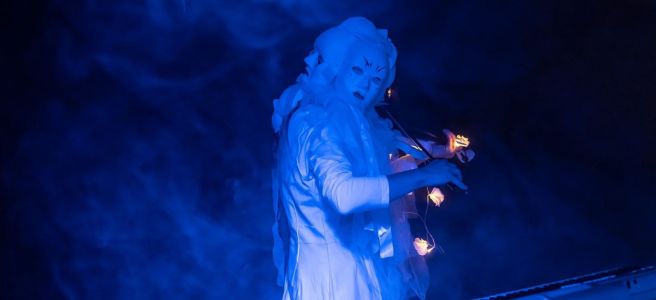
We had a late-night chat, Rickerly and I. He’s been trying to work out why he wants to create music, put it out there, and perform it anonymously.  More fundamentally, he had been thinking: should he do those things?

The questions are ancient. As old as art itself. We were too snugly in our cups to go ploughing through aesthetic beliefs, though we both like a dose of philosophy. Later, after he had left, I blew the dust off some of the books and notes that had meant so much to me when I was almost as young as he.
Appreciation
A good work of art is not good in the same sense as a good action, says Stuart Hampshire (1914-2004).  “Virtue and good conduct are essentially repeatable and imitable in a sense in which a work of art is not.” [1]  To copy a good deed is to act rightly; to copy a work of art is not. Indeed, a copy of a work is regarded to have less, sometimes much less, value than the original. This is one reason why Rickerly should create. Only he can present us with the original version. Only you can produce the original form of your output.

A work of art, suggests Hampshire, should be enjoyed or neglected for what it is. Any grading or judgement is not necessary. By making art we make possible that enjoyment or neglect. We give the choice.
Taste and beauty

David Hume (1711-76) speaks of taste. Beauty, he argues, is not a quality. Things are not beautiful. “The beauty exits merely in the mind which contemplates them, and each mind perceives a different beauty.”[2]   One person may perceive deformity where another perceives beauty, he says. We do not need to be concerned as to the worth of what we create. Leave that to those who witness it.

Rickerly told me of a trip to Lincoln. The audience was small he said, but the appreciation of a single punter expressed to him afterwards, meant a very great deal. So it should. He lives a long way from Lincoln. He could not know the value that he was conveying. We should all convey our created goods in ignorance. Let the receiver find what they will.
Build the extension
“Extending and building the concept ‘art’ is the business of art today,” says Timothy Binkley (b.1943); who goes on to provoke us into rebuilding by remarking that “creativity stifles definition”. [3] When we make new work, we redefine the definition of that kind of art. “What makes art different, is that it is centrally involved with the creation of new instances of the concept.”

If Rickerly does not make music, no one will redefine music in that specific way.

B.L. Tilghman (b.1927) extends that observation, by pointing out that if Kafka had not written with his particular idiosyncrasy, we would not be able to label any other work ‘Kafkaesque’, regardless of whether that work followed or preceded him.  [4]

Without Rickerly, we could not have Rickerlyesque.
Art and emotion
R.G. Collingwood (1889-1943) informs us that until a person expresses an emotion, they do not know what emotion it is. [5] The arts express emotion in exclusive ways, so exclusive that they cannot be experienced without that precise manifestation, in that place at that time. This is why performance can be invaluable. No two performances are ever exactly the same, and while the environment – including fellow perceivers – plays its part, it is the performer that is crucial. We must perform, or the emotion is not born.
Perception and genius

It is Arthur Schopenhauer ((1788-1860) who provides the most inspiring definition of genius. He says that when we perceive something comprehensively, we become indistinguishable from the perception. We no longer perceive ourselves. We have become one with the image that we perceive. Genius, he says, is the ability to lose oneself in the perception. [6]

This turns the performance space into a sacred place. It means that not only can the artist be genius whilst in the act of creation, the perceiver can be genius during the perception.

In this context, for the painter, the performance is the exhibition. For the author, it is the reading. It is an act of genius for the artist to confer that status on the perceiver.
The impulse
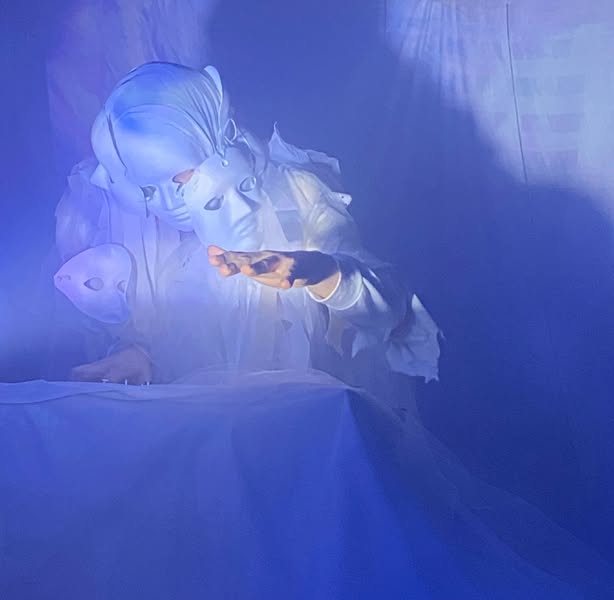
So much for the philosophy, but creativity is instinctive. Rickerly performs in full disguise, and I told him I admire him for that. It’s not ego, it is not greed. Sometimes he is paid, sometimes not, but he says he knows it is not likely to settle the bills any time soon. So why does he want to do it? He just does. This, I believe is the true reason why most of us create and present our art. We just do. Whether or not people like it or buy it, we just have to do it.

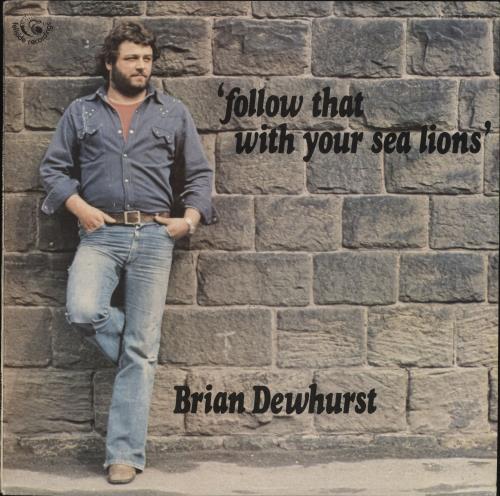
I told him I always remembered the lyrics of a song a Preston folk singer sang fifty years ago. I’ve still got my signed vinyl copy of Brian Dewhurst’s 1977 album Follow that with your sea lions.

Honky Tonk Music by American singer-songwriter Jerry Jeff Walker closes side one:

Every night I play the places
Neon lights and smilin' faces
People laugh and talk away the evenings while I play
Ask myself, "Why do I do it?"
Guess there must be somethin' to it
Getting' paid for doin' something I'd be doin' anyway

Follow that Rickerly. You’ll always have my seal of approval.
Notes and links
[1] Sim Stuart (Editor) Art Context and Value, The Open University 1992, ISBN0749211067, page 298.
[2] Ibid page 281.
[3] Ibid page 267
[4] Ibid page 245
[5] Wilkinson R (editor) Theories of Art and Beauty, Open University 1991, ISBN 0749211059, page 357
[6] Ibid page 222
You can listen to Rickerly and Dave Hartley in collaboration at the Anthony Burgess Foundation Sleeve Notes event in celebration of Record Store Day here: https://sleeve-notes.bandcamp.com/track/his-masters-voice-dave-hartley-x-rickerly-2
and a whole cornucopia of Rickerly’s other work here: https://rickerly.bandcamp.com/
I’ll be in the company of other creatives on 3rd May this year:
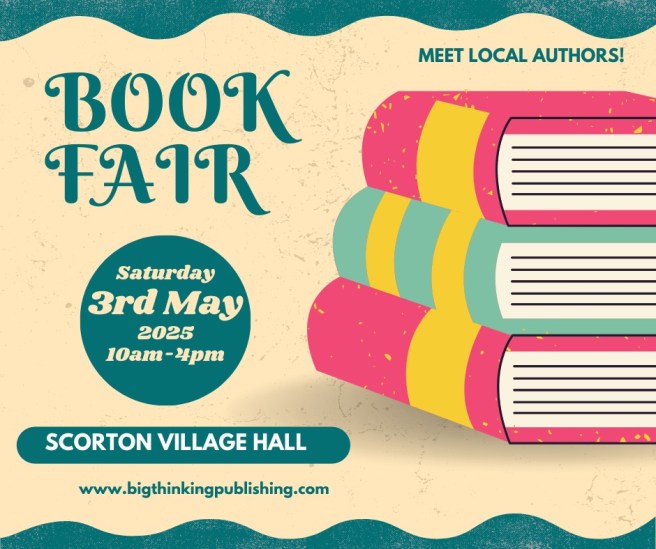
The village of Scorton is a delightful corner of Lancashire. The village hall can be found at: Factory Brow, PR3 1AS
I will not be performing, but will be happy to talk about all things creative. For more such insights try:
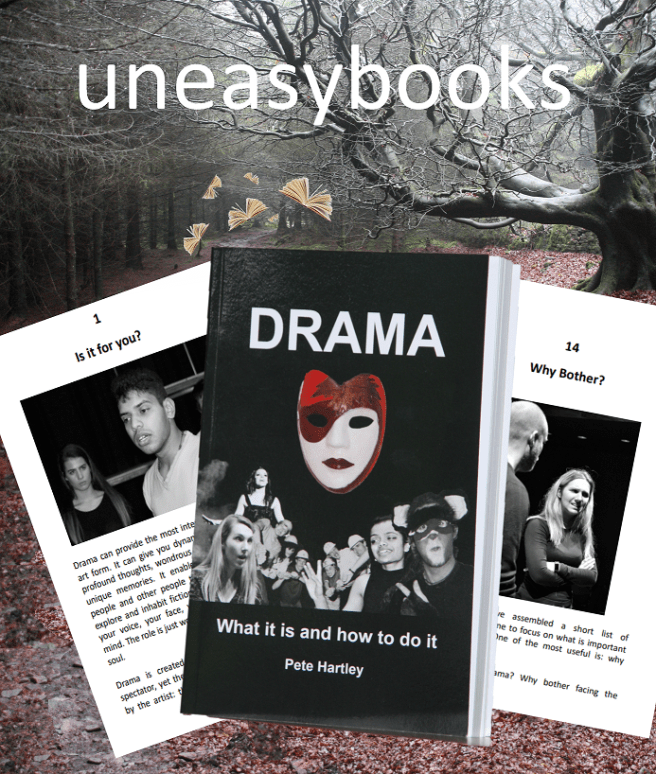
Click on the pic for more info.

 uneasywords