Grasping the Gothic part six: David Lean outdoes Dickens
For me, this is where Gothic began. We are nearing the culmination of my exploration of the genre of ‘gloomth’, so let me share with you its nativity in my cultural experience. This movie represents, during the first thirty minutes or so, what I regard as the greatest onscreen rendition of the Gothic mood. You may disagree. It lacks the gore, the ghostly and the gratuitously horrific that you might desire, but it is grim, grave, haunting, brutally romantic, restrainedly melodramatic, sinisterly beautiful and narratively irresistible. It is a pressure cooker of characterisation, a furnace of emotion and a forge of melancholy. David Lean’s screen manifestation of Charles Dickens’ Great Expectations is a neutron star of gloomth.
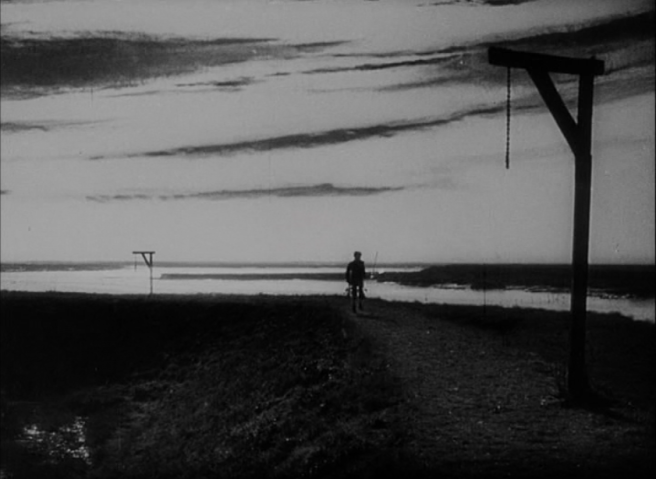
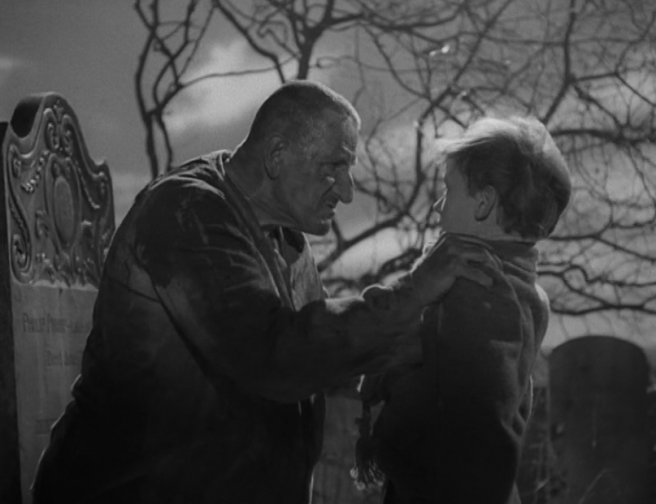
I was born into a household that did not possess a television. This was not uncommon among my contemporaries, in fact, in the mid-1950s over a third of British homes did not possess one. My sisters grew up without a television, but by the time I started laying down lasting memories, we had one. David Lean’s Great Expectations is the first movie I remember seeing on it, at Christmas time in the early 1960s. I remember a family row over which of the two channels we should watch. I lost, but my belligerence was quelled by the sight of a boy who was a similar age to me, dashing beneath a pair of gallows along a monochrome coastal path, into a church graveyard where he was accosted by an escaped criminal caked in mud, shackled by chains and crazed by hunger.
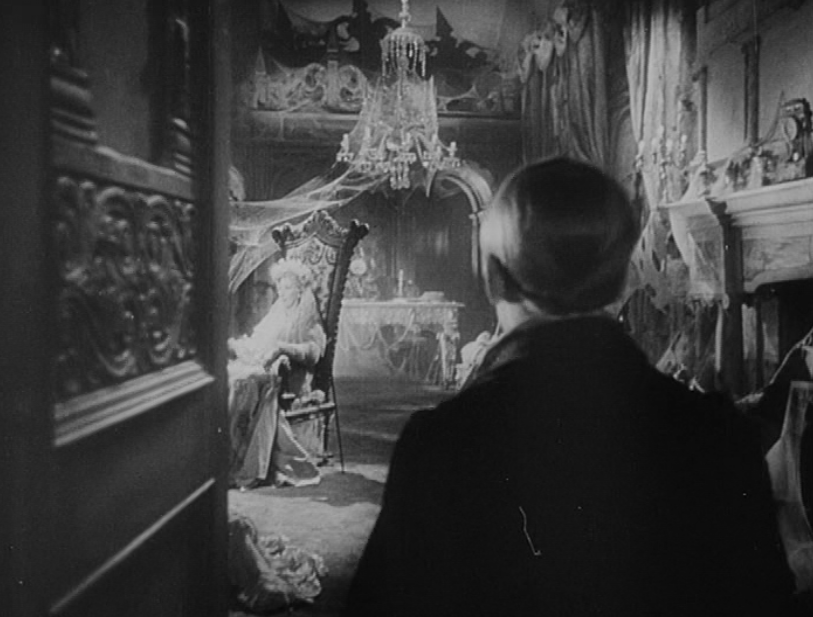
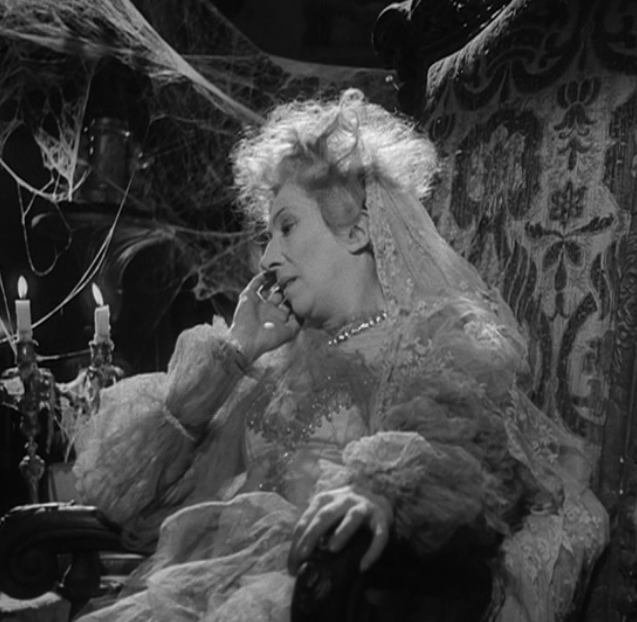
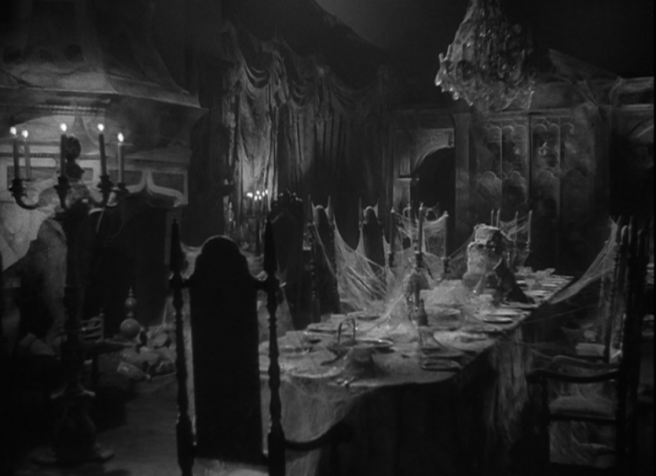
I was hooked, and gripped further when the boy – an orphan named Pip - was summoned to see a woman who had not seen the light of day since before he was born, and whose wedding breakfast was still set on the dining table, rotting beneath a trousseau of cobwebs and being enjoyed by visible vermin.

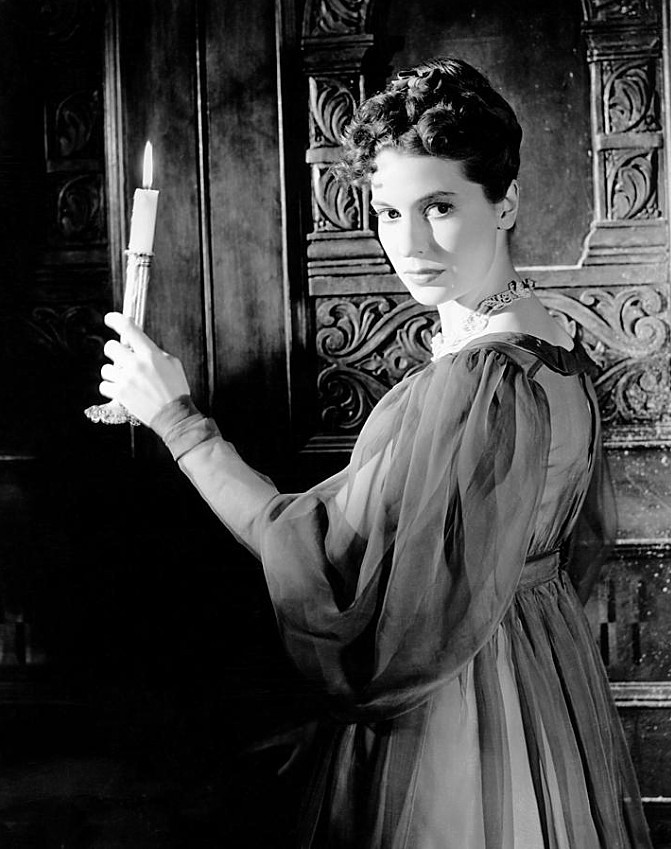
I have to admit, that the slightly older girl, curiously garbed in what seemed to be Andy Pandy pyjamas under her frilly frock enthralled me in ways I had not been enthralled before, as she rebuffed his blatant admiration with an acidic dose of supercilious cruelty. She arrogantly conducted him, condescendingly insulted him, made him cry, slapped him, savoured the suffering she caused him, then let him kiss her. All that considerably troubled the infant me. I think I lost interest when the young protagonist grew up, but the film, and then the book, would draw me back in subsequent years. As we have discovered in earlier posts in this series, that’s what Gothic does. It doesn’t let go.
So, David Lean’s Great Expectations taught me what the Gothic genre was long before I ever knew what ‘Gothic’ and ‘genre’ meant. Lean imbues his interpretation with even stronger Gothic ingredients than Dickens does. The former was working three quarters of a century later and so had many more influences and conventions on which to draw. The novel was published in 1861 and Lean’s film premiered in 1946.

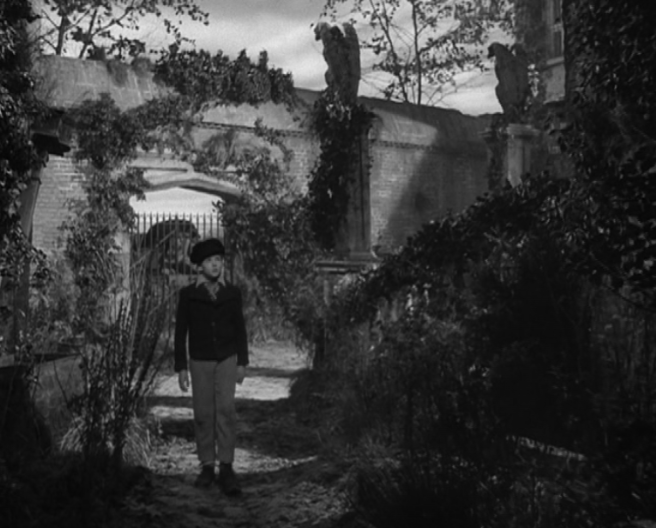
The architectural is once again the literal backdrop of the Gothic. In fact, the mood dissipates somewhat when we leave Satis House, the decaying, ever-dark mansion of Miss Havisham. The legal chambers of the lawyer Jaggers periodically restores the gloom with its death masks, and capital punishment icons, but it is primarily the decrepit interior of Satis that provides the Gothic carapace.
The thematic pillars are robustly present. The ominous is all in this work, as the title suggests. Pip expects something great. Greatness awaits, but not in the guise he anticipates. The twist is gut-wrenchingly grotesque, and the incessantly teasing turns into the interminably disappointing. The plot flips are chilling, and as frequently happens in Gothic fiction, they emerge from behind the enticingly beautiful.
It is however the inner architecture than pinions the viewer so strongly. Pip’s character arc is pointed. It soars supremely with wrongly imagined benefits until it is bluntly reversed, and then it plummets steeply. It does not crumble, however, and Pip is as robust after he has lost, as he was when he didn’t know what he wasn’t going to gain.
Dickens must get his due for the characterisation. Miss Havisham is extraordinary. We may mourn for her when we learn of how she was jilted on her wedding day, but we surely lose sympathy as we watch her tutor her ward, Estella, to break lovers’ hearts. She calmly conducts the opposite of grooming. ‘Gloomthing’ perhaps? She is a living ghost of herself nourished only by anticipating revenge, not on the person who wronged her, but on other men, including Pip. That’s not revenge; it’s regeneration. She is decaying.

With Miss Havisham we find a staple component of Gothic – the grotesque – chiselled into a complete character. She has been psychologically disfigured into a monstrous mason intent on carving the child in her care into a malevolent replica in cherubic guise. She is the grotesque that keeps on grimacing.
In Estella herself, we find a cheerfully damaged child become a cheerfully ambivalent adult. She is, perhaps, the quintessence of the nature/nurture dispute. How much is she the product of her education? Can she ever supplant its influence? Does she want to? Has her mentor spoiled her or simply encouraged her innate tendencies to flourish? Or could it be that Estella’s character was not forcibly derailed, but collaterally contaminated? Could any developing youth live in Satis house without catching its endemic corruption?

It is interesting, but irrelevant, that Valerie Hobson, who played the adult Estella has complained that Lean offered her hardly any directorial advice at all. In contrast to Miss Havisham’s influence on Estella, David Lean left Hobson to her own devices. The way she turned out was Hobson’s choice.
A plethora of detailed supporting roles enrich the core. Joe Gargery, Pip’s blacksmith brother-in-law, is a deeply warm and truly beautiful person. His simple loyalty is boundless, his humility almost excruciating and his integrity is impenetrably solid. Lean’s only significant directorial flaw in the film lies in over-exploiting Joe’s social inadequacy to the extent of farce in a hat-juggling sequence in Pip’s rooms in London. Dickens puts the comedy in, but the cinematic handling of it is overworked. Nevertheless, Joe is one of the characters who provides the secure foundation on which all the flamboyant decoration of the more multifaceted roles can stand.

Magwitch the felon, and Jaggers the lawyer, are crypts that hold several ciphers, while some ‘minor’ characters turn out to be majorly important. Some are linchpins others keystones. Every one is a crisply delineated individual with their differences defining the unity of the whole. Like the detailed frescos, statues and embellishments of a Gothic cathedral they all belong, even if some seem disturbingly out of place.
David Lean’s Great Expectations frequently features highly in the lists of best ever films and several critics concur that it is still the best Dickens adaptation of all. It is certainly the best that I have seen. Lean had previously worked in colour, but this was shot in black and white. That adds to the gloomy atmosphere. Gothic often works best in filthy shades of grey.
This Gothic masterpiece gripped me in the middle of the twentieth century. The story was reaching out from the middle of the nineteenth century. Will it still seem as great when we reach the middle of the twenty-first?

I expect that it will.
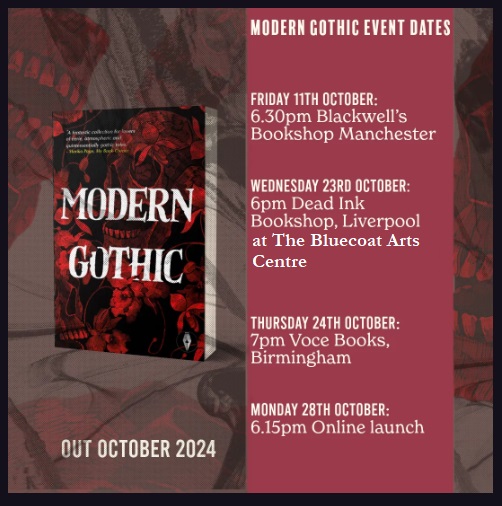
Modern Gothic edges closer. A series of live events has been announced:
While you are waiting, adults and older children (10 and over) might enjoy a Dickens meets Durrell meets Richard (Watership Down) Adams type adventure:
I will be donating all proceeds from this publication to Leyland Hedgehog Rescue who eased my wife and I into the process of fostering prickly urchins, and provided the hogs that inspired the characters in this book that are not stolen from classic literature.
Former drama teacher, fringe theatre producer and director, and author of novels, short stories and some non-fiction work. I now hawk my output under the moniker of uneasybooks.
View all posts by Pete Hartley




 uneasywords
One thought on “Lean Expectations”